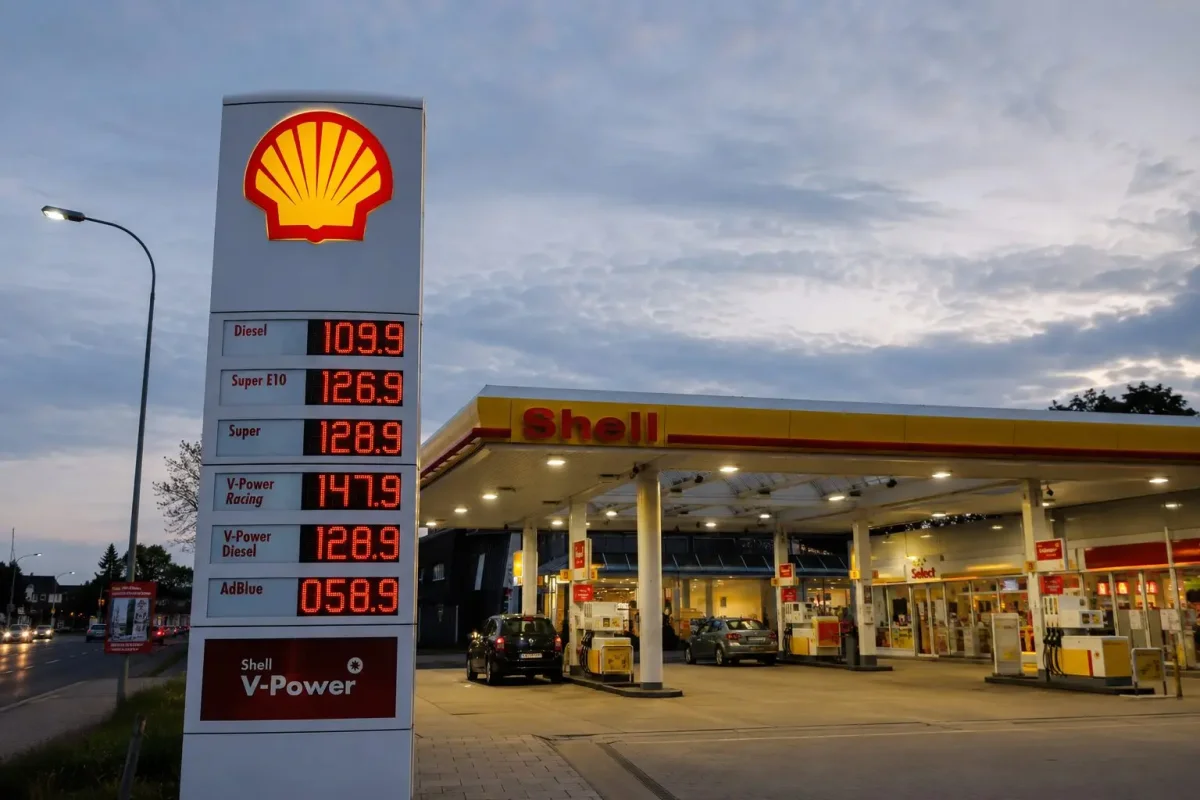
Shell Plc (LON:SHEL) shares climbed 1.7% to 3,160.5 pence by 10:01 BST on Tuesday, outperforming a 0.7% decline in the FTSE 100. The advance was driven by the company's agreement to sell its Indian renewables business and a rise in crude oil prices. Brent crude gained 2.6% to approximately $85 a barrel, fueled by renewed tensions between the United States and Iran, which lifted European energy stocks by 1.4%.
Asset Sales Fuel Funding Strategy
The sale of Sprng Energy, Shell's Indian renewables arm, for $1.8 billion is the latest in a series of disposals announced or completed since June 30. These transactions have a combined headline value of $5.8 billion, roughly 1.7 times the $3.4 billion cash component of Shell's agreed acquisition of ARC Resources Ltd (TSE:ARX). The rest of ARC's $13.6 billion equity consideration is being paid via Shell shares, and Shell will also assume about $2.8 billion of net debt and leases.
The disposals span oil production, vehicle servicing, fuel retail, and renewables. Only the $1.3 billion sale of Jiffy Lube International and Premium Velocity Auto has been completed; the other transactions are expected to close in late 2026 or 2027. The $1.8 billion price for Sprng equates to roughly $360 million per gigawatt-peak (GWp) of operating and contracted wind and solar capacity, though the value includes debt and remains subject to adjustments.
BP's Boost and Market Context
BP Plc (LON:BP) saw a larger gain of 3.0%, buoyed by its own catalyst: the company forecast that higher oil and gas prices could add a combined $2.3 billion to $2.8 billion to second-quarter divisional earnings. BP also said net debt was expected to fall to $22 billion-$23 billion from $25.3 billion at the end of March. Shell's advance, by contrast, was supported by both crude oil and capital recycling through asset sales.
The ARC acquisition would add about 370,000 barrels of oil equivalent per day (boe/d) to Shell's roughly 2.8 million boe/d production base—an increase of about 13% before other portfolio changes. CEO Wael Sawan described ARC as a "high-quality, low-cost" producer that complements Shell's existing footprint in Canada. ARC shareholders are set to vote later Tuesday, requiring at least 66% support. Shell has suspended its $3 billion share-buyback program through July 14 due to securities-law rules tied to the transaction, making the vote relevant to both production growth and capital return timing.
Risks and Outlook
However, the $5.8 billion funding bridge is not yet fully secured. Three of the four sales remain pending, Sprng's value includes debt and closing adjustments, and the South African downstream business's $1.0 billion enterprise value is subject to net-debt and working-capital adjustments. A failed ARC vote, delayed disposals, or a sharp reversal in crude prices could undermine the balance-sheet and earnings support that Tuesday's share move suggests.
Shell is scheduled to report second-quarter results on July 30 at 07:00 BST. The company has forecast a $1 billion-$6 billion working-capital inflow—after an $11.2 billion outflow in the first quarter—alongside significantly stronger integrated-gas trading. These figures will indicate whether the oil-price lift and disposal program are translating into sustained cash generation.