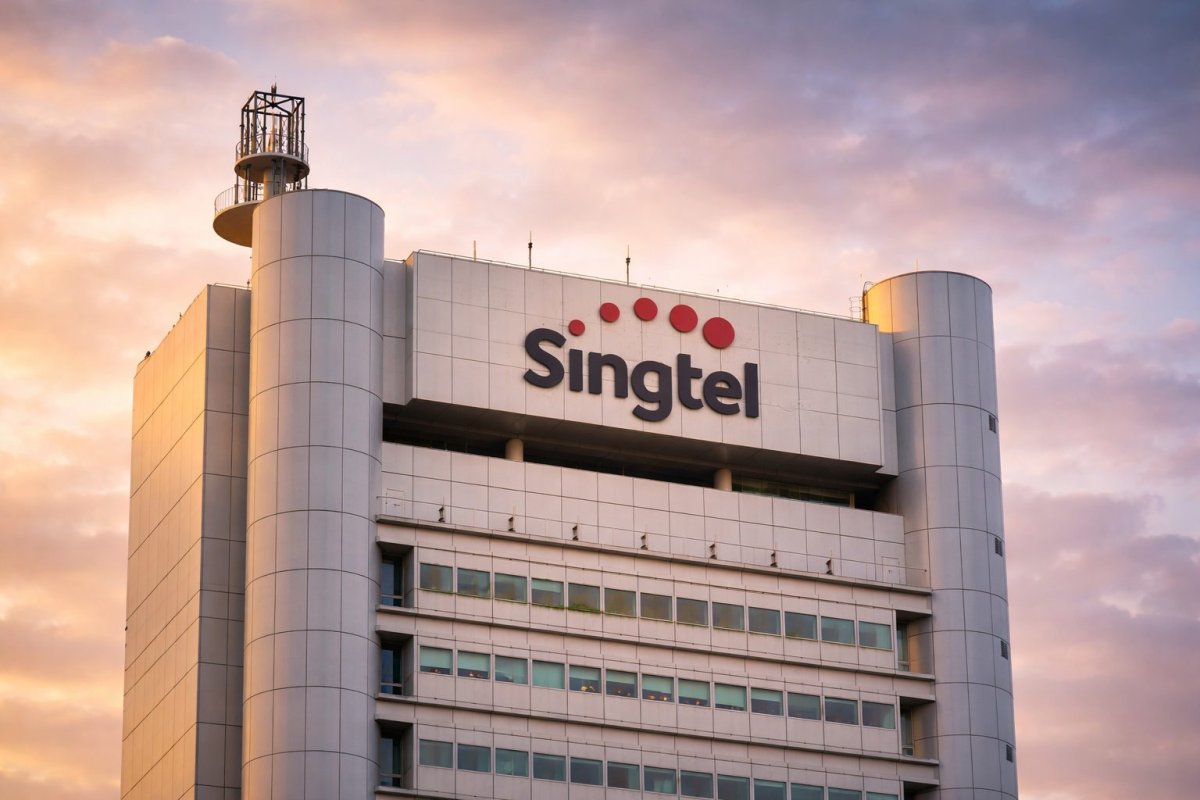
Singapore Telecommunications Limited (Singtel) shares experienced a modest uptick during Tuesday's trading session, gaining approximately 0.2% to close at S$4.79. This movement occurred against a backdrop of significant corporate developments and emerging sector-wide cybersecurity concerns. The Straits Times Index, in contrast, recorded a slight decline of 0.07% on the same day.
Strategic Expansion into Digital Infrastructure
The positive share price movement coincided with a major operational milestone for the company's digital infrastructure arm. Nxera, Singtel's data centre unit, officially commenced operations at its new DC Tuas facility on Monday. This launch represents the company's largest multi-tenant data centre to date, featuring a substantial 58-megawatt capacity specifically engineered for high-density, artificial intelligence workloads. According to Bill Chang, Chief Executive of Nxera and head of Singtel's Digital InfraCo unit, the facility addresses a critical market need for AI-ready infrastructure in a region where data centre capacity remains constrained. The design prioritizes the power-intensive server configurations required for advanced AI model training and deployment, positioning Singtel to capitalize on the growing demand for computational resources in the AI ecosystem.
Persistent Cybersecurity Threats Loom
This strategic advancement was tempered by a separate, concerning disclosure from Singaporean authorities. Cybersecurity agencies revealed that a sophisticated cyberattack, attributed to a suspected China-nexus espionage actor known as UNC3886, had targeted all four of the nation's major telecommunications operators: Singtel, StarHub, M1, and Simba. The intrusion methodology involved a zero-day exploit, allowing hackers to bypass a perimeter firewall by leveraging a previously unknown software vulnerability. While initial assessments indicate that no sensitive customer data was compromised, a limited amount of technical information was exfiltrated. This incident underscores the persistent and evolving cyber threats facing critical national infrastructure operators.
For investors, these dual narratives create a complex valuation calculus. Singtel's stock is increasingly behaving less like a traditional telecommunications utility and more like a hybrid network-and-infrastructure play. The company's recent agreement, formed in partnership with global investment firm KKR, to acquire ST Telemedia Global Data Centres (STT GDC) in a deal valuing the operator at S$13.8 billion further accentuates this strategic pivot. The transaction, pending regulatory approvals, is anticipated to close in the second half of 2026 and has contributed to recent share price strength.
However, this growth trajectory is not without its headwinds. The cybersecurity breach highlights a tangible and ongoing operational risk. As telcos are classified as critical infrastructure, any significant security failure or service outage can have severe financial and reputational consequences. Investors are now tasked with determining the appropriate growth premium for Singtel's digital infrastructure ambitions while simultaneously discounting for heightened regulatory scrutiny, potential increases in security-related capital expenditures, and the ever-present threat of sophisticated cyber intrusions.
The development of large-scale data centres in Singapore also carries inherent challenges, including substantial upfront capital requirements and potential constraints related to land availability and electrical power supply, which could prolong expansion timelines. A sudden shift in regulatory policy or a more damaging future security incident could rapidly alter the risk profile for operators managing sensitive data flows.
Market participants are now looking ahead to Singtel's upcoming earnings report, scheduled for February 18, for greater clarity. Traders and analysts are particularly keen to understand the ongoing status of the cyber intrusion attempts and to gauge the potential financial impact of remediation efforts. The company's guidance on future cybersecurity investments and the operational integration of its new data centre assets will be critical factors in shaping the investment narrative moving forward.