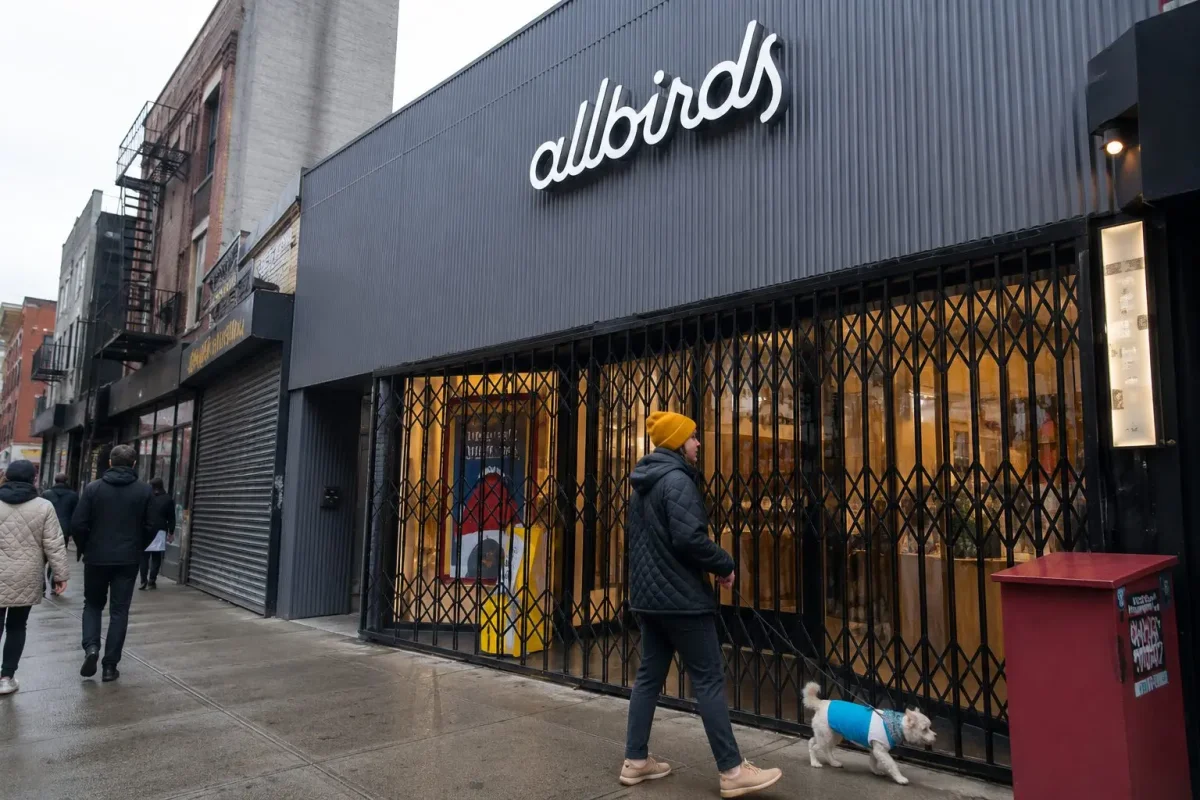
Smartbird, the company formerly known as Allbirds, saw its shares surge 39.09% in Wednesday trading, closing at $5.48 on the Nasdaq. The dramatic rally comes as the company completes its transformation from a struggling footwear brand into an artificial intelligence infrastructure play, a move that has captured investor attention.
Strategic Shift Complete
The company finalized the sale of its Allbirds footwear assets and officially rebranded as Smartbird. Alongside this transformation, the firm appointed former Amazon Web Services executive Nadia Carlsten as its new chief executive officer. Carlsten replaces Joe Vernachio, who stepped down from both the CEO role and the board of directors.
In a significant financial move, Smartbird doubled its convertible financing facility from $50 million to $100 million. This type of financing can later convert into equity, providing the company with capital flexibility while also posing potential dilution risks for existing shareholders.
Market Context and Valuation
Despite Wednesday's impressive gain, Smartbird remains a small-cap stock with a market capitalization under $50 million. The stock has risen approximately 25% year-to-date, with the recent AI-driven pivot providing a substantial catalyst. However, the company's market cap remains modest compared to the massive cloud infrastructure providers it aims to serve.
Investors are now looking beyond the company's retail past and focusing on its new direction. The key question is whether a small public company with a history of struggling retail operations can successfully compete in the high-stakes AI infrastructure market.
New Leadership and Strategy
Carlsten brings experience from AWS, where she worked with cloud infrastructure clients. In the company's announcement, she noted that many organizations lack practical solutions for deploying dedicated AI infrastructure. Smartbird is targeting middle-market customers rather than directly competing with hyperscale cloud providers like Amazon Web Services, Microsoft Azure, or CoreWeave.
“We are not competing head-on with the hyperscalers,” Carlsten told Business Insider. She emphasized that some customers prefer single-tenant infrastructure for greater control. “In a few months, people won't even remember the shoes,” she added, highlighting the company's complete strategic shift.
Leadership Changes
Along with Carlsten's appointment, the company announced that Annie Mitchell will remain as chief financial officer. Lily Yan Hughes has been appointed as the new chair of the board, signaling a fresh governance structure to support the new strategic direction.
Risks and Challenges
Despite the optimistic outlook, the company faces substantial risks. Smartbird must demonstrate its ability to secure customers, acquire expensive AI hardware, and fund its growth in a market dominated by well-capitalized giants like Amazon, Microsoft, and CoreWeave. These competitors have established relationships with both hardware suppliers and potential customers.
The company has acknowledged these challenges in its risk factors, citing uncertainties around its ability to execute the new business plan, manage future finances, and raise additional capital if needed. The convertible financing facility provides some runway, but the company will need to convert interest into concrete contracts and revenue.
Traders are now watching closely to see if Smartbird can translate Wednesday's AI-driven rally into sustainable business performance, including signed contracts, actual sales, and sufficient cash reserves to maintain momentum. The company's ability to deliver on its promises will determine whether this pivot proves successful or becomes another chapter in the story of a struggling retailer's failed transformation.