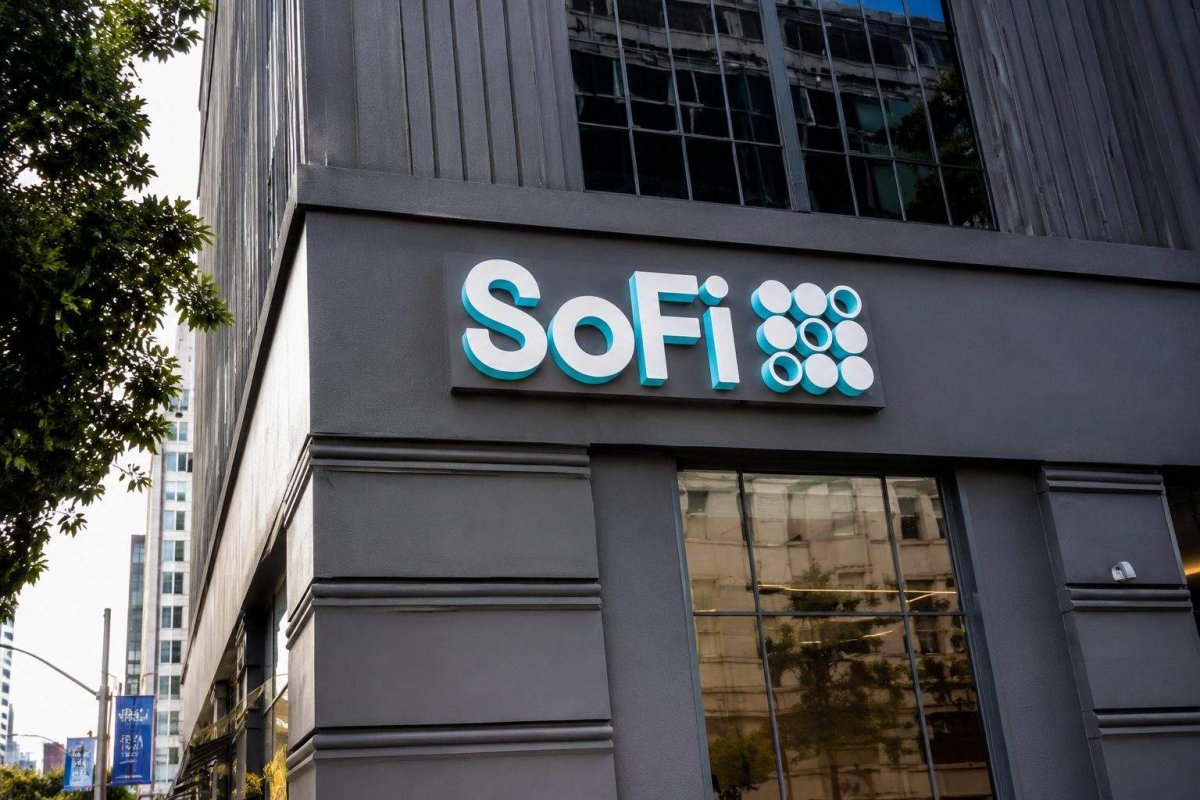
SoFi Technologies Inc. has introduced its bank-issued dollar stablecoin, SoFiUSD, to its consumer banking application, marking a significant expansion of its cryptocurrency offerings beyond enterprise clients. The move gives the digital lender a fresh test in the crypto space as its shares hover near $16 ahead of regular U.S. trading on Thursday.
The timing is strategic for SoFi as it seeks to demonstrate to investors that it can evolve beyond a traditional lender tied to credit demand and funding costs. A stablecoin is a digital token designed to maintain a one-for-one peg with a fiat currency, in this case the U.S. dollar. SoFi is positioning SoFiUSD as a faster payment mechanism within a regulated banking framework.
SoFi announced on Wednesday that SoFiUSD can now be bought, sold, held, and converted directly within the SoFi app by its nearly 15 million members. The company stated that the token is redeemable 1:1 for dollars from SoFi Bank, backed by liquid assets, and operates on the Ethereum and Solana blockchain networks, which are commonly used for digital asset transfers.
Chief Executive Anthony Noto emphasized that SoFi aims to combine "the speed and versatility of the blockchain with the trust of a bank." He added that members would have a single platform to use digital assets alongside saving, borrowing, and investing activities.
Shares were quoted at $16.17 before the U.S. open, giving SoFi a market capitalization of approximately $22.3 billion, according to market data. In comparison, Robinhood, another retail-focused financial app with crypto exposure, saw its shares trade higher, while Coinbase declined. Affirm, which is more tied to consumer credit and buy-now-pay-later lending, also rose in pre-market trading.
SoFi's next steps will be closely watched by investors. The company plans to allow users to convert SoFiUSD into tokenized deposits—bank deposits represented digitally on a blockchain—that can earn interest and qualify for FDIC insurance under separate deposit terms. Additionally, SoFi intends to facilitate cross-border money transfers and list SoFiUSD on the Bullish exchange for institutional trading.
Industry experts have noted the distinction between stablecoins and tokenized deposits. Emily Goodman, a partner at fintech consulting firm FS Vector, told American Banker that the two are "structurally distinct with unique advantages" and that combining them could create "operational and compliance efficiencies." Nick Elledge, co-founder of Stablecore, simplified the retail pitch: customers could "spend with the stablecoin and save with the insured deposit," as reported by American Banker.
The rollout builds on a stronger operating backdrop. In late April, SoFi reported first-quarter adjusted net revenue of $1.09 billion, up 41% year-over-year, adjusted EBITDA of $339.9 million, and 14.7 million members. Deposits rose to $40.2 billion. However, there was a blemish: SoFi's technology-platform revenue fell 27% in the quarter after a large client completed its transition off the platform, highlighting that not all growth lines are moving smoothly.
Adoption remains an open question. Stablecoins themselves are not FDIC-insured, and the rules around yield are sensitive. SoFi's strategy relies on moving customers into tokenized deposits for bank-style protections. If users treat SoFiUSD as a niche crypto feature rather than a payments tool, the stock may continue to be driven by loan growth, credit quality, and valuation concerns rather than the new digital-asset push.