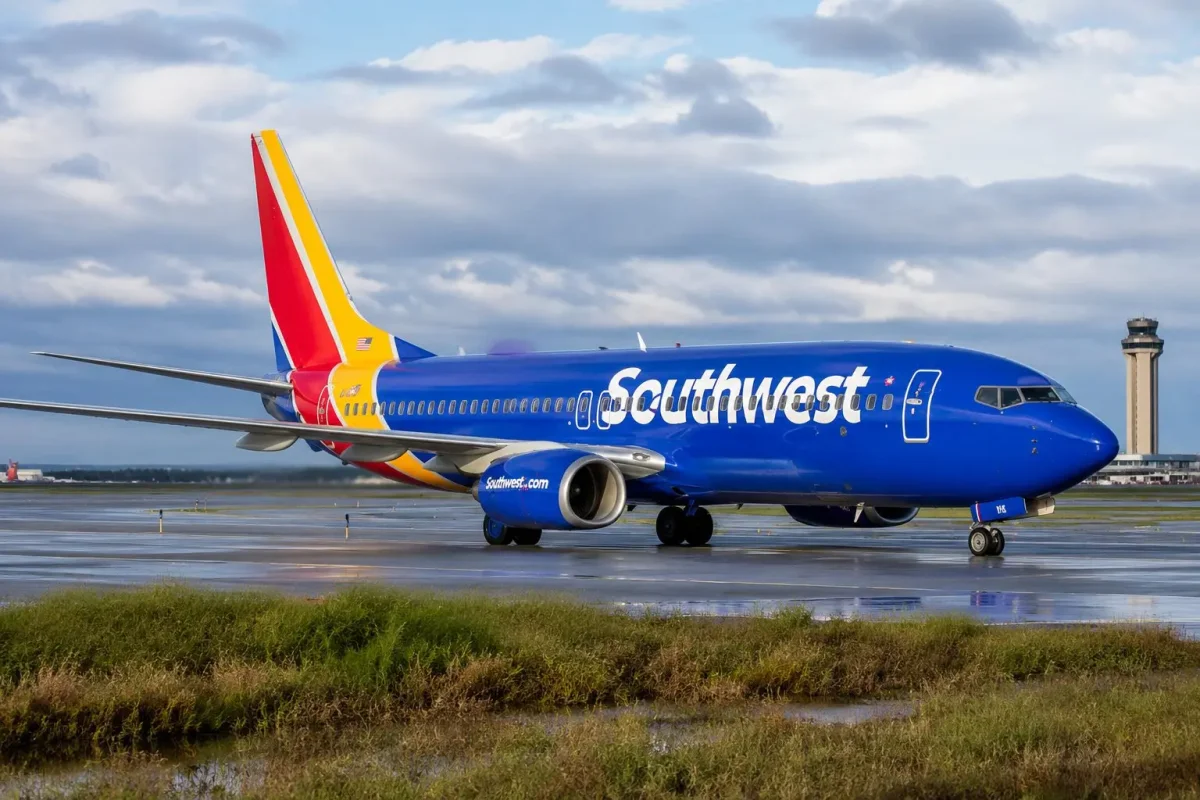
Southwest Airlines has announced an ambitious technology overhaul, setting a 2028 deadline to migrate most of its on-premises systems to a cloud-based, AI-enabled infrastructure powered by Amazon Web Services. The move is part of a broader strategic shift as the carrier transitions to assigned seating, introduces baggage fees, and expands premium product offerings.
The airline, based in Dallas, selected AWS as its preferred cloud provider to modernize systems critical for ticket sales, operations, and its workforce of over 70,000 employees. This modernization is essential for supporting Southwest's new commercial model, which requires more complex capabilities in seating, loyalty programs, pricing, and customer service compared to its previous open-seating, point-to-point approach.
Southwest's technology push comes amid efforts to stabilize operations following significant disruptions, including a $140 million fine from U.S. regulators after the 2022 holiday meltdown that resulted in 16,900 flight cancellations and stranded approximately 2 million passengers. The airline aims to use AI and cloud technologies to enhance reliability and prevent future operational failures.
As part of the initiative, Southwest will utilize AWS tools such as Amazon Quick and Kiro to update Southwest.com, its primary customer-facing website. Kiro, described by AWS as an agentic coding service, enables AI agents to autonomously pursue software development goals, though AWS notes that human oversight may still be required for certain steps. Over 2,700 Southwest developers are currently working with Kiro to build features, automate tests, and establish cloud infrastructure.
Lauren Woods, Southwest's executive vice president and CIO, emphasized that aligning performance and reliability improvements with AWS technology is central to the airline's strategy. Swami Sivasubramanian, AWS vice president for agentic AI, revealed that Southwest is deploying AI agents in customer support, operations, and software development. The partnership builds on a 2023 agreement where Southwest began leveraging AWS for fare searches, customer tools, data analytics, gate and ground operations, flight operations, and aircraft maintenance.
The technology overhaul is closely tied to Southwest's broader business transformation. The carrier is moving away from its long-standing open-seating policy and free checked bags for all passengers, aligning more closely with competitors like Delta Air Lines, United Airlines, and American Airlines, which rely on premium seats and ancillary fees to boost revenue. Early results show promise: Southwest reported first-quarter operating revenue of $7.2 billion, up 12.8%, with 60% of passengers choosing an upgrade from the base product, compared to roughly 20% in 2025. Assigned seating and extra-legroom seats were introduced on January 27, 2026.
Despite the strategic shift, risks remain. The 2028 migration target could face delays, and the integration of AI systems into critical software and daily operations lacks robust checks, testing, and clear ownership. The business model changes also carry uncertainty. Raymond James analyst Savanthi Syth expressed skepticism about bag fees, while Delta President Glen Hauenstein noted potential opportunities to capture Southwest customers affected by the policy changes.
Investor reaction was cautious. Southwest shares slipped 1.6% to $46.66, while Amazon shares fell 3.5% to $237.50 in after-hours trading Wednesday, suggesting the market did not view the announcement as an immediate catalyst.