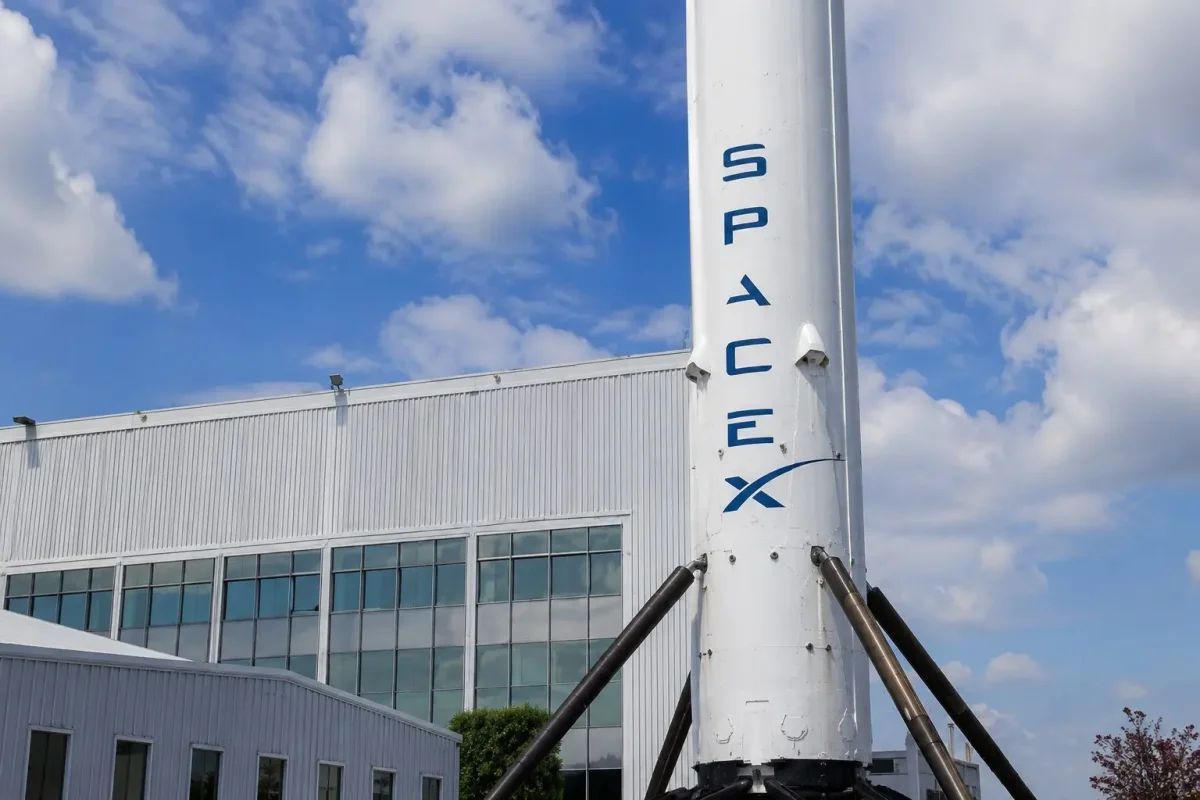
Space Exploration Technologies Corp. (SpaceX) is set to make its public market debut on the Nasdaq under the ticker SPCX on June 12, with an initial public offering price of $135 per share. The offering comprises 555,555,555 Class A shares, placing approximately $75 billion of stock on the market. This marks a significant milestone for the private company, which has long been a dominant player in the aerospace and satellite internet sectors.
Retail investor interest has been exceptionally high, with demand reportedly running at about twice the number of shares available. In an unusual move, SpaceX is allocating up to 30% of the IPO to individual investors, a stark contrast to typical offerings that prioritize institutional buyers. Brokers and platforms such as Fidelity, Robinhood, SoFi, and E*Trade are facilitating retail access, with Fidelity lowering its IPO eligibility minimum from $500,000 to $2,000.
Crypto exchanges are also tapping into the hype. Bybit has launched a product called SpaceX IPO Express, allowing users to subscribe for tokens that provide exposure to the stock's economics, though these tokens do not confer voting rights, dividends, or underlying equity ownership. Similarly, Kraken is offering IPO xStocks at the offering price plus a 5% spread, but this service is not available to clients in the U.S., UK, Canada, or Australia.
SpaceX's roadshow materials highlight its core businesses, including rocket launches and Starlink satellite internet, while also emphasizing plans for artificial intelligence computing and space-based data centers. Proceeds from the IPO are expected to fund AI infrastructure and expand the Starlink network. However, the company's valuation remains a point of contention. Morningstar values SpaceX at $780 billion, far below the implied $1.75 trillion target valuation cited by Reuters. Nicolas Owens of Morningstar noted that investors might find a better entry point after the IPO.
Financial performance reveals significant challenges. SpaceX reported a net loss of $4.94 billion in 2025, despite revenue climbing to $18.67 billion. The company's pricing strategy has drawn scrutiny, with some analysts interpreting it as a take-it-or-leave-it approach. Craig Coben, a former Bank of America capital-markets executive, remarked that high-demand IPOs can shift the burden onto investors to accept the terms.
Comparing SpaceX to peers is difficult. At the IPO price, the company would trade at 93.7 times 2025 revenue, while Rocket Lab, a close competitor, trades at 118 times revenue. Other high-growth AI firms like Anthropic and OpenAI are not direct space sector peers but may compete for similar growth-focused investors.
Index inclusion is another factor. Nasdaq has adjusted its listing rules to facilitate the entry of large new names like SpaceX into the Nasdaq 100. However, S&P Global maintains its profitability requirement, meaning SpaceX cannot join the S&P 500 until it turns profitable. Art Hogan of B. Riley Wealth argued against making exceptions for unprofitable companies, regardless of their size or private longevity.
The risks are evident. Beyond the 2025 losses, much of the IPO premium hinges on nascent markets like orbital data centers and AI infrastructure. If demand falls short or index buying disappoints, the stock could dip below the $135 offer price on its first day of trading. Investors are advised to weigh these factors carefully as the countdown to the June 12 listing begins.
