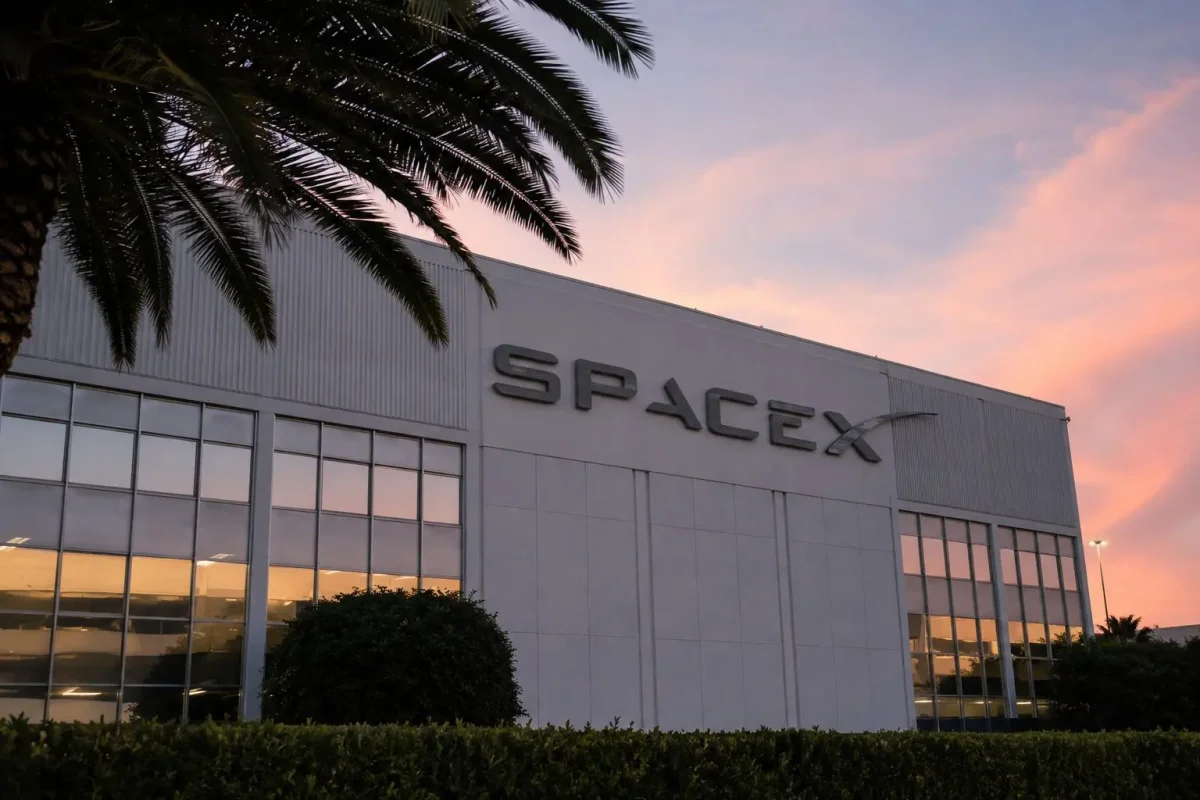
SpaceX's highly anticipated public listing has seen its shares trade above the initial offering price, as investors now focus on upcoming options trading and potential index inclusion. The stock, trading under the ticker SPCX on the Nasdaq Global Select Market and Nasdaq Texas, opened at $150.20 and reached a high of $176.45 before settling at a last quoted price of $160.95, representing a nearly 19% gain from the $135 IPO price.
Record-Breaking IPO
Space Exploration Technologies Corp. sold 555,555,555 Class A shares in its blockbuster IPO, raising $75 billion and achieving a valuation of $1.77 trillion at the offering price. The company's market capitalization briefly surpassed $2 trillion during its first day of trading, underscoring the immense investor appetite for SpaceX's unique blend of space launch services, Starlink satellite internet, and its newly integrated artificial intelligence unit.
The company's 2025 revenue reached $18.67 billion, up from $14.02 billion in 2024, driven by strong growth in its Connectivity division, which generated $7.17 billion in Segment Adjusted EBITDA. Starlink subscribers numbered approximately 10.3 million as of March 2026.
Options and Index Catalysts
According to Reuters, options trading on SPCX could begin as early as Tuesday. The introduction of options is expected to increase trading volumes and potentially introduce greater volatility, as both bullish and bearish investors gain new tools to express their views. Options allow holders to buy or sell shares at predetermined prices, providing leverage for bulls and hedging opportunities for bears without the need to short the stock directly.
Index inclusion is another key catalyst. Nasdaq is reportedly adjusting rules to facilitate SpaceX's entry into the Nasdaq 100, while MSCI has provisions for early inclusion of large IPOs. S&P Global, however, has decided not to fast-track SpaceX into the S&P 500 index.
Risks and Governance Concerns
Despite the strong debut, SpaceX faces significant challenges. The company reported a net loss of $4.94 billion attributable to shareholders in 2025, followed by a $4.28 billion net loss in the first quarter of 2026. Its AI division, acquired through the purchase of xAI, remains in early stages, requiring substantial capital and presenting integration and competitive risks.
Governance is another concern. Class B shares carry ten votes per share, while Class A shares have one vote, giving CEO Elon Musk significant control. SpaceX expects to qualify as a "controlled company" under Nasdaq rules, which means Class A shareholders will have fewer governance protections than those at companies with full corporate governance standards.
Greenshoe and Trading Dynamics
Underwriters have a 30-day greenshoe option to purchase up to 83,333,333 additional Class A shares at $135 each, which could raise an additional $11.2 billion. This over-allotment mechanism can help stabilize the stock during early trading but also increases the number of shares available.
For now, SPCX appears richly valued given the execution risks across its core businesses. The stock already prices in a long runway of flawless execution, while losses, governance issues, and early trading volatility remain significant headwinds. The coming days, with options activity and potential index buying, will provide a clearer picture of whether investor demand can sustain the stock's premium or if profit-taking will set in.
