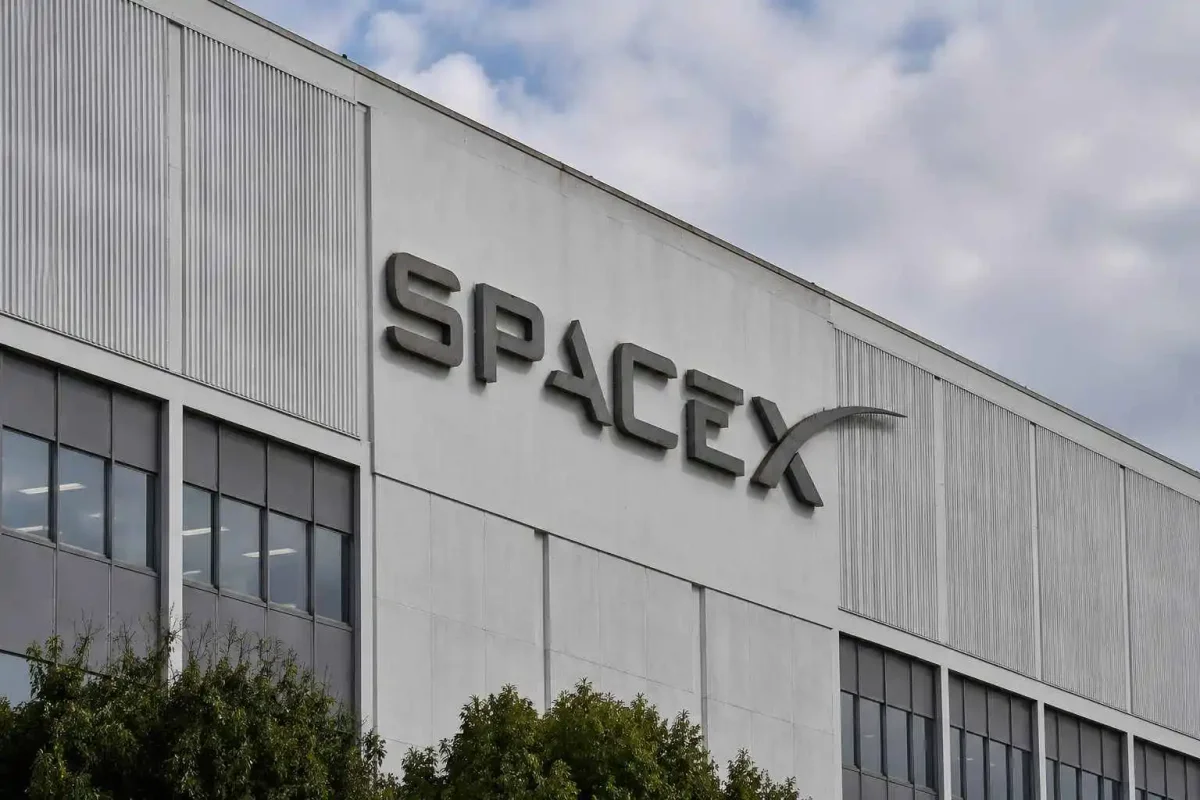
Space Exploration Technologies Corp. (NASDAQ:SPCX) experienced a sharp decline in premarket trading on Wednesday, with shares falling as much as 9.8% to $113.01. The drop came as investors weighed the company's aggressive artificial intelligence investment strategy against otherwise robust quarterly results. The sell-off reflects growing concerns about the pace of capital deployment and its impact on near-term profitability.
Revenue Surge and Capex Allocation
For the second quarter of 2026, SpaceX reported revenue of $7.81 billion, a 91.9% increase year-over-year and a 66.5% sequential gain. The company narrowed its operating loss to $0.14 billion, a significant improvement from the $1.94 billion loss in the prior quarter and an 85.3% reduction from the $0.97 billion loss a year earlier. Adjusted EBITDA surged to $3.54 billion, up 213.9% from Q1 and 191.4% from Q2 2025.
However, capital expenditures reached a staggering $18.37 billion, more than doubling sequentially and jumping 550.2% from the same period last year. Of that total, $15.83 billion—or 86.2%—was directed toward AI-related initiatives. This heavy AI focus has become a double-edged sword: while it positions the company for future growth, it also pressures cash flows and raises questions about near-term returns.
Segment Performance: Starlink and AI
The Space and Connectivity segment, which includes Starlink, generated $5.25 billion in revenue and $2.39 billion in adjusted EBITDA, covering 94% of its $2.54 billion capex. Starlink's subscriber base doubled to 12 million, though average revenue per user (ARPU) fell 22.4% to $66 due to the introduction of lower-priced international plans. Enterprise and government revenue soared 108.3% to $1.81 billion, while consumer revenue grew 44.4% to $2.49 billion. Operating income for the segment rose 79.4% to $1.66 billion.
In contrast, the AI segment posted revenue of $2.56 billion, with adjusted EBITDA of $1.15 billion, but reported a GAAP loss of $1.26 billion. Its capital expenditures amounted to $15.83 billion—6.2 times revenue and 13.8 times adjusted EBITDA. This level of investment underscores the company's commitment to building massive AI compute capacity, a strategy CEO Elon Musk described as "building AI compute capacity at scale faster than anyone else."
Balance Sheet and Liquidity
As of June 30, 2026, SpaceX held $100 billion in cash and marketable securities. Operating activities generated $3.47 billion in the first half, while investing activities consumed $34.49 billion, and financing contributed $100.29 billion. The company's robust balance sheet provides a cushion, but the continuous heavy spending could delay free-cash-flow positivity.
Upcoming Catalysts and Share Supply
SpaceX is planning its next Starship test flight as early as the end of this month, pending regulatory approval. The mission aims to deploy V3 Starlink satellites, which Musk claims will deliver tenfold the broadband capacity of current versions, and attempt to catch the upper stage with the launch tower. Success would be a major technical milestone, but delays remain a risk.
Share supply is another near-term concern. Starting Thursday, up to 912 million insider shares become eligible for sale, representing 141% of the current public float of 646 million shares. By mid-2027, an additional 12.9 billion shares are expected to unlock, potentially creating significant selling pressure.
Valuation and Analyst Sentiment
Following the selloff, SpaceX's market capitalization stood at approximately $1.49 trillion, based on a share price of $113.01 and 13.18 billion total shares. This translates to 47.7 times annualized Q2 revenue, down from 52.9 times at the August 4 close of $125.33, but still well below the intraday high of $225.64 in June, which implied a valuation of $2.97 trillion (95.2 times revenue).
Brian Mulberry of Zacks Investment Management called the early monetization of AI "a tremendous upside surprise," according to Reuters. However, analysts caution that continued AI investment could push back free-cash-flow prospects, and risks include Starship delays, declining Starlink ARPU, regulatory hurdles, and the upcoming lockup expiration.
Despite the sharp drop, SpaceX remains valued at nearly 48 times annualized revenue, indicating that investors still expect rapid capital returns in the long run. The company's ability to balance growth investments with shareholder returns will be critical in the coming quarters.