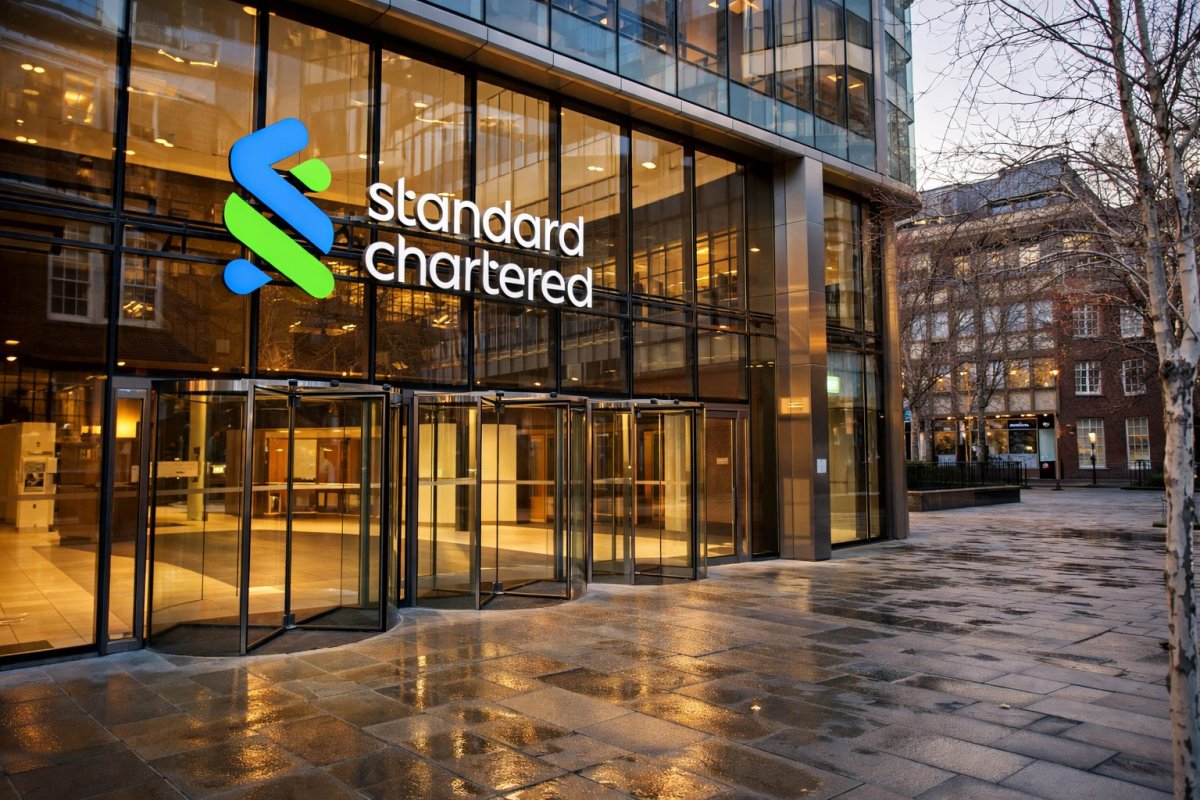
Standard Chartered PLC has entered into a strategic partnership with institutional cryptocurrency liquidity provider B2C2, aiming to enhance and streamline institutional access to digital asset markets. The collaboration is designed to integrate B2C2's client base directly with Standard Chartered's core banking payment and settlement infrastructure, commonly referred to as "banking rails." This move seeks to facilitate faster and more regulated "fiat-to-crypto" conversions, where traditional government-issued currencies are exchanged for digital assets and vice versa, with the goal of reducing transactional friction and improving settlement reliability.
Expanding Institutional Infrastructure
The agreement positions B2C2 to provide its clientele—which includes asset managers, hedge funds, corporations, and family offices—with prospective direct connectivity to the bank's systems. B2C2 will also continue to supply liquidity across spot and options crypto markets, aiming to enable large-scale trading without causing significant price disruptions. Luke Boland, Standard Chartered's Asia fintech head, characterized the partnership as a "regulated, scalable market linkage" that maintains execution quality and risk management standards.
Thomas Restout, CEO of B2C2, described Standard Chartered as an "ideal strategic counterpart," noting the joint effort to "build a durable connectivity layer" between traditional finance and the digital asset ecosystem. B2C2, which is majority-owned by Japan's SBI Holdings, offers round-the-clock execution services for institutional clients. However, neither firm disclosed a specific launch timeline for the direct connectivity feature or detailed which geographic markets will be included in the initial rollout.
Market Context and Recent Performance
This announcement follows a period of active engagement by Standard Chartered in the digital asset space. In July 2025, the bank's UK entity launched a trading service for institutional clients, starting with deliverable spot trades in Bitcoin and Ether, and signaled intentions to introduce cash-settled non-deliverable forwards. The bank is also active through its subsidiaries, Zodia Markets and Zodia Custody.
The broader banking sector is increasingly shaping crypto trading to align with traditional finance standards, emphasizing tighter controls and stronger regulatory links. Standard Chartered highlighted that institutional adoption has accelerated notably in Asia and other regions. Meanwhile, the bank's U.S.-traded American Depositary Receipt (ADR) saw volatile price action recently, rising 1.37% on February 11, 2026, before declining 5.08% on February 12, as per Investing.com data.
Strategic Implications and Industry Trends
The partnership underscores a significant industry trend where established financial institutions are building bridges to the digital asset world by leveraging their trusted settlement networks. For clients, the alliance promises a more streamlined, regulated pathway that may circumvent the need to interact directly with crypto exchanges at every stage of a transaction. For B2C2, it represents an opportunity to embed its liquidity services within a global bank's established financial plumbing.
Nevertheless, the path forward is not without challenges. Cryptocurrency markets remain inherently volatile, regulatory frameworks continue to evolve unevenly across jurisdictions, and banks must operate within strict regulatory timelines. The existence of a partnership agreement does not guarantee seamless cross-border operational connectivity. The success of this initiative will depend on navigating these complexities while meeting the demanding requirements of institutional investors for security, compliance, and efficiency.