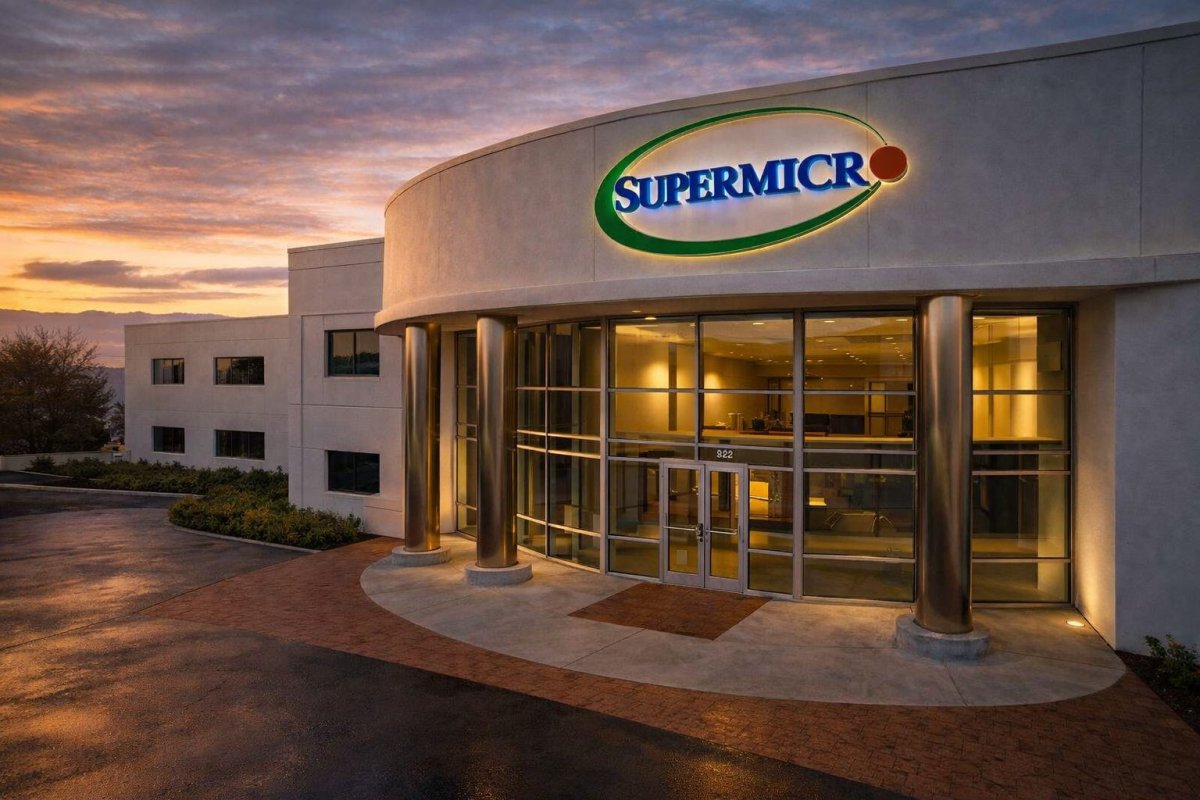
Shares of Super Micro Computer experienced a dramatic selloff on Friday, March 20, 2026, closing down 33.2% at $20.53. The steep decline followed the announcement that United States prosecutors have filed charges against the company's co-founder, Yih-Shyan "Wally" Liaw, and two other individuals for allegedly orchestrating a scheme to illegally funnel approximately $2.5 billion worth of advanced artificial intelligence servers to China.
The Justice Department alleges that Liaw, along with sales manager Ruei-Tsang Chang and contractor Ting-Wei Sun, diverted servers through a Southeast Asian intermediary during 2024 and 2025. The hardware was reportedly routed through Taiwan and Southeast Asia before reaching its final destination in China. Prosecutors highlighted a particularly intense period in late April to mid-May 2025, during which at least $510 million in servers were redirected using this method.
This case centers on U.S. export controls, which are government regulations requiring approval before shipping sensitive technology overseas. These rules were significantly tightened in 2022 as Washington increased efforts to restrict exports of advanced AI chips and servers to China, citing concerns that such hardware could enhance Beijing's military capabilities and accelerate its artificial intelligence development programs.
In response to the charges, Super Micro Computer stated it is not a defendant in the case and has cooperated with investigators. The company placed Liaw and Chang on administrative leave and terminated its relationship with contractor Sun. Super Micro emphasized that the alleged actions directly violate its internal compliance protocols and company policies. Following the market close, the company announced Liaw's immediate resignation from its board of directors.
The company moved swiftly to bolster its governance, appointing DeAnna Luna as its acting chief compliance officer. Luna joined Super Micro in 2024, bringing prior experience in trade compliance from roles at Intel and Teledyne. The appointment was disclosed in a filing with the Securities and Exchange Commission on March 20.
Market reaction extended beyond Super Micro. Traders identified potential beneficiaries from the turmoil, with shares of competitor Dell Technologies rising 0.8% to $157.67. Analysts suggested Dell, with its scale and close partnership with chipmaker Nvidia, could gain market share. Nvidia itself slipped 3.1% amid a broader technology sector decline. Analysts from Gabelli Funds and Melius Research noted that Super Micro now faces heightened risks, including further investigations, potential audit costs, and significant reputational damage that could affect customer trust.
The situation presents substantial ongoing risks for Super Micro. While the company itself has not been charged, it faces the threat of a broader compliance review, increased scrutiny from suppliers, and the potential for skittish customers to delay or cancel orders. In its 2025 annual report, the company had already flagged issues such as late filings, ongoing efforts to fix internal controls, and the risk of negative headlines as threats to both its business operations and customer confidence.
Super Micro's stock had been a standout performer during the AI investment boom, with its market capitalization reaching $67 billion in 2024. However, the shares had already been under pressure due to margin concerns and questions about business credibility before Friday's crash. The latest developments force investors to re-evaluate the company's robust order book—heavily tied to demand for Nvidia-based systems—against this severe new blow to its reputation and regulatory standing.
The selloff moderated slightly in after-hours trading, with the stock recovering roughly 2%. Nonetheless, the event marks a critical juncture for a key player in the AI infrastructure supply chain, highlighting the complex geopolitical and regulatory challenges facing the technology sector. The company's recently updated fiscal 2026 revenue forecast of at least $40 billion, announced just last month, is now under a cloud of uncertainty as the legal and operational fallout unfolds.