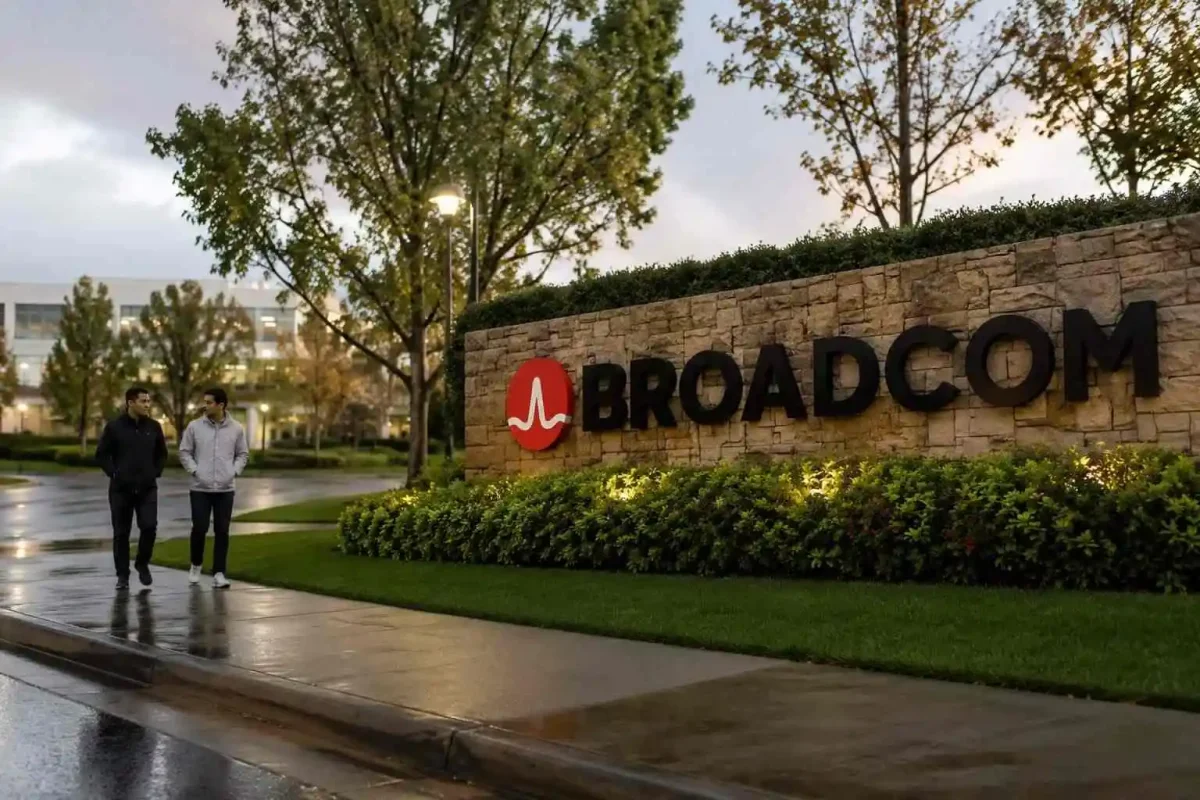
A consortium of leading technology companies, including Broadcom (AVGO), Meta Platforms (META), Applied Materials (AMAT), GlobalFoundries (GFS), and Synopsys (SNPS), has committed $125 million to establish a new semiconductor research center at the University of California, Los Angeles (UCLA). The initiative, announced by the UCLA Samueli School of Engineering, aims to accelerate the development of custom artificial intelligence chips, a critical area as demand for specialized silicon grows.
Focus on Custom AI Silicon
The five-year hub will support doctoral research and provide year-long internships at the founding firms, fostering collaboration between academia and industry. This investment underscores the increasing importance of application-specific integrated circuits (ASICs) as tech giants seek to reduce costs and power consumption in AI data centers. Broadcom, in particular, has emerged as a key player in the custom chip market, with its ASIC business gaining traction among hyperscalers.
Market Context and Key Partnerships
Meta's involvement is notable, as the social media giant expanded its partnership with Broadcom in April, agreeing to co-develop next-generation MTIA chips—Meta's in-house accelerators for AI training and inference. The deal, which begins with over 1 gigawatt of custom silicon, runs through 2029. This collaboration is part of Meta's strategy to diversify its chip suppliers and reduce reliance on Nvidia (NVDA), which remains the dominant AI accelerator provider.
Pre-market trading saw Broadcom shares flat at $414.14, while Meta gained approximately 0.5%. Nvidia slipped 1.9%, reflecting ongoing market dynamics in the AI chip sector.
Industry and Academic Collaboration
The UCLA hub will integrate chip design, software, manufacturing, equipment, and advanced materials, creating what Broadcom's Charlie Kawwas described as a "comprehensive ecosystem." Meta's Yee Jiun Song highlighted that the center will tackle challenges from energy-efficient design to advanced packaging. UCLA Chancellor Julio Frenk emphasized that semiconductors are "critical to economic vitality and national security," while Applied Materials CEO Gary Dickerson noted the growing need for closer industry-academia ties as chip complexity increases.
Long-Term Implications
Broadcom's investment adds to a series of custom-silicon agreements. In March, the company forecast over $100 billion in AI chip sales by 2027, with analysts pointing to customers like Anthropic and Meta for demand visibility. However, returns from such research hubs may take time, as they focus on long-term innovation rather than immediate revenue. Broadcom's next earnings report, due June 3, will test whether its AI chip revenue—forecast at $10.7 billion for the fiscal second quarter—matches market expectations.
AMD (AMD) also plans to sell up to $60 billion in AI chips to Meta over five years, highlighting the competitive landscape. Matt Britzman, senior equity analyst at Hargreaves Lansdown, noted that Meta is diversifying to avoid chip bottlenecks, a prudent strategy in a supply-constrained market.