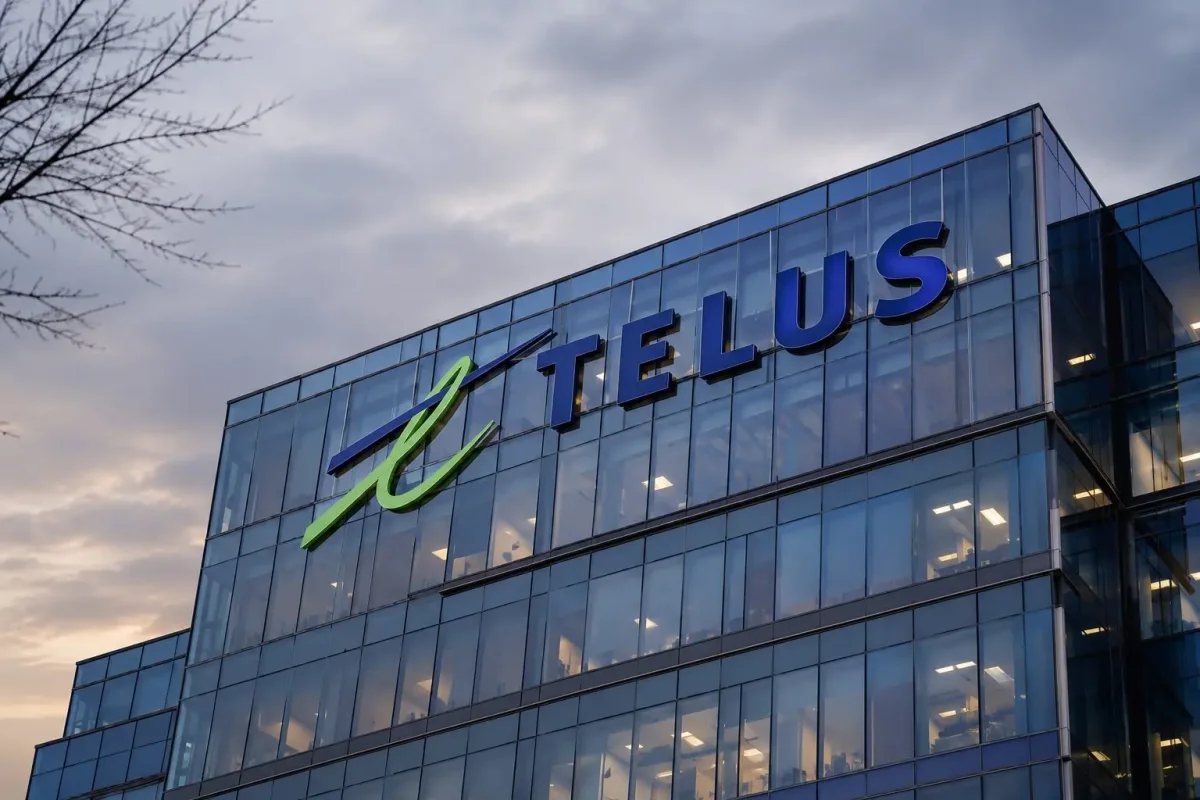
TELUS Corporation (TSE:T) saw its shares slide to a fresh 52-week low on Thursday, the first trading day under new CEO Victor Dodig. The stock fell 1.77% to CA$14.74 by late morning, after touching CA$14.71 earlier in the session. The broader S&P/TSX Composite Index edged up 0.24% during the same period, offering little support for the telecom giant.
The decline comes as TELUS handed out its regular quarterly dividend of CA$0.4184 per share on Thursday, bringing the annualized payout to CA$1.6736 per share. With approximately 1.57 billion shares outstanding, the gross annual dividend amounts to roughly CA$2.63 billion, before any participation in the dividend reinvestment plan (DRIP). The stock's dividend yield now stands at 11.36%, according to Google Finance.
This yield gap is a key focus for investors. TELUS's dividend yield is nearly double that of BCE Inc (TSE:BCE), which offers about 5.73%, and more than two-and-a-half times the 4.39% yield of Rogers Communications Inc (TSE:RCI.B). Quebecor Inc (TSE:QBR.B) lags further behind at 2.37%. The elevated yield reflects market concerns about the sustainability of TELUS's payout, given the company's ongoing efforts to reduce leverage and the board's decision to pause dividend growth in December 2025.
Victor Dodig took over as president and CEO on July 1, following the retirement of Darren Entwistle after 26 years at the helm. Dodig, who joined as CEO-designate on May 1, has pledged to "listen, to learn" and operate with "discipline and focus." Gopi Chande also stepped in as CFO on July 1, replacing Doug French after a 30-year tenure. Chande previously led finance at TELUS Digital and TELUS Health and has committed to "strong financial discipline."
The company's financial outlook adds pressure on the new leadership. TELUS reiterated in May that it aims for free cash flow of approximately CA$2.45 billion in 2026, with capital spending of about CA$2.3 billion. In the first quarter of 2026, free cash flow came in at CA$583 million, up 19% year-over-year. However, the company warned that free cash flow running below expectations could limit its ability to invest, reduce leverage, or maintain shareholder payouts.
To help manage cash flow, TELUS rolled out a discounted DRIP in December, with plans to scale back the discount through 2028. The company expects the cash dividend coverage ratio to be around 75% of free cash flow. The board has also paused dividend growth, stating that increases will resume only when the share price better reflects growth prospects. There is no guarantee that semi-annual increases will return or that any dividend growth program will continue through 2028.
The broader market provided little relief on Thursday. The S&P/TSX Composite was up 0.2% in late morning trading, supported by gains in gold miners following weaker-than-expected U.S. job data. Michael Dehal, senior portfolio manager at Dehal Investment Partners at Raymond James, noted that the data pointed to some labour-market softness but was "nothing too alarming right now."
For TELUS, the new leadership faces an immediate challenge: balancing the high dividend yield with the need to cut leverage and invest in growth. With the stock trading just pennies above its 52-week low, investors are watching closely to see how Dodig and Chande navigate these competing priorities.