TeraWulf Inc. (NASDAQ:WULF) saw its shares decline 5.3% on Friday, closing at $21.97, as the market reacted to the company's plans to secure approximately $3.5 billion in debt financing for its Kentucky-based AI data center project, which is backed by a lease with Anthropic.
The financing requirement has raised concerns among investors, given TeraWulf's already leveraged balance sheet. As of March 31, the company held $2.63 billion in cash against $5.29 billion in debt and convertible securities, measured at book value. Interest expenses in the first quarter reached $67.1 million, nearly double the $34.0 million in revenue generated during the same period. The proposed $3.5 billion raise would represent roughly two-thirds of its existing debt and 1.3 times its cash holdings.
According to Bloomberg News, the company is considering a financing package that could combine its first leveraged loan with high-yield bonds, with Morgan Stanley (NYSE:MS) potentially leading the effort. Leveraged loans are typically extended to companies with significant debt, while high-yield bonds offer higher returns to compensate for increased risk.
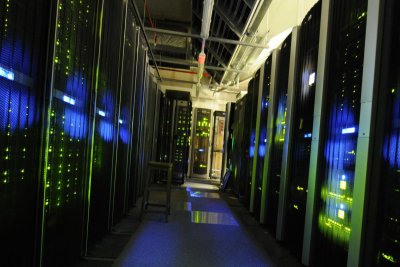
TeraWulf's Justified Data campus is expected to deliver approximately 401 megawatts of critical IT load, with electricity dedicated to computing equipment. The project is slated to come online in phases starting in the second half of 2027 through early 2028. The 20-year lease with Anthropic is anticipated to carry investment-grade credit support. CEO Paul Prager described the deal as validating the company's strategy and establishing a long-duration revenue stream.
A closer look at the project's economics reveals key metrics: the proposed debt financing amounts to about $8.73 million per megawatt, while the contracted lease revenue totals roughly $19 billion over 20 years, or $950 million annually. This translates to simple annual revenue of about $2.37 million per megawatt before operating costs, interest, or taxes. The contracted revenue-to-debt ratio stands at approximately 5.4 times, though this does not account for the timing of payments. The average gross rent needed to equal the debt is about 3.7 years, which is not the same as the project's payback period.
Market reaction to the financing news has been notable. WULF's stock ended the week just 3.7% above its July 2 close, prior to the lease announcement, and was 12.6% below Monday's intraday high of $25.15. Trading volume on Friday reached approximately 30.4 million shares, representing 41% of the 74.7 million shares that changed hands on the day the news broke. TeraWulf underperformed compared to other miners with strong power assets viewed as AI infrastructure plays, including IREN Ltd. (NASDAQ:IREN), Core Scientific Inc. (NASDAQ:CORZ), and Riot Platforms Inc. (NASDAQ:RIOT), which slipped an average of 1.7% on Friday. WULF ended the session roughly 3.7 percentage points below those peers.
The company is exploring at least one funding offset. TeraWulf agreed to sell its 50.1% stake in the 168-MW Abernathy data center project to a group led by Fluidstack. The company had invested about $450 million in the Texas project. Management indicated the deal would close at a premium, freeing up capital for other wholly owned campuses.
Several risks remain. Anthropic's rent payments do not begin until each phase becomes operational, and the full 401 MW capacity will not be online until early 2028. Any construction delays would push back cash receipts while interest continues to accrue. The terms of the loan rate, bond yield, collateral requirements, and whether lenders can pursue assets outside the project have not been disclosed. Cost overruns or tighter credit conditions could necessitate additional equity or reduce shareholder cash flows.
For now, WULF trades more like a financed construction project than a completed $19 billion cash generator. The next catalyst will likely be the details of the debt terms. Each percentage point on $3.5 billion in debt would add roughly $35 million in annual interest expense before principal payments.