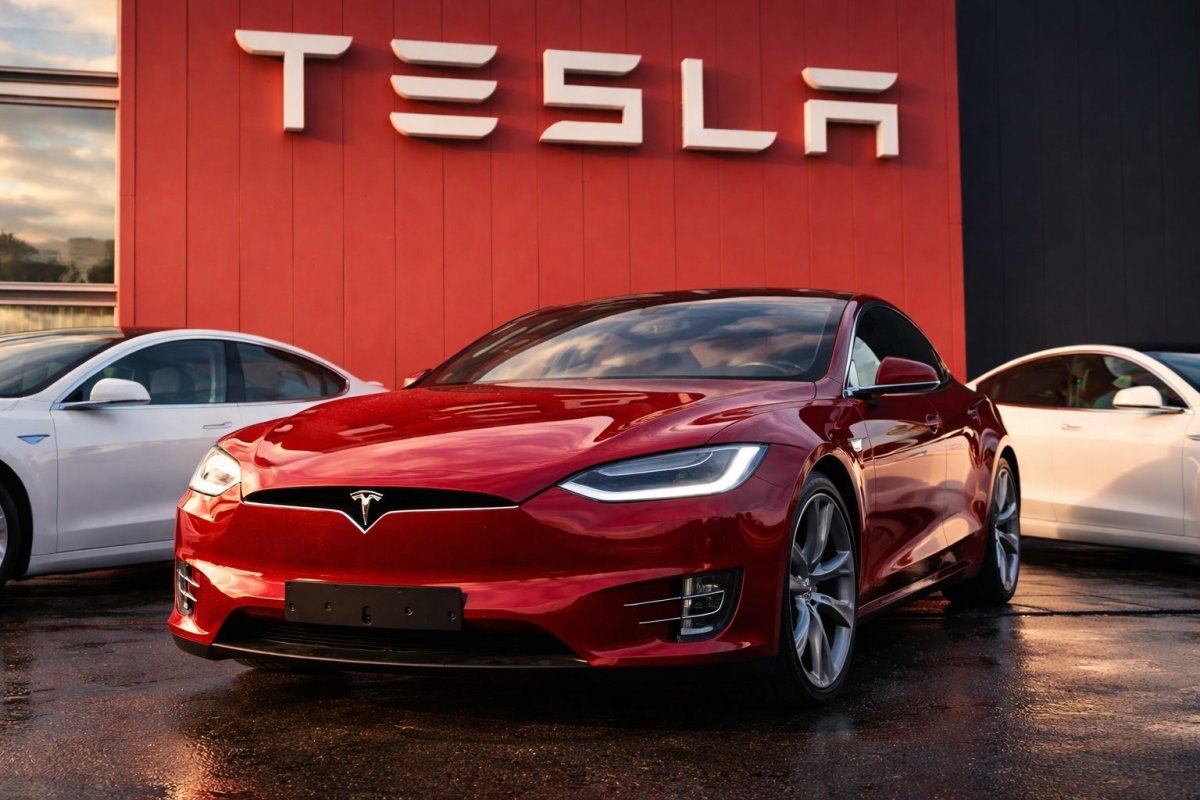
European Union regulatory filings reveal that Stellantis, Toyota, and Subaru will not participate in Tesla's carbon-credit pooling arrangement for the 2026 model year. This marks a significant departure from the previous year, when all three automakers were part of the Tesla-led alliance alongside Ford, Mazda, Honda, Suzuki, and Leapmotor—Stellantis's electric vehicle partner. The filing, dated February 27, 2026, indicates these manufacturers are not currently collaborating with Tesla to collectively meet the bloc's stringent CO2 emissions limits.
Manufacturer Stance and Strategic Shifts
Stellantis has stated it is "not currently participating" in the 2026 pool but has not ruled out joining at a later date. A Toyota spokesperson in Europe indicated that decisions regarding pooling are premature at this stage. The relationship between Toyota and Subaru, where Toyota holds a 21% stake, adds a layer of strategic complexity to their compliance planning. Furthermore, questions remain about how Stellantis will account for the electric vehicle sales of its partner, Leapmotor, toward its own EU emissions targets.
Impact on Tesla's Financials
This development carries substantial weight for Tesla. Revenue from regulatory credits—a high-margin, low-cost income stream—has long bolstered the company's financial performance. In 2025, Tesla reported $1.993 billion in automotive regulatory credit revenue, a notable 28% decline from the $2.77 billion recorded in 2024. The company continues to sell these credits globally to other regulated manufacturers needing them for compliance, but the loss of major pool participants signals potential future pressure on this revenue segment.
Regulatory Flexibility and Pooling Mechanics
Brussels has recently provided automakers with more breathing room. A new flexibility rule from the European Commission allows car and van manufacturers to average their CO2 emissions results across the three-year period spanning 2025, 2026, and 2027. This change alleviates the previous pressure to hit strict annual targets individually, reducing the immediate threat of financial penalties for falling short in any single year.
Pooling remains a critical tool for compliance within the EU system. When manufacturers form a pool, the European Commission treats the group as a single entity for regulatory purposes. The collective emissions results of all pool members are assessed together to determine compliance with targets and to calculate any potential "excess emissions" penalties.
Tesla's European Market Context
This filing emerges as Tesla seeks to regain momentum in the European market after a period of challenges. Recent registration data for February shows a mixed recovery: Tesla's registrations surged 55% in France, more than doubled in Portugal, jumped 74% in Spain, and rose 32% in Norway. However, the picture was not uniformly positive, with registrations declining 45% in the Netherlands, 18% in Denmark, and 7% in Italy.
Labor and Operational Challenges
Concurrently, Tesla faces labor unrest at its Gruenheide factory near Berlin. Workers began voting this week on a new works council, with Germany's powerful IG Metall union seeking greater influence. The union's lead candidate, Laura Arndt, stated their issues are "clearly striking a chord with our colleagues." The election process has been marked by legal disputes and sharp exchanges between management and labor representatives.
Investor Perspective and Future Monetization
Analysts note that Tesla's stock valuation has historically incorporated expectations beyond automotive manufacturing, leading investors to scrutinize smaller, non-auto revenue streams like regulatory credits. Shay Boloor, chief market strategist at Futurum Equities, recently noted, "The key signal for 2026 is that Tesla is intentionally trading near-term automotive margin for fleet scale… later to be monetized through autonomy and software." This strategic pivot underscores the company's focus on long-term software and service revenue over immediate regulatory credit income.
Volatile Credit Market Outlook
The outlook for regulatory credits remains inherently volatile. The new averaging rule provides automakers with the flexibility to pause, reassess projections, and potentially delay payments for pooled compliance. Rapid shifts in electric vehicle demand, the introduction of new models, and potential further tweaks to emissions regulations can all swiftly alter the market dynamics. A more relaxed regulatory framework, for now, eases the immediate compliance pressure on traditional manufacturers.