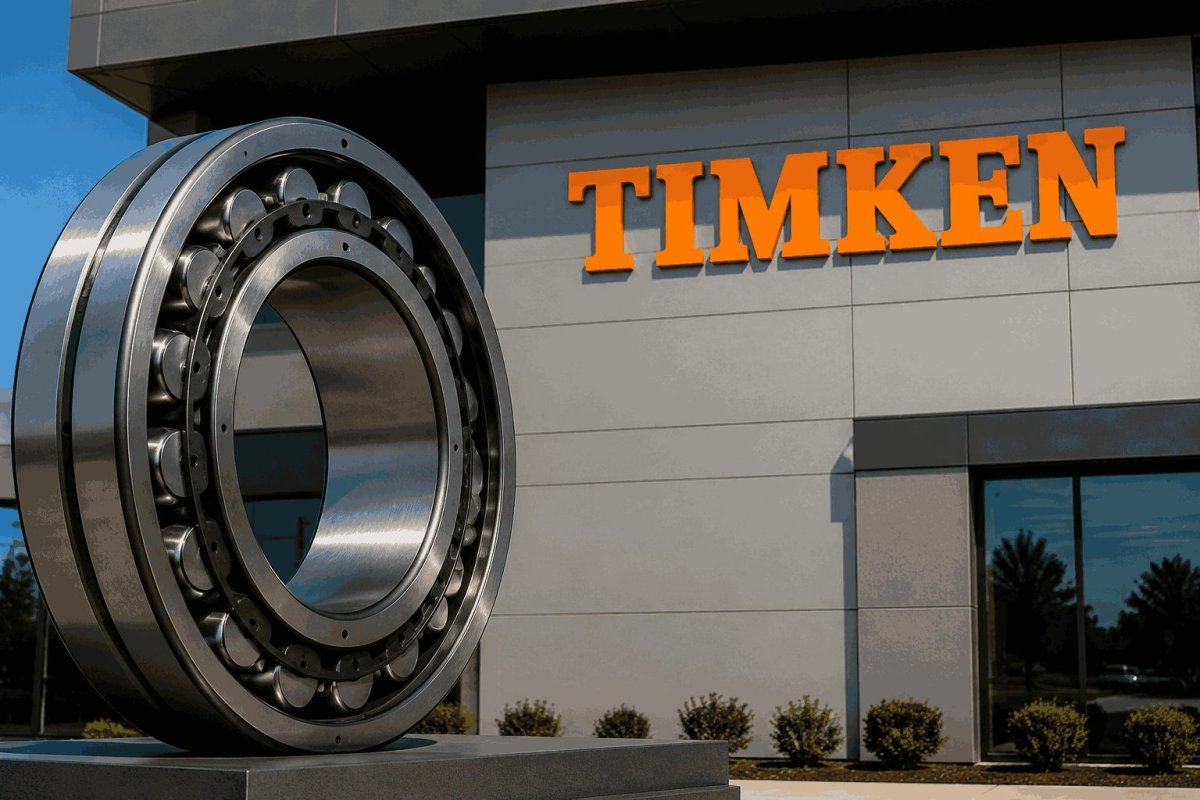
Timken (NYSE: TKR) shares advanced 1% to $131.56 in afternoon trading on Thursday, extending gains beyond the price at which a director recently sold a portion of his holdings. The stock's upward move comes as investors weigh the insider transaction against improved operational performance and a raised earnings outlook for the full year.
According to a filing with the U.S. Securities and Exchange Commission on Tuesday, Director Richard Kyle, a former chief executive officer, sold 13,637 shares on Monday at a weighted average price of $126.63. The transaction generated approximately $1.73 million in proceeds. Despite the sale, Kyle retains 183,724 directly owned shares, meaning the shares disposed of represent only 6.9% of his pre-transaction direct stake. The relatively small proportion of his holdings suggests the sale may be part of routine personal financial management rather than a signal of waning confidence in the company's prospects.
Timken's stock traded at $131.56 as of 2:06 p.m. EDT, approximately 3.9% above Kyle's sale price. The session's range has been $129.29 to $131.69, with volume reaching about 593,000 shares. The stock's resilience above the insider's exit price indicates that the market is focusing on the company's fundamentals rather than the sale itself.
The stronger support for Timken's shares comes from its operations. Last week, the company raised its full-year adjusted earnings guidance after reporting second-quarter adjusted EPS that increased 29% year over year. Organic sales rose 4.4%, while adjusted EBITDA margin expanded by 190 basis points. The second-quarter results showed total sales of $1.261 billion, up 7.5% from $1.173 billion in the same period last year. Adjusted EPS came in at $1.83, compared to $1.42 in the prior-year quarter, and adjusted EBITDA margin improved to 19.6% from 17.7%. Free cash flow also increased to $80.5 million, up 2.9% from $78.2 million a year ago.
Chief Executive Lucian Boldea attributed the strong performance to improving customer demand and disciplined execution. "Our performance during the first half of the year, continued momentum, and disciplined execution framework gives us the confidence to raise our 2026 outlook," he said in a company release.
Management raised the midpoint of its adjusted EPS guidance by 20 cents, or 3.3%, to a range of $6.05 to $6.35. The company also nudged its expected revenue growth higher to about 5.5%, up from approximately 5%. However, the GAAP EPS guidance was lowered to a range of $3.75 to $4.05, down from $4.70 to $5.20, due to an impairment charge related to the planned divestiture of its belts business.
At Thursday's price, Timken trades at approximately 21.2 times the midpoint of 2026 adjusted EPS guidance. The multiple falls to 15.5 times management's roughly $8.50 adjusted EPS target for 2028, implying about 17% annualized EPS growth over the next two years. The company's Industrial Motion segment is expected to be the primary margin driver, with quarterly sales climbing 14.6% and adjusted EBITDA margin reaching 23.3%. Management targets a 25% to 27% margin for this segment by 2028, up from 19% in 2025.
Analyst sentiment remains largely positive. Oppenheimer has an Outperform rating with a $150 price target, while Citigroup, KeyBanc, and JPMorgan all rate the stock Buy/Overweight with $160 targets. Goldman Sachs is Neutral with a $142 target. The S&P Global consensus is Buy with an average target of $144.91, implying roughly 10% upside from current levels. However, the range of targets, from $129 to $160, shows that some analysts are cautious, with the bottom target sitting below Thursday's price.
Risks to the thesis include potential weakness in industrial demand, tariff impacts, raw material costs, and acquisition integration challenges. The second quarter included an $8 million tariff-refund benefit, which may not be repeated. If organic growth fails to sustain, the current earnings multiple could become harder to defend.
Overall, Kyle's sale is notable but not decisive. He retained the majority of his direct stake, and the stock has moved above his exit price. The larger test for Timken is whether it can convert its raised 2026 outlook into the 17% annualized EPS growth implied by its 2028 target. With a solid operational quarter and improved guidance, the company appears to be on track, but investors will be watching closely for continued execution.