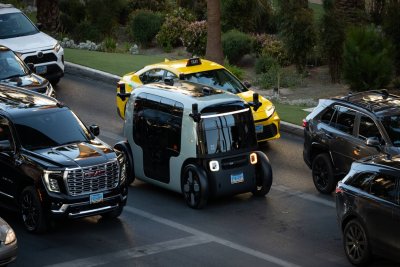
The National Highway Traffic Safety Administration (NHTSA) has opened an investigation into 16 crashes involving autonomous vehicles operated by Avride, several of which were deployed on Uber Technologies Inc.'s ride-hailing platform. The probe casts a shadow over Uber's strategy to expand its robotaxi ambitions through partnerships rather than in-house development.
According to NHTSA's Office of Defects Investigation, the incidents involved Avride vehicles struggling with lane changes, reacting to vehicles ahead, and navigating stationary obstacles. All crashes occurred with a safety monitor seated in the driver's seat, and one resulted in a minor injury. The review highlights potential shortcomings in how Avride's autonomous systems handle real-world road conditions.
Uber has been positioning robotaxis as a key growth driver, with CEO Dara Khosrowshahi emphasizing a vision where autonomous vehicles complement human drivers rather than replace them overnight. However, the company's approach of partnering with third-party developers like Avride rather than building its own driverless technology limits its operational control. Andrew Macdonald, Uber's president and chief operating officer, recently acknowledged that the industry is sidestepping some hard questions in its push toward autonomy, as reported by Axios.
The timing of the probe is particularly sensitive. Uber recently issued second-quarter gross bookings guidance in the range of $56.25 billion to $57.75 billion, reflecting the pre-deduction value of rides, delivery, and other platform activity. First-quarter trips increased 20% year-over-year, underscoring robust demand. Adam Ballantyne, senior analyst at Cambiar Investors, described the outlook as signaling durable demand, though Uber warned that the Middle East conflict could shave about 60 basis points off growth in the current quarter.
Uber shares closed Friday at $75.45, down 1.7%, giving the company a market capitalization of approximately $156.3 billion. The stock's performance reflects broader market caution amid the regulatory headwind.
Meanwhile, Lime, the e-bike and scooter company backed by Uber, filed for a U.S. initial public offering. In its S-1 registration, Lime reported 2025 revenue of $886.7 million, up from $686.6 million the prior year, and disclosed that its partnership with Uber contributed 14.3% of its 2025 revenue. Lukas Muehlbauer, an associate at IPOX Research, told Reuters that Lime's filing points to a better IPO market and a company showing renewed strength. However, Lime also flagged substantial doubt about its ability to continue as a going concern unless IPO proceeds or new financing materialize, citing hefty debt and note payments due by the end of 2026.
Uber's platform continues to diversify beyond ride-hailing and food delivery. On May 7, the company announced that more than 1,500 Ulta Beauty stores had joined Uber Eats, expanding its retail footprint. Hashim Amin, who oversees Uber's grocery and retail business in North America, said variety and flexibility are top priorities for beauty shoppers. Competitors are also showing strength: Lyft's second-quarter outlook for bookings and adjusted core profit beat analyst targets, while DoorDash guided marketplace gross order value above expectations, buoyed by growth in grocery, retail, and international segments.
The safety probe could slow regulatory approvals for new robotaxi fleets in cities, potentially delaying Uber's timeline for scaling autonomous operations. As the industry watches closely, Uber's partnership model faces its first major test under regulatory scrutiny.