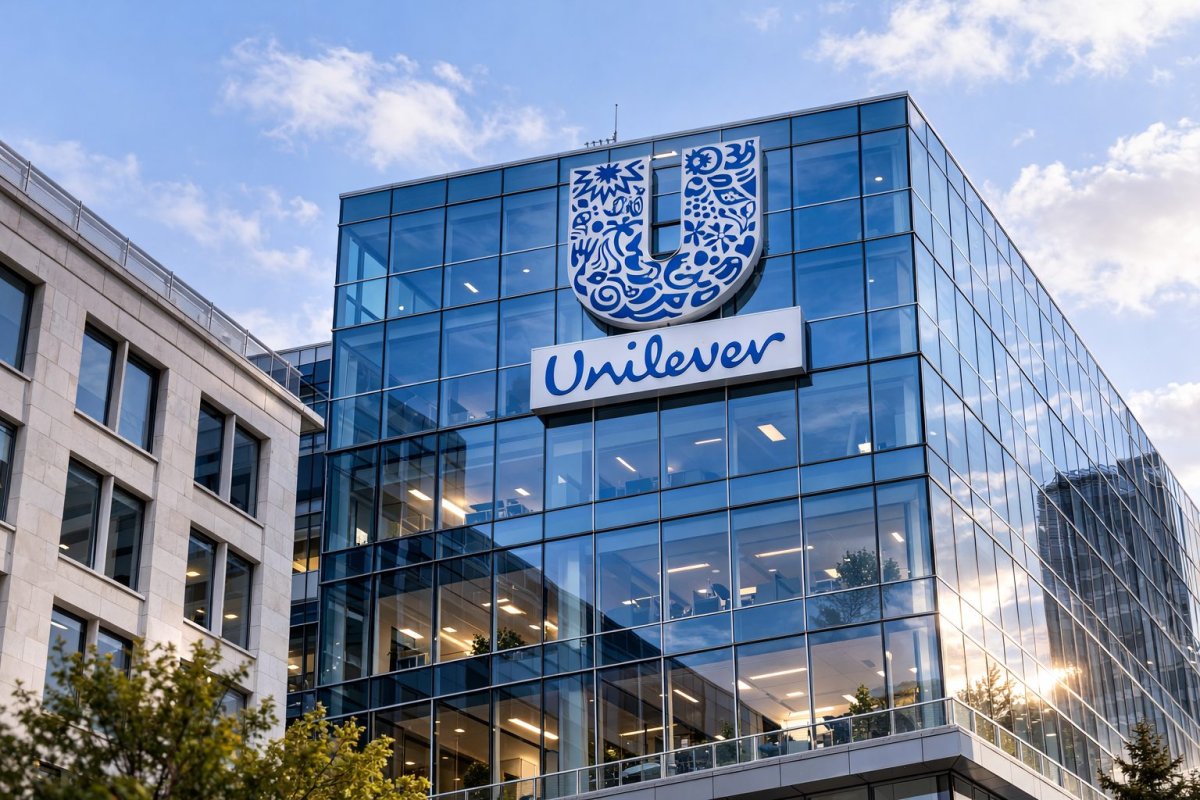
Shares of Unilever (ULVR.L) experienced a slight decline in London trading, closing at 5,320 pence, a decrease of 8 pence from the previous session. The movement comes amid a shift in sentiment from financial analysts and strategic announcements from the company's key operations.
Strategic Push in India
The company's Indian subsidiary, Hindustan Unilever, has unveiled a substantial investment plan, committing up to 20 billion rupees (approximately $220.54 million) over the next two years. The capital is earmarked for expanding manufacturing capacity, specifically within premium product categories where consumer demand remains robust. This move occurs even as competitive pressures continue to squeeze profit margins in the region. The Indian market has seen a notable rise in direct-to-consumer (D2C) personal care brands, a trend that industry consultant Akshay D'Souza suggests will lead to further market consolidation. Hindustan Unilever has been active in this space, having acquired skincare brand Minimalist last year and recently moving to purchase the remaining 49% stake in plant-based nutrition company Oziva for 8.24 billion rupees.
Revised Guidance and Capital Return
In a recent update, Unilever's management indicated that underlying sales growth for the full year 2026 is now expected to land at the lower end of its previously stated 4% to 6% target range. This revision is attributed to a noticeable slowdown in key markets, including the United States and Europe. Concurrently, the multinational behind brands like Dove and Hellmann's announced a new share buyback program valued at 1.5 billion euros. The company also projected a modest improvement from the 20% operating profit margin reported for 2025.
Analyst Sentiment Cools
Brokerage firms have recently adopted a more cautious stance on Unilever's stock. This week, analysts at Kepler Cheuvreux, Berenberg, and DZ Bank all downgraded their ratings from "buy" to "hold." Their revised price targets predominantly cluster in the mid-5,000 pence range. Berenberg's analysis noted that much of the positive narrative surrounding Unilever's ongoing corporate turnaround is already reflected in the current share price. The bank highlighted that the stock trades at a 12-month forward price-to-earnings (P/E) ratio of 19.6 times, which is roughly 17% above its own five-year historical average. This valuation also places Unilever at a premium compared to other global consumer staples peers such as Nestlé and Procter & Gamble. Potential risks flagged include foreign exchange volatility impacting reported earnings, intensifying competition, and the possibility of earnings dilution if the company divests additional assets.
Insider Trading Activity
A regulatory filing disclosed that Unilever's Chief Research & Development Officer, Richard Slater, sold 18,486 ordinary shares on the London Stock Exchange on February 17. The transaction, executed at a price of £54.137945 per share, resulted in proceeds of nearly £1.0 million.
New Leadership Direction
Since taking the helm, CEO Fernando Fernandez has begun to outline his strategic priorities for the company. Investors are closely parsing his early public comments, particularly his emphasis on adopting a more aggressive, digitally-native marketing approach. In an interview with Marketing Week, Fernandez stated his conviction that the era of large-scale, corporate-brand messaging is over, signaling a pivot towards leveraging social media and content creators to engage consumers.
Market participants are now looking ahead to Unilever's next scheduled update, a first-quarter 2026 trading statement due on April 30. Key areas of focus will include evidence that sales volumes are holding steady and whether strategic initiatives like premium product expansion and e-commerce are beginning to generate more predictable, sustainable growth for the portfolio.