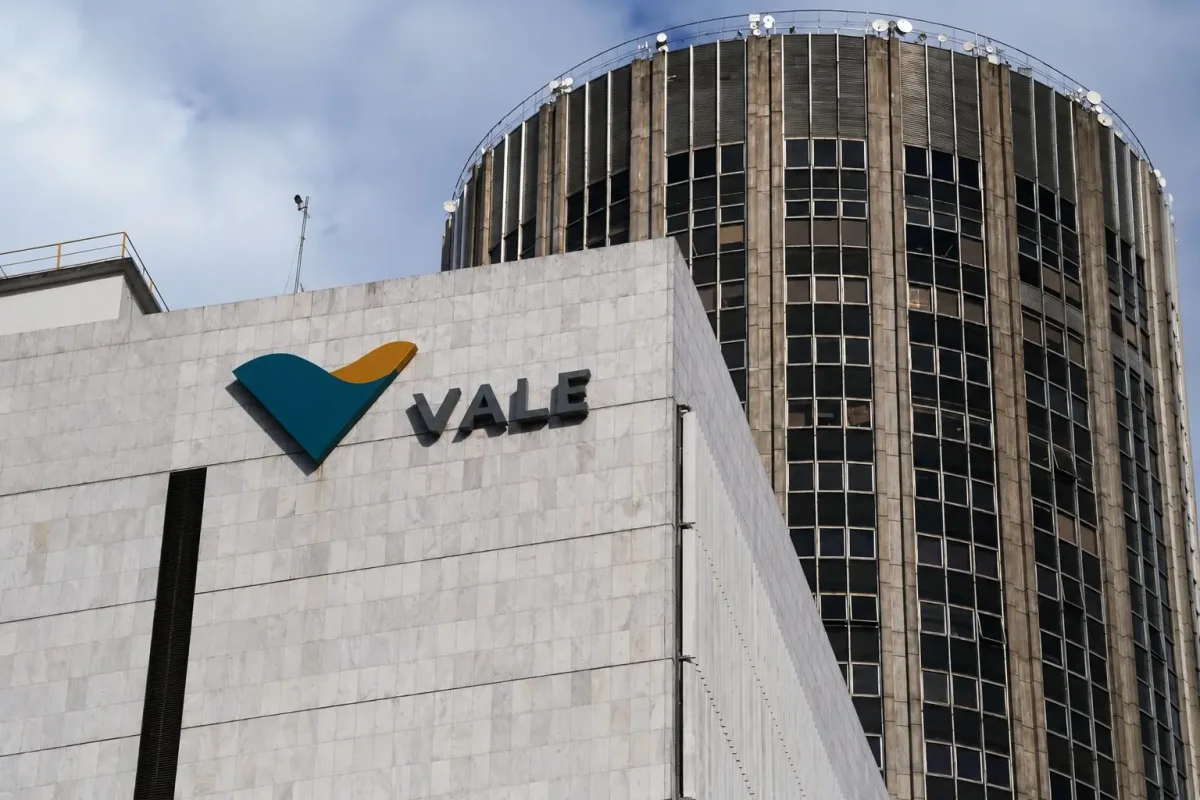
Shares of Vale (VALE3) closed at R$83.50 on Friday, gaining 0.76% on the day, while Brazil's benchmark Ibovespa index slipped 0.61% to 177,284 points. For the week, Vale's stock advanced approximately 2.5%, contrasting sharply with the broader market's decline of around 3.7%.
The miner's resilience reflects a strong tailwind from iron ore prices, which traded near $110.77 per tonne on May 15—close to their 52-week high of $111.42. This price support has boosted expectations for Vale's cash generation, even as Brazilian equities have come under pressure.
On May 12, Vale informed U.S. regulators that its Iron Ore Solutions segment is expected to deliver roughly $1.5 billion in additional free cash flow in 2026, citing improved market conditions following the Middle East conflict. The projection includes about $1.2 billion from stronger EBITDA, a key measure of operating performance used by the company.
Vale's first-quarter net profit rose 36% year-over-year to $1.89 billion, though it missed the $2.05 billion consensus estimate from analysts surveyed by LSEG. Adjusted EBITDA came in at $3.83 billion, up 23% but also below forecasts. CEO Gustavo Pimenta described the quarter as "a solid start to 2026."
China remains a critical demand driver for Vale, accounting for $4.37 billion of the company's $9.26 billion in net operating revenue in the first quarter. The stock continues to track Chinese steel demand closely, with China's influence now directly impacting Vale's bottom line rather than merely serving as a macroeconomic narrative.
In a notable competitive milestone, Vale produced 336.1 million metric tons of iron ore in 2025, surpassing Rio Tinto's Pilbara output for the first time since 2018. However, Rio's total iron ore production, including its Canadian operations, remained slightly higher than Vale's.
Vale is also investing in cost-saving measures, aiming to expand its fleet of sail-equipped iron ore carriers to at least 20 within three years—more than doubling the current number. The initiative is designed to reduce fuel consumption on routes to Asia. Rafael Fischer, Vale's general manager for shipping, told Reuters that "energy efficiency" helps mitigate exposure to volatile bunker-fuel prices and offsets what he called a "geographic disadvantage" versus Australian miners.
Risks remain, however. China's property-driven construction cycle continues to struggle, with ongoing declines in real estate investment pressuring steel and building materials demand. Vale noted that a stronger Brazilian real and higher costs weighed on first-quarter results, meaning any further drop in iron ore prices or currency appreciation could quickly squeeze cash flow.
Investors will be watching Vale's stock closely this week to see if it can maintain its divergence from the Ibovespa. Key factors to monitor include iron ore prices near $110 per tonne, Chinese demand trends, fuel costs, the Brazilian real's trajectory, and Monday's order book in São Paulo.