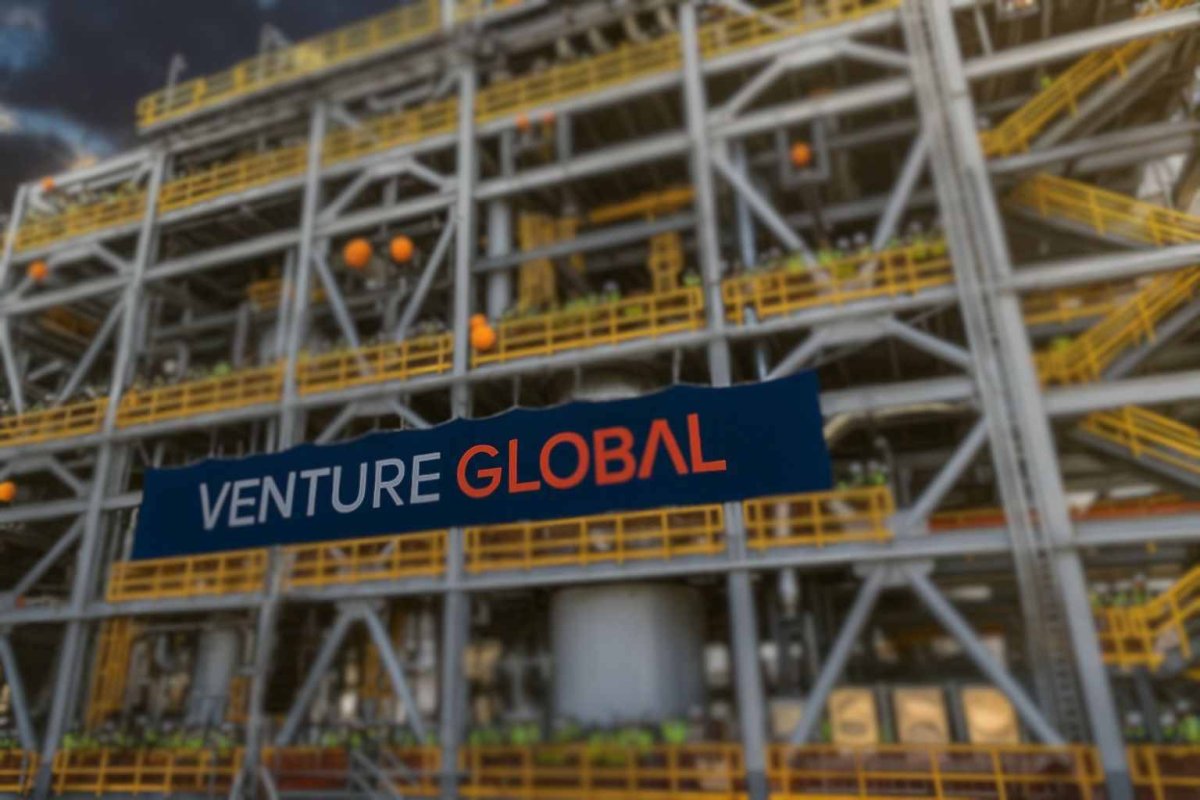
Shares of Venture Global, a leading U.S. liquefied natural gas exporter, moved lower on Wednesday, relinquishing earlier gains as geopolitical developments prompted a broad pullback in energy markets. The stock closed down 67 cents at $15.93, retreating from an intraday peak of $16.61 reached earlier in the session.
The reversal coincided with a decline in crude oil benchmarks, which softened following reports that the United States had presented a ceasefire proposal to Iran. This news tempered the risk premium that had bolstered energy commodities amid ongoing regional tensions. Venture Global's stock often acts as a key indicator for LNG market sentiment due to its unique operational profile.
A defining characteristic of Venture Global is its substantial exposure to volatile spot market pricing. Approximately 31% of the company's projected 2026 production volume remains unhedged, meaning it is not locked into long-term contracts and is instead sold at prevailing market rates. This structure makes the equity particularly responsive to shifts in supply narratives, whether concerning disruptions or potential relief.
This sensitivity was on display just a day prior. Speaking at the CERAWeek energy conference in Houston, Chief Executive Mike Sabel highlighted the company's active efforts to secure "critical cargoes" for global clients, leveraging its flexible supply position. The comments came as the market grapples with potential supply constraints following attacks on Qatari energy infrastructure.
On the commercial front, Venture Global continues to expand its contract portfolio. The company announced a binding five-year agreement with commodities firm Vitol on March 23, committing to supply roughly 1.5 million tonnes of LNG annually starting in 2026. This follows a similar medium-term arrangement with Trafigura reached earlier in March, signaling a strategic pivot toward shorter-duration contracts that offer greater pricing flexibility.
In statements accompanying the Vitol deal, CEO Sabel pointed to "rapidly growing" worldwide demand for adaptable U.S. LNG supply. He emphasized Venture Global's capability to support the market across short-, medium-, and long-term horizons and expressed openness to further short-term engagements.
The company, currently the second-largest U.S. LNG exporter, is pursuing an aggressive expansion strategy. It aims to boost its annual capacity from the current 37 million tonnes to over 85 million tonnes by 2029. This growth is driven by ongoing developments at its Plaquemines and CP2 facilities in Louisiana. Earlier this month, the company sanctioned the second phase of its CP2 project, approving the necessary capital expenditure. Management has stated that upon completion, this project will propel Venture Global to the top position among U.S. LNG exporters.
The broader LNG sector also traded lower. Cheniere Energy, which hedges approximately 94% of its sales via long-term agreements, saw its shares drop about $9.61 to $284.97. NextDecade closed at $7.18, while Sempra Energy edged down to $94.81. Analysts note that new U.S. export capacity linked to these firms, along with Golden Pass, could help offset potential supply shortfalls elsewhere.
Global supply concerns remain acute. Last week, QatarEnergy warned that sustained attacks could force offline roughly 17% of its LNG production capacity for up to five years. Analysts at Wood Mackenzie suggest such a scenario could redirect significant business to alternative suppliers like those in the United States for the coming years. However, they also caution that sustained high prices could erode demand as buyers seek cheaper fuel alternatives.
Market observers warn that the geopolitical risk premium in energy prices could dissipate rapidly. Brent crude futures fell 4.1% on Wednesday as traders reacted to the potential ceasefire proposal. Despite this, analysts at ING cautioned that with the vital Strait of Hormuz effectively closed to normal traffic, it is premature to anticipate a sustained, sharp decline in energy prices.
Company-specific challenges persist for Venture Global. It remains embroiled in arbitration proceedings related to cargo deliveries from its Calcasieu Pass facility. BP recently prevailed in one ruling and is seeking at least $3.7 billion in claims. In a recent note, UBS analyst Manav Gupta cited this "arbitration overhang" as a continuing weight on the stock.
Despite recent volatility, Venture Global shares continue to trade significantly below their January 2025 initial public offering price of $25, having debuted at $24.05. The failure to close this gap reflects persistent investor concerns regarding the tightening global LNG market, project execution risks, ongoing legal disputes, and the substantial financing requirements of the company's multi-billion-dollar expansion plans.