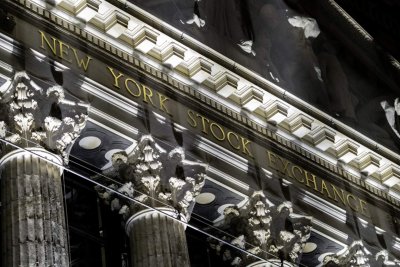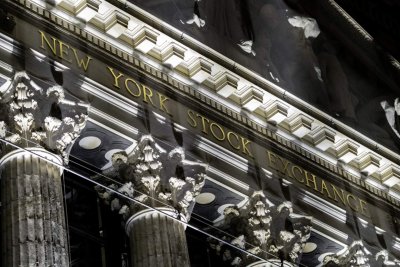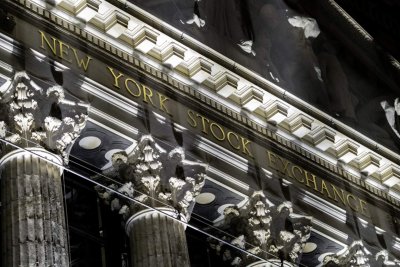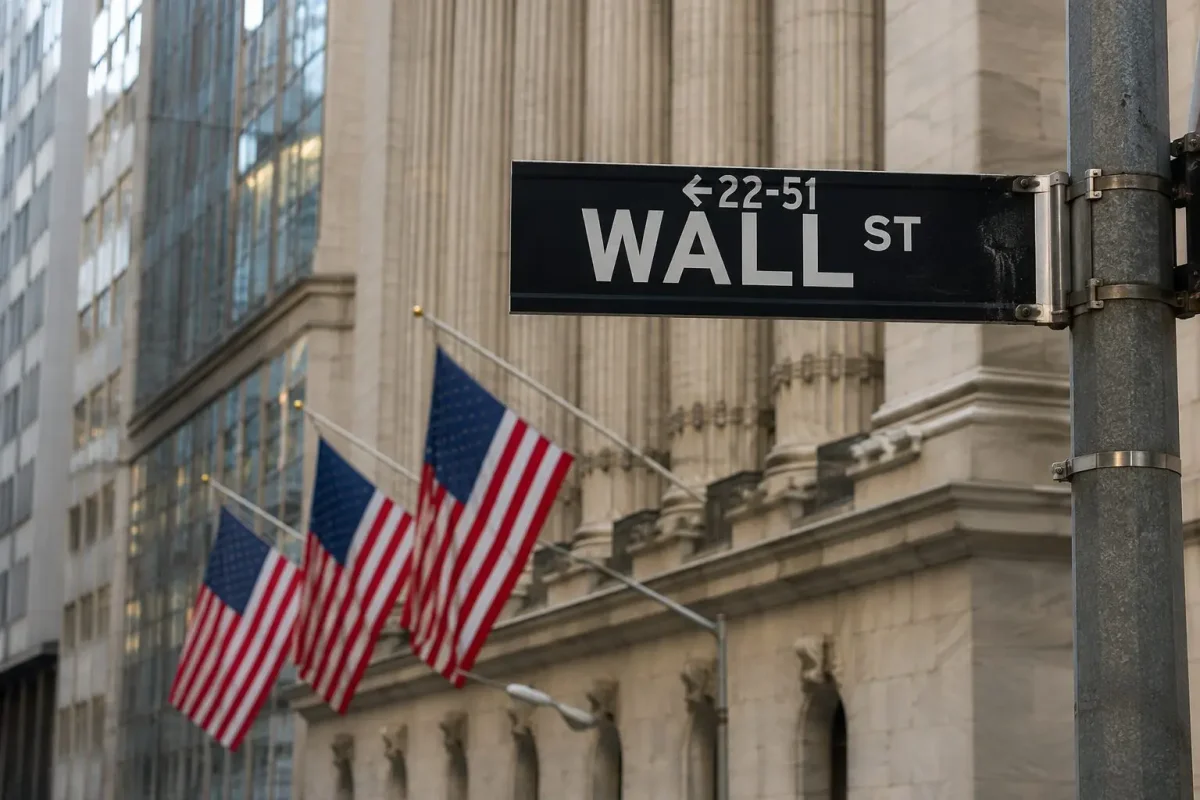
U.S. equities climbed on Wednesday, extending a recent rally as a second consecutive weak inflation report bolstered expectations that the Federal Reserve may soon ease monetary policy. The Dow Jones Industrial Average rose 0.35%, the S&P 500 added 0.25%, and the Nasdaq Composite gained 0.44% as of 11:38 a.m. EDT. However, a notable divergence emerged within the tech-heavy Nasdaq, where the Nasdaq-100, which tracks the 100 largest non-financial companies on the exchange, slipped 0.49%.
The market's breadth was solid, with advancing stocks outnumbering decliners by a ratio of 1.77 to 1, suggesting broad-based buying beyond the mega-cap tech names. The Russell 2000 index of small-cap stocks also advanced 0.42%, reflecting a rotation into more economically sensitive sectors. The S&P 500 is now up more than 10% for the year and trading near its June highs.
Inflation Data Fuels Rate-Cut Expectations
The latest leg of the rally was sparked by the June producer-price index (PPI), which fell 0.3% from the prior month, defying expectations for a flat reading. Core PPI, which excludes volatile food, energy, and trade services, rose a modest 0.1%. This followed Tuesday's consumer-price index (CPI) report, which showed a 0.4% decline in June. The consecutive soft inflation prints have traders pricing in roughly a 10% chance of a Fed rate hike at the next meeting, down sharply from about 42% on Monday.
The 10-year Treasury yield fell to 4.55% as bond markets welcomed the disinflationary signal. New York Fed President John Williams commented that there are “encouraging reasons to expect that inflation has peaked and should edge down in coming quarters.” However, Fed Chair Kevin Warsh cautioned that one good inflation print is not enough to declare victory, especially with oil prices remaining volatile.
Financials Lead on Strong Earnings
The financial sector was a standout performer, with the S&P 500 financials index rising 0.6%. Major money-center banks and asset managers reported robust quarterly results, driven by rising asset values and strong inflows. BlackRock (BLK) shares surged 7.3% after the firm reported assets under management of $15.34 trillion, up from $12.53 trillion a year earlier, and net inflows of $192 billion. Adjusted earnings per share came in at $13.91, well above the $12.59 consensus estimate.
BNY Mellon (BNY) also gained 2.9% after posting adjusted EPS of $2.46 versus a $2.22 estimate. Custody and administration assets climbed 12% to $62.6 trillion, while fee revenue increased 11% to $4.04 billion. CEO Robin Vince said in a statement that “the fundamental drivers of capital markets have been broadly constructive,” with corporate earnings remaining resilient.
Morgan Stanley (MS) shares slipped 0.7% despite record quarterly revenue of $21.35 billion. The bank reported wealth-management assets of $10 trillion and net new assets of $148 billion, more than half of which came from IPO-related stock plan flows. However, the market appeared to favor firms with steady, fee-based income over those with more volatile trading and investment banking revenue.
Oil Prices and Geopolitical Risks
Commodity markets added a note of caution. Brent crude oil briefly touched $86 per barrel on Wednesday amid renewed tensions in the Iran conflict before retreating to $83.37. Energy prices fell 6.4% in June, with gasoline down 12%, accounting for nearly two-thirds of the decline in goods prices. A sustained rise in oil could reverse the recent disinflationary trend and push bond yields higher again, complicating the Fed’s policy path.
Market Outlook
The tape is sending mixed signals. While broader market participation is healthy, with more stocks rising outside the Nasdaq giants, the divergence between the Nasdaq Composite and the Nasdaq-100 suggests that investors are selectively rotating into value and cyclical names. The coming round of earnings reports will be critical in determining whether the current rally can be sustained. For now, the market is betting that inflation is cooling enough to allow the Fed to ease, but any upside surprise in oil or wages could quickly shift the narrative.