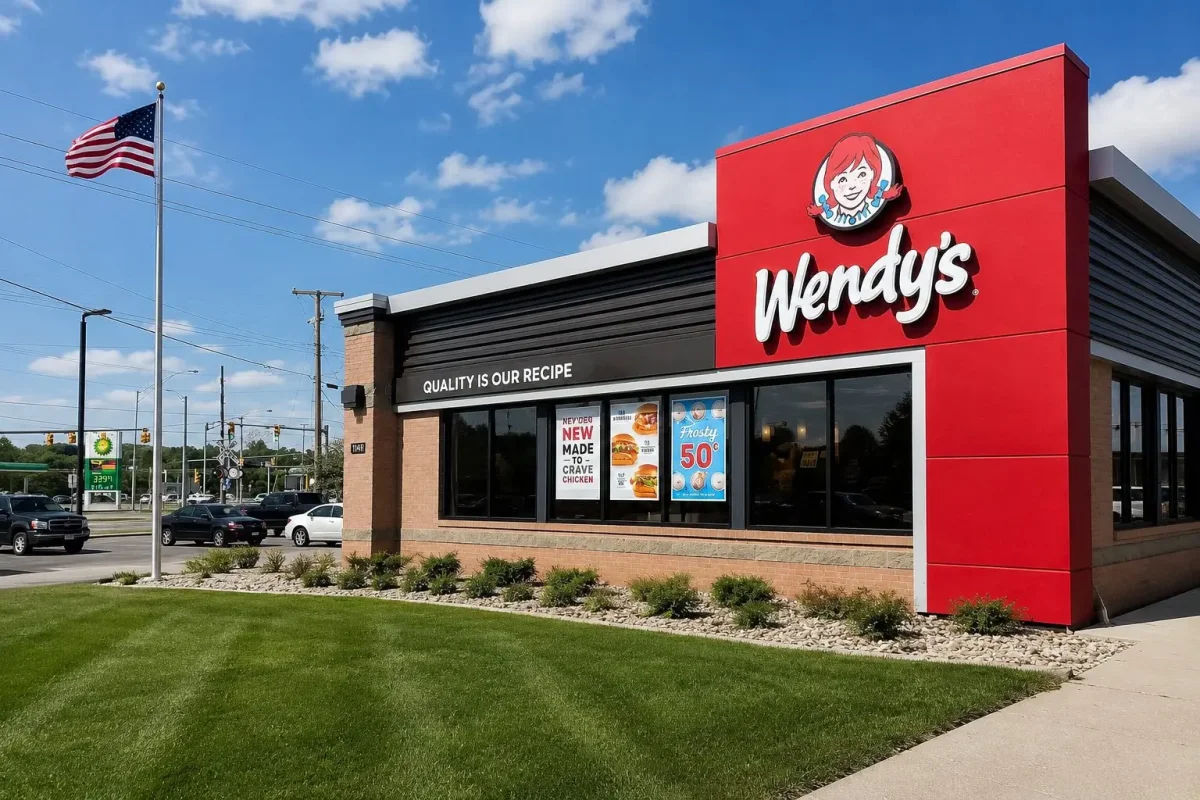
Wendy's (WEN) is navigating a challenging turnaround as new CEO Robert Wright takes the helm amid persistent sales declines and store closures. The fast-food chain reported a 7.8% drop in U.S. same-restaurant sales for the first quarter of 2026, following an 11.3% decline in the fourth quarter of 2025. The weak performance has led Zacks Research to lower its second-quarter earnings per share estimate to $0.17 from $0.18.
New Leadership Faces Immediate Challenges
Robert Wright, who previously led Potbelly and held senior roles at Wendy's, Domino's Pizza, and Charleys Philly Steaks, officially became CEO on May 21. He replaces interim chief Kenneth Cook, who remains CFO. Wright steps in as the Dublin, Ohio-based company grapples with sluggish store traffic, the closure of 164 U.S. locations in Q1 (bringing the total to 5,805), and attention from activist investor Nelson Peltz's Trian Fund Management.
Wendy's shares last traded at $7.81 before the Memorial Day market closure, reflecting investor unease about the company's trajectory.
Project Fresh: A Multi-Pronged Revival Plan
Management has labeled 2026 a "rebuilding year" and is rolling out "Project Fresh," a strategy to revitalize the brand and improve store operations. In Q1, Wendy's introduced $4, $6, and $8 Biggie Deals, revamped its burgers and chicken sandwiches, and installed menu-label printers at approximately 85% of locations to enhance order accuracy. The company expects most of its footprint optimization to conclude by the end of Q2.
"We are taking decisive action to strengthen the Wendy's system and improve performance," Cook told investors. However, Chief Accounting Officer Suzie Thuerk acknowledged ongoing consumer pressure, stating, "We do see continued pressure on the lower-income consumer."
Competitive Pressure Mounts
Wendy's struggles stand in stark contrast to its rivals. McDonald's posted a 3.9% gain in U.S. comparable sales for Q1, while Burger King's parent company, Restaurant Brands International, reported a 5.8% increase. Both competitors leaned heavily on value promotions as Wendy's focused on its reset.
International markets offer a brighter spot: Wendy's global systemwide sales rose 6.0% in Q1, and the company announced a deal to open up to 1,000 locations in China over the next decade. However, this expansion does little to address the immediate U.S. traffic slide.
Analysts Turn Cautious
The turnaround timeline has prompted skepticism on Wall Street. JPMorgan analyst Rahul Krotthapalli downgraded Wendy's stock to "Underweight" this month, cutting the price target to $6. The analyst flagged sliding sales, soft franchise profits, debt, and execution risk as potential obstacles to the recovery plan through 2028.
Wright's challenge is clear: prove that cleaner stores, more accurate orders, lower-priced bundles, and a sharper food pitch can boost traffic without eroding margins. With new management in place, the square-burger chain still needs to demonstrate it can halt the decline and regain its cultural edge in a fiercely competitive market.