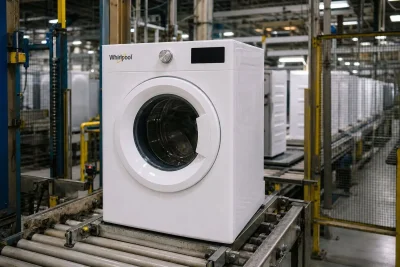
Shares of Whirlpool Corporation (WHR) experienced a dramatic decline of approximately 20% in early trading on Thursday, May 7, 2026, following a series of concerning announcements from the company. The home appliance giant slashed its 2026 profit forecast, suspended its common dividend, and directly attributed a steep downturn in U.S. consumer demand to the ongoing conflict in Iran.
Financial Performance and Strategic Shifts
In its first-quarter earnings report, Whirlpool posted net sales of $3.27 billion, a 9.6% decrease compared to the same period last year. The company reported a GAAP net loss of $85 million, a stark reversal from the $71 million profit recorded in the prior year. Adjusted operating profit, or ongoing EBIT, plummeted to $44 million from $214 million, while ongoing loss per share was 56 cents, compared to earnings of $1.70 per share a year earlier.
To navigate the challenging environment, Whirlpool announced a series of price increases. The company implemented a promotional price hike of over 10% in April and plans an additional list-price increase of approximately 4% in July—the largest single price adjustment from the company in over a decade. These moves aim to offset rising costs and margin pressures but rely on consumer willingness to accept higher prices.
Impact of the Iran War on Demand
Whirlpool chairman and CEO Marc Bitzer pointed to a "rapid deterioration in macroeconomic conditions" as the primary driver behind the company's actions. The conflict in Iran has fueled inflation and heightened concerns over living costs, leading to a sharp decline in consumer confidence, particularly in late February and March. This has directly impacted demand for major household appliances such as washers, refrigerators, and stoves, which are closely tied to home purchases and renovations.
Bitzer also highlighted that adjustments to Section 232 tariffs, rooted in national security law, could benefit domestic producers like Whirlpool, given its U.S.-manufactured product lineup. However, the company faces significant headwinds from rising material costs, intense competition, and potential shifts in foreign trade policy.
Revised Outlook and Financial Flexibility
Whirlpool now forecasts 2026 GAAP earnings per share between $2.45 and $2.95, with ongoing earnings projected in the $3.00 to $3.50 range. Net sales are expected to be approximately $15.0 billion. The company anticipates operating cash flow of about $700 million and free cash flow exceeding $300 million after capital expenditures.
The board of directors has decided to suspend the common dividend, shifting focus toward debt reduction. Whirlpool aims to pay down over $900 million in debt. Chief Financial Officer Roxanne Warner emphasized that inventory reductions, a planned recapitalization, and a projected $2.25 billion asset-based credit line are designed to provide the company with "financial flexibility" during this period.
Regional Performance and Competitive Landscape
North America, Whirlpool's largest market, bore the brunt of the downturn. Revenue in the regional major appliances division dropped 7.5% to $2.24 billion, while EBIT plunged 96% to just $6 million. In contrast, Latin America saw a 5% revenue gain, though EBIT edged lower. Small appliances revenue jumped 13.4%, driven by new product launches.
Tariffs remain a key battleground. Whirlpool estimates that competitors face tariff hits of 10% to 15% of North American major-appliance sales, compared to roughly 5% for Whirlpool. Previous reports have singled out Samsung Electronics and LG Electronics as leading foreign competitors in pricing and tariff disputes.
Risks and Uncertainties
Whirlpool's strategy hinges on consumers absorbing higher prices; otherwise, margin gains could evaporate. The company flagged potential risks including stiff competition, rising material costs, shifting foreign trade policy, and economic uncertainty. If the Iran war continues to drive up energy or household bills, or if housing demand remains weak, consumers may postpone appliance purchases further, exacerbating the company's challenges.