Xanadu Quantum Technologies (XNDU) experienced a sharp rebound on Wednesday, with shares climbing 20.4% to close at $14.13. The rally came as the broader quantum computing sector joined a market upswing, with the Nasdaq Composite rising 1.6%, the S&P 500 gaining 1.1%, and the Dow Jones Industrial Average adding 1.3%. The move higher was fueled by a rotation back into growth stocks amid falling oil prices.
Quantum Stocks Rally in Tandem
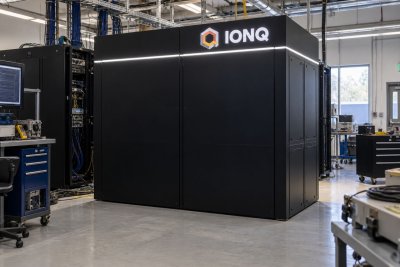
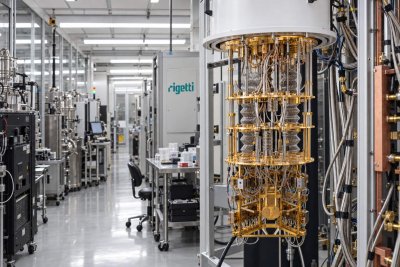
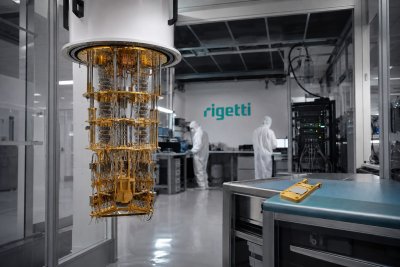
Other quantum computing firms also posted strong gains, indicating the move was sector-wide rather than isolated to Xanadu. IonQ (IONQ) rose approximately 8.3%, D-Wave Quantum (QBTS) advanced 6.0%, and Rigetti Computing (RGTI) gained roughly 5.7%, according to market data. The coordinated advance suggests renewed investor interest in early-stage quantum technology names.
Xanadu's Financial Performance and Share Structure
Xanadu reported first-quarter revenue of $2.83 million, up sharply from $699,000 in the same period last year. However, the company's net loss widened to $20.6 million from $12.2 million a year earlier, reflecting heavy investment in research and development. As of March 31, the company held $272.5 million in cash and cash equivalents, bolstered by approximately $301.6 million from its reverse recapitalization and private placement.
The company's share structure remains a key concern for investors. Xanadu's quarterly filing listed 43.3 million Class B subordinate voting shares outstanding as of March 31, alongside 255.2 million Class A multiple-voting shares, which are convertible into Class B shares. In May, the company filed a prospectus covering the potential sale of up to 293.7 million Class B shares by selling securityholders, including shares tied to conversions of multiple-voting stock, private placements, and founder shares. Xanadu noted it will not receive proceeds from those sales except for cash if warrants are exercised.
Business Outlook and Government Support
Xanadu is pursuing photonic quantum computing, which uses light particles to process quantum information. The company's current revenue is derived primarily from software, simulators, cloud services, and pilot projects with partners, as it has not yet achieved commercial-scale sales of full quantum computers. In its prospectus, Xanadu acknowledged that its technology remains at an early stage and that it has not built a commercial-scale, fault-tolerant quantum computer. The company also warned it may miss its goal of reaching 100,000 physical qubits and up to 500 logical qubits by 2029-2030.
Despite these challenges, Xanadu is in discussions with the Canadian federal and Ontario provincial governments for up to approximately $285 million in proposed support. CEO Christian Weedbrook stated after the earnings release that the company is "not measuring success in quarters," while CFO Michael Trzupek emphasized that Xanadu is "in an investment phase."
Market Context and Analyst Perspectives
The SPAC merger that brought Xanadu public has created a unique overhang, with a large number of shares potentially hitting the market. Kat Liu, vice president at IPOX, noted to Reuters last year that SPAC listings can provide research-focused quantum companies with a "large, single-tranche capital infusion," but public markets later demand evidence that new cash is driving technical progress.
Xanadu is scheduled to present at the CIBC Technology & Innovation Conference and the CG Virtual Quantum Symposium on May 21, followed by the TD Cowen TMT event on May 28. While Wednesday's bounce provided some relief, the dual challenges of potential share dilution and the long road to commercial quantum revenue remain firmly in focus for investors.