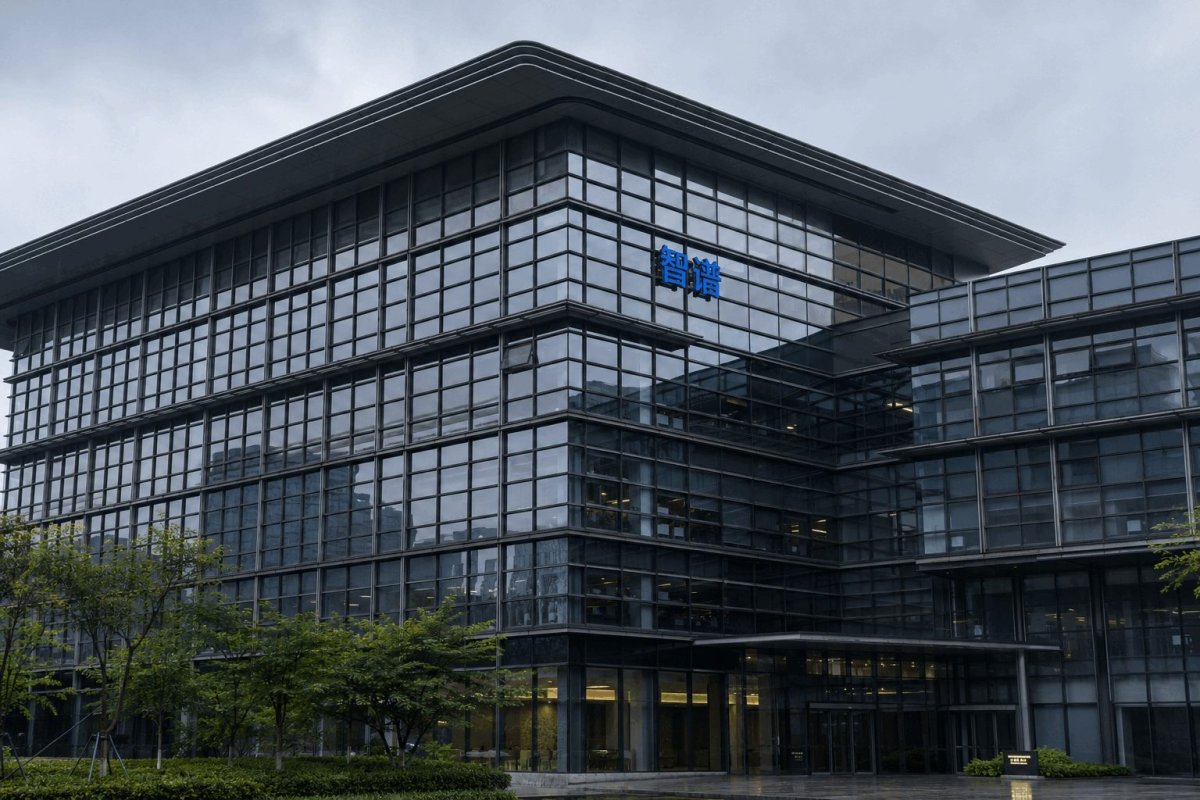
Hong Kong-listed artificial intelligence firm Z.ai (HKG:2513) saw its shares decline 3.6% on Friday, closing at HK$1,270, even as the launch of its latest model, GLM-5.3, generated significant search interest. The stock's slide underscores a growing disconnect between product hype and investor sentiment, as the company's valuation has now shed approximately HK$479 billion from its June peak.
Market Performance and Valuation
The stock closed the session at HK$1,270, down 3.57% from the previous close. The intraday range was wide, with shares trading between HK$1,199 and HK$1,435, a 19.7% low-to-high span. Over the five-day period, the decline was a more moderate 1.4%. At current levels, the stock is 57.4% below its June high of HK$2,980, and the market capitalization stands at HK$591.34 billion, roughly HK$478.7 billion lower than the HK$1.07 trillion peak reached in June.
Despite the recent pullback, the shares remain significantly above their initial public offering price. In January, Z.ai listed at HK$116.20 per share, meaning the current price is still nearly 11 times higher. The company also conducted a placement in July at HK$1,588 per share, raising HK$31.41 billion, but the current price is now 20% below that placement level.
GLM-5.3 Launch and Model Details
The launch of GLM-5.3 on August 14 sparked a surge in U.S. search interest, with queries exceeding 1,000 and rising more than 200% within four hours. The model, which retains a roughly 700-billion-parameter base similar to its predecessor GLM-5.2, promises enhancements in coding and other capabilities. Z.ai has committed to releasing the model's weights within two weeks, allowing developers to download and modify the system.
Company-reported benchmarks show improvements over GLM-5.2 and results approaching Anthropic's Fable 5 in certain tests. However, these are internal comparisons, and independent evaluation will be crucial in determining the model's actual market standing.
Revenue Growth and Cost Challenges
Commercial traction is building, with annual recurring revenue reaching $1 billion in July, according to a report cited by The Economic Times. JPMorgan has projected revenue growth exceeding 534% in 2026, with profitability expected by 2028. However, the surge in demand has also raised cost concerns. Qinkai Zheng, technical lead of Z.ai's CodeGeeX team, noted, "We are trying to lower the cost, but because the demand is too large." This tension could support pricing but also necessitates additional compute resources.
Analyst Sentiment and Future Outlook
Broker targets remain above the current market price, though recommendations are mixed. Macquarie has a Buy rating with a target of HK$2,157, implying 69.8% upside. Goldman Sachs holds a Hold with a target of HK$1,880, while JPMorgan maintains a Buy with a target of HK$1,800. CLSA has a Hold with a target of HK$1,500. The broader consensus is a Buy with an average target of HK$1,612, suggesting 26.9% upside.
Next week will be critical as the first full Hong Kong trading session following the GLM-5.3 release unfolds. Investors will be watching for independent coding test results, API pricing updates, developer traffic metrics, and any timetable changes for the model weights. A rapid integration pace would strengthen the commercial case for the stock.
Risks and Considerations
There are several risks to consider. Company benchmarks may not hold up under independent testing, and the stock remains highly volatile. Z.ai is still loss-making, and heavy compute spending could absorb revenue growth. Additionally, Chinese regulatory actions and U.S. export restrictions add an extra layer of uncertainty.
GLM-5.3 restores product momentum after a sharp valuation reset, but the market has already discounted HK$479 billion from the peak. The next rerating will depend on paid adoption, not just search traffic. As the company navigates these challenges, investors will be closely monitoring whether the model can translate into sustainable revenue growth.
