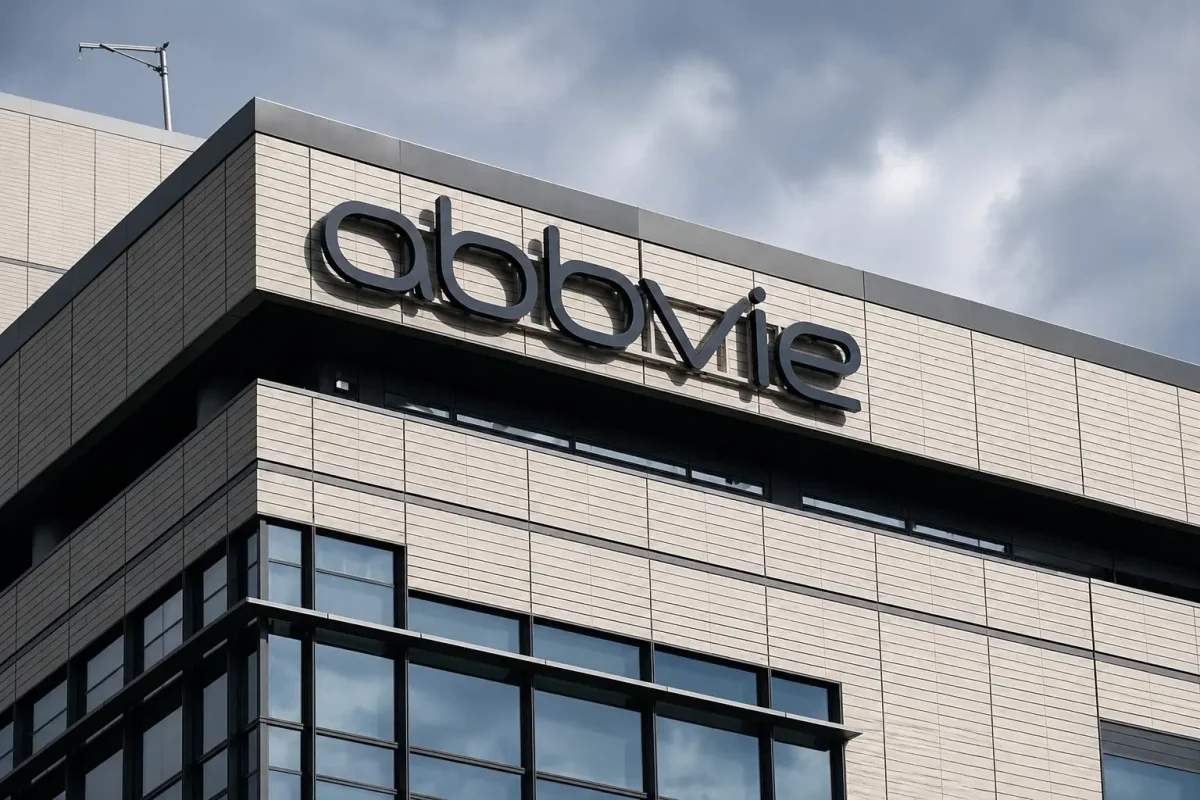
AbbVie (ABBV) announced Monday it will acquire Apogee Therapeutics for $10.9 billion in cash, marking its largest acquisition since 2019. The deal, valued at $135.11 per share, represents a 49.49% premium over Apogee's closing price last Thursday. Apogee shares surged 48% in pre-market trading to $133.77, while AbbVie shares rose 1.3%.
The acquisition centers on zumilokibart (APG777), an experimental monoclonal antibody targeting IL-13, a protein involved in inflammation associated with atopic dermatitis (eczema) and asthma. In a Phase 2 study, 65.9% of patients receiving a mid-dose achieved EASI-75—a 75% improvement in eczema severity—compared to 23.4% on placebo. The drug is designed for maintenance dosing every three to six months, a significant advantage over current treatments like Sanofi and Regeneron's Dupixent, which requires biweekly injections.
AbbVie Chairman and CEO Robert Michael called Apogee's clinical-stage assets "highly differentiated," emphasizing the focus on atopic dermatitis and asthma. Apogee CEO Michael Henderson said the deal will help the programs "reach their full potential." The transaction is expected to close in the third quarter of 2026, pending shareholder and regulatory approvals.
The deal comes as AbbVie continues to transition from its blockbuster drug Humira to newer immunology drugs Skyrizi and Rinvoq. In the first quarter, immunology sales rose 16.4% to $7.29 billion, with Skyrizi contributing $4.48 billion and Rinvoq $2.12 billion. Humira sales fell 38.6% to $688 million. The acquisition underscores AbbVie's commitment to maintaining its leadership in immunology amid patent expirations.
JPMorgan analysts described the deal as a "solid fit" for AbbVie, noting it expands the company's immunology and atopic dermatitis portfolio. They added that AbbVie could leverage its "historic strength in immunology" to commercialize zumilokibart if approved.
The broader pharmaceutical M&A landscape remains active, with over $200 billion in healthcare deals announced this year, according to LSEG data. Big pharma is increasingly pursuing biotech acquisitions to replenish pipelines as patents on older blockbusters expire.
Apogee's strategy shifts with the acquisition. Just four weeks ago, the biotech secured up to $1.3 billion in funding from Blackstone Life Sciences, including up to $800 million tied to a synthetic royalty on future zumilokibart sales. The deal with AbbVie effectively replaces that arrangement.
However, risks remain. Zumilokibart is still investigational, and AbbVie's filing noted that early Phase 2 and Phase 1b results may not hold up in larger late-stage trials. The company also cited potential hurdles including shareholder and regulatory approvals, legal issues, and integration risks. AbbVie is betting on Phase 3 success to extend its immunology franchise, but if the drug fails, the company will have paid a premium to protect its portfolio without seeing full data.