Shares of ACV Auctions (ACVA) skyrocketed 44.5% to $10.43 by early afternoon trading on Friday, following the announcement that Copart (CPRT) will acquire the digital used-vehicle marketplace for $10.50 per share in cash. The deal, valued at approximately $1.9 billion, represents a 45% premium over ACV's unaffected closing price on August 10.
For investors buying ACVA at the current price, the remaining gross upside is just 6.5 cents per share, or 0.62%. This narrow spread reflects the market's high conviction that the transaction will close as planned. However, it also leaves little room for error, and the potential downside is substantial if the deal were to fall through.
Merger Arbitrage Dynamics
At the observed price of $10.43, a successful close would yield a pre-tax profit of $0.065 per share. If the deal closes by year-end, that translates to an annualized return of roughly 2.1%, which could improve if the tender settles earlier. But the risk-reward profile is asymmetric: a failure could send the stock back to its unaffected level near $7.24, representing a loss of approximately $3.19 per share, or 30.6%—nearly 50 times the potential gain.
Using a simple two-outcome model—$10.50 on success and $7.24 on failure—the break-even probability of deal failure is around 2%. This is not a forecast but a pricing lens, and actual outcomes could vary. A competing bidder could emerge, regulatory hurdles could arise, or the timeline could extend beyond expectations.
Why the Spread Is So Tight
The transaction is structured to minimize execution risk. Copart will fund the acquisition with cash on hand, eliminating financing contingencies. Both boards have unanimously approved the deal, and the companies expect to close by the end of 2026.
According to ACV's September 10 SEC filing, Copart must commence the cash tender offer within five to seven business days after signing, and the offer must remain open for at least 10 business days. Completion requires more than 50% of ACV's outstanding shares to be tendered, along with expiration of the Hart-Scott-Rodino waiting period and no blocking injunctions. Support agreements cover about 4.1% of ACV shares, so the minimum tender condition is not pre-locked. Once the tender succeeds, the merger can proceed under Delaware law without a stockholder vote.
Antitrust Scrutiny Looms
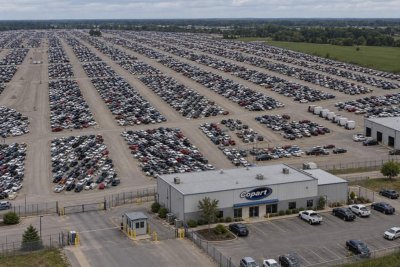
The primary risk is regulatory. Copart operates a vast global online vehicle-auction network, with over 250 locations in 11 countries and more than 4 million units sold last fiscal year. ACV adds a dealer-to-dealer wholesale marketplace, transportation, financing, and data tools. Regulators may examine market concentration in vehicle remarketing.
The contract allocates this risk through termination fees. ACV could owe Copart $57.7 million if it accepts a superior proposal, while Copart may owe ACV $115.3 million if antitrust or HSR conditions prevent closing. These amounts represent 3.0% and 6.1% of the equity value, respectively. The reverse fee incentivizes Copart to pursue clearance, but it does not guarantee ACVA shareholders full recovery if the deal breaks.
What Copart Is Paying For
ACV's latest results show revenue growth outpacing vehicle volume. Second-quarter revenue rose 10% to $214 million, while marketplace gross merchandise value held near $2.7 billion. The company posted an $8 million GAAP net loss but generated $21 million in adjusted EBITDA.
At the midpoint of ACV's 2026 guidance, the $1.9 billion equity value equates to about 2.2 times projected revenue and 25 times adjusted EBITDA. Copart expects the acquisition to be neutral to earnings per share in the first full year and accretive by fiscal 2028. This delayed accretion explains why CPRT investors are more cautious, with Copart shares down 1.56% to $30.27 on the day.
What to Watch Next
For ACVA shareholders, the key milestones are the tender launch, participation levels, and HSR timing. A spread that stays near 6.5 cents signals confidence; any sudden widening could indicate regulatory delays or changed terms. While a higher bid is possible given the fiduciary out, the no-shop covenant and $57.7 million fee make it unlikely. At $10.43, new buyers are essentially underwriting deal completion for 0.62% gross upside. Existing shareholders who enjoyed the 44.5% jump must decide whether locking in gains outweighs waiting for the final 6.5 cents.