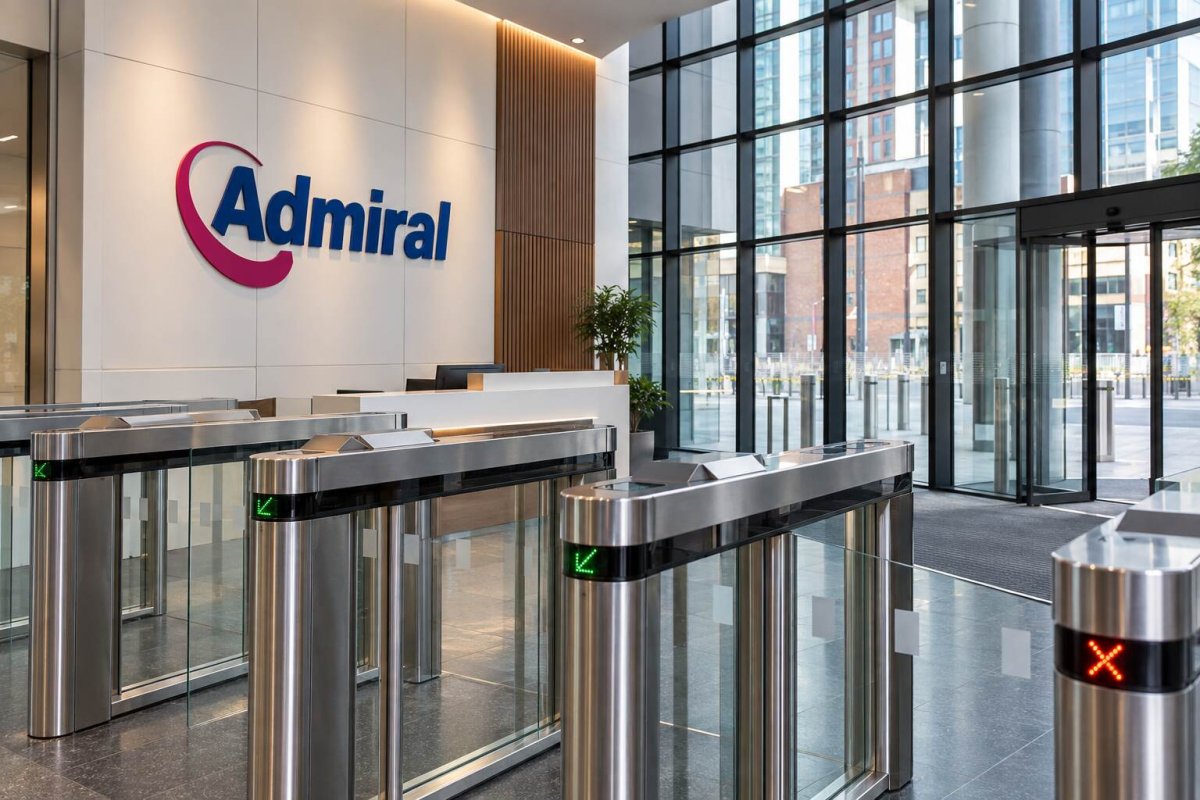
Admiral Group plc (LON:ADM) saw its shares close 0.9% lower on Wednesday, September 23, 2026, following the announcement of a proposed reduction of approximately 500 roles within its UK insurance division. The cuts, which represent about 5% of that unit's workforce, are part of a broader £100 million efficiency program, yet the company has not disclosed the expected annual savings or the associated restructuring charges.
The stock ended the trading session at 3,672 pence, down 0.92%, with 659,218 shares changing hands. This decline extends a recent slide, as the shares had already fallen 3.39% on Tuesday. Wednesday's trading volume was 28% higher than the previous day but remained well below the 1.87 million shares traded on Friday.
Financial Context and Performance Metrics
The job cut proposal comes amid a challenging financial period for Admiral. In the first half of 2026, the company reported an 18% drop in group profit before tax, which fell to £429.2 million from £521.0 million in the same period of 2025. The UK Insurance segment also saw a 17% decline in profit, from £584.4 million to £485.0 million.
Admiral's expense ratio rose by 0.9 percentage points to 21.2%, while the service margin contracted by 3.1 percentage points to 15.7%. Despite these pressures, the company grew its insured risks by 5.3% to 12.03 million, indicating that the efficiency drive is aimed at addressing margin compression rather than a lack of demand.
Management's Rationale and Investor Scrutiny
Admiral's UK Insurance CEO, Alistair Hargreaves, stated that the changes are intended to make the company "faster and more efficient." The company has entered a 45-day collective consultation period, which is expected to conclude in early November, providing a key checkpoint for investors to assess the plan's details.
The lack of specific financial guidance has drawn scrutiny. Analysts note that the £100 million figure is a broad program target, not necessarily tied to payroll savings from the 500 job cuts. Dividing that amount by the number of roles would be misleading, as the program may encompass other cost-saving initiatives.
Admiral has clarified that artificial intelligence is not the primary driver of the cuts, despite recent investments in automation for chat, voice, and document processing. The company's half-year report highlighted these technologies as part of its efficiency efforts.
Analyst Sentiment and Outlook
Despite the near-term concerns, several analysts maintain positive ratings on Admiral. Morgan Stanley's Wilson-Omordia upgraded the stock to Buy with a target of 4,450 pence, implying 21.2% upside from Wednesday's close. Barclays, Berenberg, Jefferies, and UBS also have targets above the current share price, ranging from 4,083 to 4,400 pence.
However, Berenberg's Hold rating, despite a 14.4% upside target, underscores lingering execution risks. The company's strong capital position—a 190% solvency ratio and £258.8 million in shareholder distributions, including a £45 million buyback—provides some cushion, but investors await concrete numbers on cost savings.
Risks include potential delays in achieving savings due to redundancy and consultation costs, as well as possible service disruption that could weaken renewal rates. Additionally, softer motor pricing or higher claims could offset any gains from staff reductions.
As the consultation progresses, the market will look for clarity on annualized savings and restructuring charges. Until then, the plan's earnings-accretive potential remains uncertain, leaving Admiral shares under pressure.