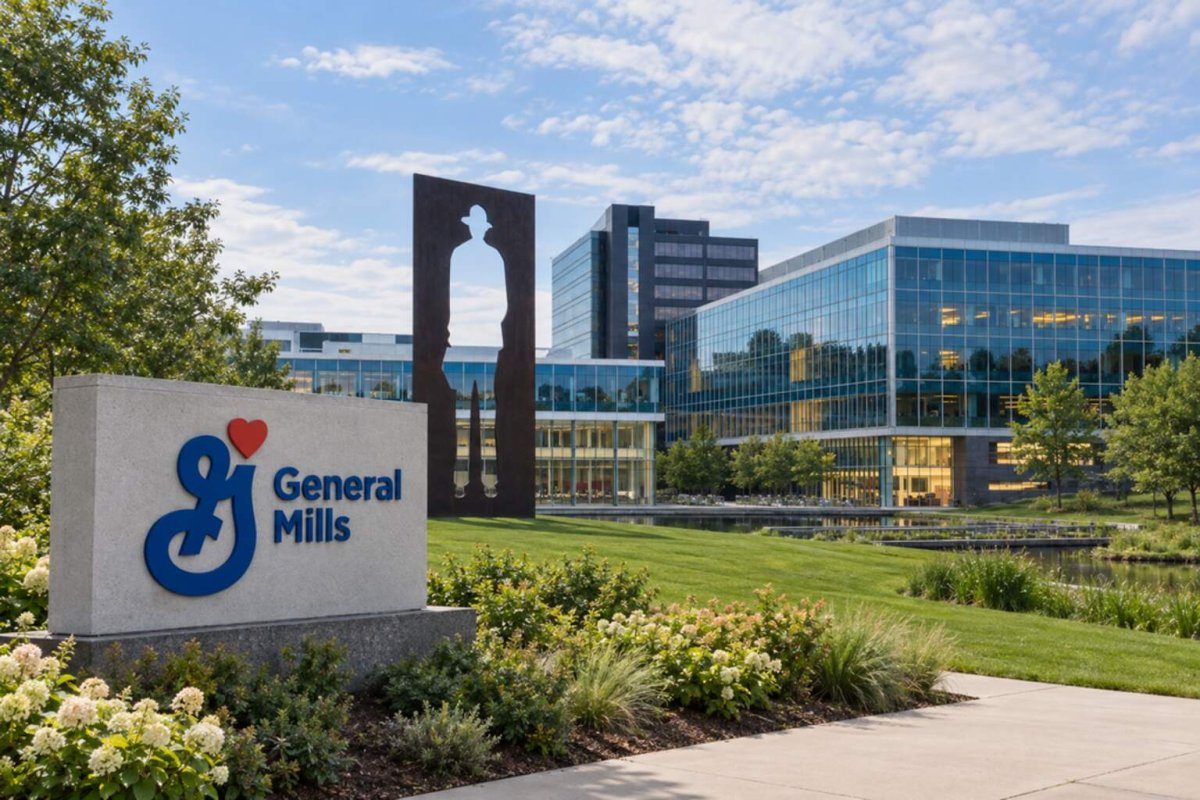
General Mills Inc. (NYSE: GIS) reported fiscal first-quarter earnings that topped analyst expectations, yet the market response was muted as investors focused on another contraction in profitability. The cereal and snack food giant saw its shares slip 0.6% to $35.25 in afternoon trading on Wednesday, reflecting concerns that cost savings may not be enough to offset persistent margin pressure.
For the quarter ended August 30, 2026, adjusted earnings per share came in at $0.75, surpassing the consensus estimate of $0.72 by 4.2%. Revenue reached $4.39 billion, also beating the $4.34 billion expected by Wall Street, a 1.1% upside. However, organic sales were flat year-over-year, and adjusted operating margin contracted by 130 basis points to 14.4%, down from 15.7% in the same period last year.
The margin decline was driven by a combination of higher input costs, increased brand investment, and a 1% drop in volume. While price-mix was neutral, the company’s adjusted operating profit fell 11% on a constant-currency basis, underscoring the challenges in its core North America Retail segment.
Segment Performance: Retail Weakness Offsets Gains Elsewhere
North America Retail, the company’s largest segment, saw sales decline 7% to $2.45 billion, partly due to the divestiture of its yogurt business. Organic sales in the segment fell 3%, with retailer inventory reductions adding further drag. Operating profit in this division dropped 15% to $478.6 million.
In contrast, International and North America Foodservice delivered solid growth. International sales rose 4% to $794.3 million, with operating profit up 14%. Foodservice sales grew 1% to $523.1 million, and operating profit increased 12%. North America Pet was flat in sales at $612.8 million, but operating profit declined 12% to $99.5 million.
Chief Executive Jeff Harmening expressed optimism, stating the company is “off to an encouraging start in fiscal 2027.” However, management reaffirmed its full-year guidance, leaving the investment thesis hinged on the successful execution of $750 million in planned cost savings to offset inflation and increased brand spending.
Cash Flow and Capital Returns Deteriorate
The quarter also revealed a softer cash flow profile. Operating cash flow fell to $298 million from $397 million a year earlier. While the company paid $330 million in dividends, it repurchased no stock, a stark contrast to the $500 million in buybacks during the same period last year. This reduction in capital return could raise questions about management’s confidence in near-term cash generation.
Analyst Sentiment Mixed
Wall Street remains divided on the stock. RBC Capital Markets maintains an Outperform rating with a $45 price target, implying 27.7% upside. UBS holds a Sell rating with a $33 target, suggesting 6.4% downside. The broader consensus from 20 analysts is Hold, with an average price target of $37.67, offering about 6.9% upside from current levels.
Market Reaction and Outlook
The stock’s modest decline despite the earnings beat indicates that investors are looking for a clearer catalyst. Trading volume reached 7.97 million shares by early afternoon, representing 86% of the average daily volume, suggesting active repositioning.
Key risks include a deeper U.S. volume slide that could overwhelm cost savings and further compress margins. Conversely, faster-than-expected retail stabilization would make the unchanged guidance look conservative. The next critical test comes with fiscal second-quarter results, where investors will seek evidence that North America Retail volumes can stabilize before pricing and savings alone carry margins.