Aehr Test Systems (AEHR) saw its stock price climb 6.5% on Friday, closing at $97.23 after touching an intraday high of $103.72. The surge was driven by a record $41 million follow-on production order from its leading hyperscale AI customer, announced on April 16. This order covers package-level burn-in testing for custom AI processor ASICs, with shipments scheduled to begin in fiscal 2027.
Investor enthusiasm centered on the company's robust order book rather than its recent financial results. For the fiscal third quarter, Aehr reported revenue of $10.3 million, a sharp 44% decline from $18.3 million in the same period last year. The company also posted a GAAP net loss of $3.2 million, or $0.10 per share, compared to a profit a year earlier. Management attributed the revenue drop primarily to reduced shipments of wafer-level burn-in systems and contactors.
Despite the quarterly weakness, bookings for the quarter totaled $37.2 million, resulting in a book-to-bill ratio above 3.5x—meaning orders outpaced revenue by more than three and a half times. CEO Gayn Erickson highlighted that second-half bookings have surpassed $92 million, exceeding the company's earlier target of $60 million to $80 million. The company reaffirmed its fiscal 2026 revenue guidance, expecting results at the high end of the $45 million to $50 million range.
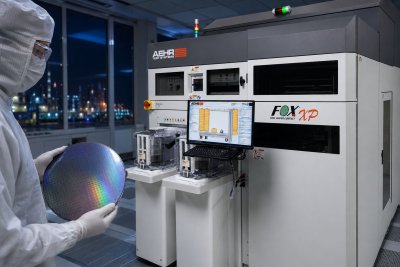
Burn-in testing, a stress test that pushes chips to their limits to identify defects, is critical for high-power AI accelerators, silicon photonics, and data-center interconnects. Aehr's Sonoma platform is designed for high-volume production burn-in of very-high-power AI processor ASICs, and Erickson noted that the customer is already developing a next-generation, higher-power AI accelerator expected to enter production later this year. This prospect has fueled expectations of additional orders.
Wall Street analysts have taken notice. After a recent silicon photonics order, William Blair analyst Jed Dorsheimer described it as "another strong signal" for Aehr's position in the AI end-market, predicting an acceleration in AI-linked order wins. However, the company faces intense competition from larger players like Teradyne and Advantest, which dominate the broader semiconductor test equipment market.
Gross margins contracted to 32.7% in the quarter, down from 39.2% a year ago, due to a higher mix of lower-margin package-level burn-in products, increased assembly and warranty costs, freight charges, and tariffs. Customer concentration remains a risk: Customer A accounted for 42.1% of revenue and 36.8% of gross accounts receivable, while Customer B contributed 10.5% of revenue. A slowdown by a key AI client could quickly reverse the positive order-book narrative.
To strengthen its balance sheet, Aehr raised approximately $60 million in gross proceeds through its at-the-market stock sale program in April, as disclosed in an SEC filing. The company's market capitalization now stands just under $3 billion. Trading volume was robust, with about 3.84 million shares changing hands on the day.
While the stock's movement reflects investor optimism about future revenue growth driven by AI orders, the company's recent earnings and margin pressures serve as a reminder that near-term profitability remains challenged. The market is clearly betting on the long-term potential of Aehr's burn-in technology in the rapidly expanding AI chip sector.