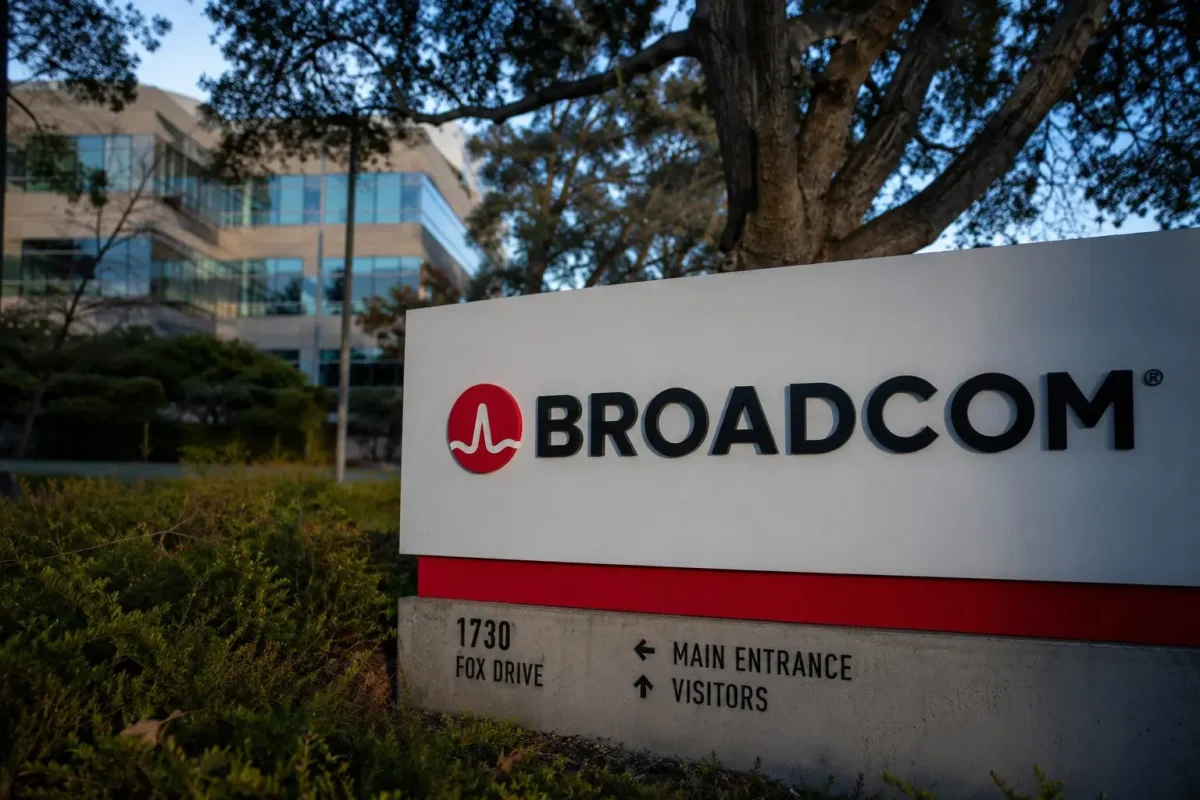
New York, June 9, 2026 - AI chip stocks extended their decline for a second consecutive session on Tuesday, as investors continued to sell semiconductor shares despite Broadcom's announcement of a $35 billion financing platform to support AI computing infrastructure for Anthropic and other major AI labs.
Wall Street is not questioning the reality of AI compute demand, but traders are increasingly skeptical about whether current valuations in stocks like Broadcom, Nvidia, AMD, and Micron leave any room for error. The selling pressure pushed the S&P 500 and Nasdaq to their lowest levels in over a month, according to Reuters data.
AMD dropped 5.2% in afternoon trading, while Micron also fell 5.2%. Broadcom declined 2.3%, and Nvidia traded 1.2% lower. The Invesco QQQ Trust, which tracks the Nasdaq-100, lost 1.8%, and the iShares Semiconductor ETF fell 3.5%.
Broadcom's AI Financing Platform
Broadcom launched the AI XPV Platform in partnership with Apollo and Blackstone's credit and insurance arm, which serve as anchor investors. The project targets over 20 gigawatts of compute capacity by 2028, utilizing Broadcom's XPUs and networking equipment for AI labs such as Anthropic and OpenAI. The initial $35 billion will fund more than 1 gigawatt of Anthropic infrastructure at Fluidstack sites starting in mid-2026.
Broadcom CEO Hock Tan described the initiative as a "historic inflection point." Apollo President Jim Zelter emphasized that the scale of AI demands a "bold, collaborative model," while Blackstone President Jon Gray called compute demand an "unprecedented opportunity" for large-scale infrastructure investment.
Market Reaction and Valuation Concerns
The market's response to Broadcom's capacity update was notably different from similar news earlier this year. Shares fell after the company's quarterly results failed to meet investor expectations for a larger AI boost. "A classic case of very high expectations," said Matt Britzman, senior equity analyst at Hargreaves Lansdown. Bernstein analyst Stacy Rasgon noted in a research report that Broadcom shares could "take a pause" for a few quarters.
Stretched valuations in the AI sector have made the trade more sensitive to interest rate expectations. Jordan Rizzuto, chief investment officer at GammaRoad Capital Partners, told Reuters that technology has driven most of the market's growth and momentum, putting it at risk for profit-taking as investors reassess rate bets. Traders were pricing in a 43% chance of a 25-basis-point rate hike in December, Reuters reported.
Broader Market Impact
The selloff on Friday had already erased approximately $1.3 trillion in market value from U.S.-listed chipmakers, according to Reuters, with Nvidia, Micron, AMD, and Marvell among the hardest hit. Despite the recent decline, the chip index still shows a strong gain for the year.
Investors are now waiting for U.S. consumer price data due Wednesday, which could influence the Federal Reserve's policy path. The chip sector's weakness persisted after only a brief bounce on Monday, as market participants seek more clarity on margins, power costs, funding terms, and fresh customer orders before re-entering the space.
Apollo is calling the deal a new asset class for private credit, which encompasses loans and structured finance from asset managers rather than traditional banks. "AI compute is becoming a compelling new asset class," said Apollo Partner Jamshid Ehsani. Broadcom executive Won Kim noted that demand is rising faster than traditional capital markets can keep up.
The financing platform adds to the competitive dynamics in the AI chip market. Broadcom has been winning business from major tech companies by supporting in-house chip design, reducing their reliance on Nvidia's expensive hardware. Nvidia remains the standard for AI chips, while AMD and Micron are exposed to the same swings in data-center spending through their processors and high-bandwidth memory.