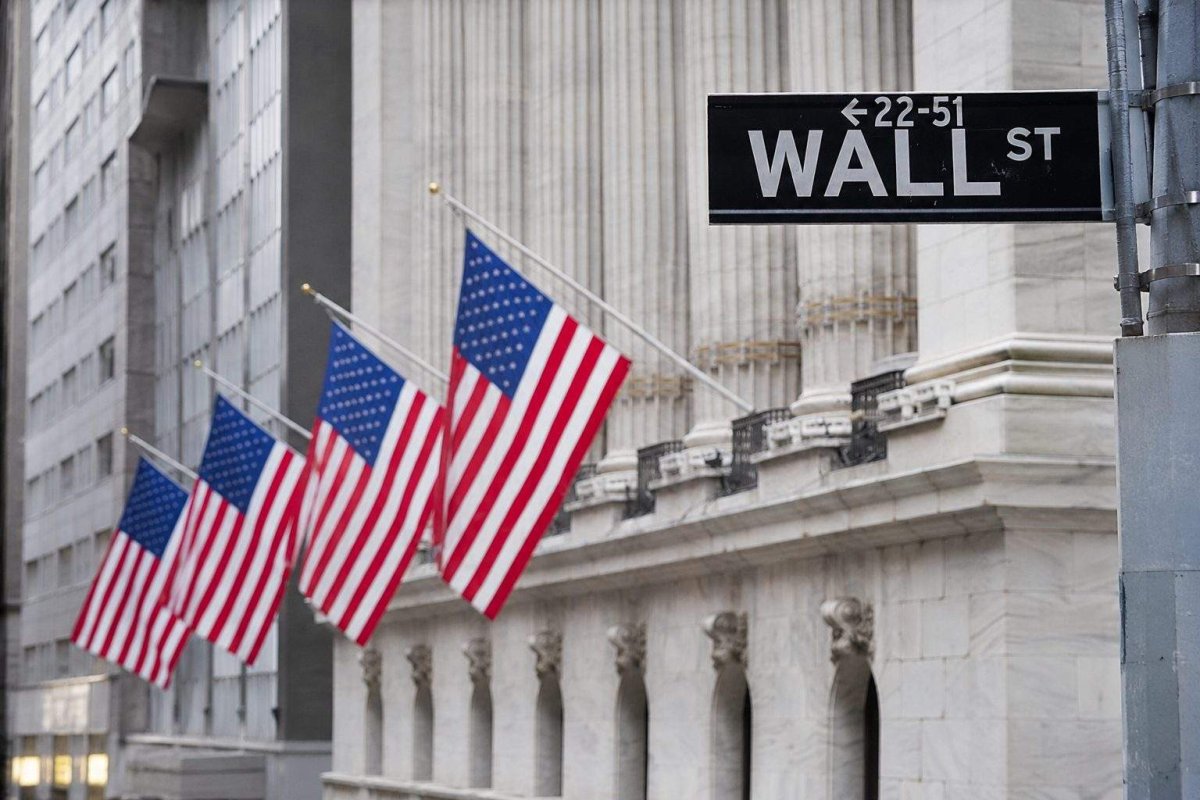
Wall Street delivered a mixed performance on Thursday, with the S&P 500 and Nasdaq Composite managing modest gains, while the Dow Jones Industrial Average edged lower. Investors weighed stronger-than-expected inflation data against a wave of upbeat earnings tied to artificial intelligence, keeping major indexes near recent highs.
The S&P 500 rose 0.34% to 7,546.05, and the Nasdaq Composite gained 0.33% to 26,763.18. The Dow slipped 0.08% to 50,601.42, according to LSEG data. Trading volumes were contained, with few sharp moves across sectors.
The Bureau of Economic Analysis reported that the personal consumption expenditures price index rose 3.8% year-over-year in April, accelerating from 3.5% in March and marking the fastest pace since May 2023. Core PCE, which excludes food and energy, came in at 3.3% annually, well above the Federal Reserve's 2% target. The data arrives as oil prices react to renewed tensions around the Strait of Hormuz and the Iran conflict, with Brent crude trading at $94.73 a barrel. The 10-year Treasury yield stood at 4.508%.
Despite the inflation uptick, the market reaction was muted. Angelo Kourkafas, senior global investment strategist at Edward Jones, described the PCE result as “not as bad as feared.” However, Peter Cardillo, chief market economist at Spartan Capital Securities, warned of a potential “stagflation problem,” where slowing growth and rising inflation create a challenging environment for central banks.
AI-related earnings provided a significant tailwind. Marvell Technology (MRVL) climbed after forecasting second-quarter revenue above estimates. Snowflake (SNOW) gained after lifting its product revenue outlook for the year and announcing a five-year AI infrastructure deal with Amazon Web Services (AMZN). Datadog (DDOG) and MongoDB (MDB) also rose, benefiting from broad demand for cloud and data solutions.
Retail stocks also saw gains. Dollar Tree (DLTR) jumped after raising its full-year profit outlook. Best Buy (BBY) was higher on improved second-quarter sales guidance, while Kohl’s (KSS) gained after matching quarterly sales estimates and reaffirming its annual targets. These gains come as consumer stocks have struggled with high energy prices and softer spending.
Anthony Saglimbene, chief market strategist at Ameriprise, cited “AI secular tailwinds” as a key driver. Chris Zaccarelli, chief investment officer at Northlight Asset Management, noted that an “AI arms race” among major players could continue to support prices. A Reuters poll put the median S&P 500 target for 2026 at 7,620, just above current levels. Goldman Sachs raised its year-end S&P 500 target to 8,000 from 7,600, pointing to steady corporate earnings and boosting its 2026 EPS estimate to $340, implying a 24% year-over-year increase.
Looking ahead, oil prices could become a more dominant factor for monetary policy. If tensions with Iran keep crude elevated, inflation expectations may rise, Treasury yields could climb, and the Fed might delay rate cuts. That would pressure valuations for growth stocks trading near record highs. For now, the market remains resilient, rotating between sectors as earnings provide support. A clearer direction may depend more on oil dynamics and tangible AI revenue growth than on daily index movements.