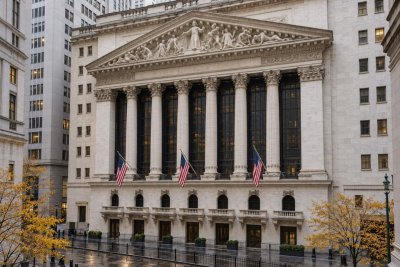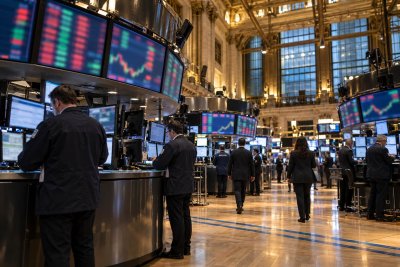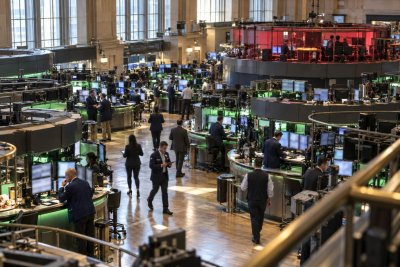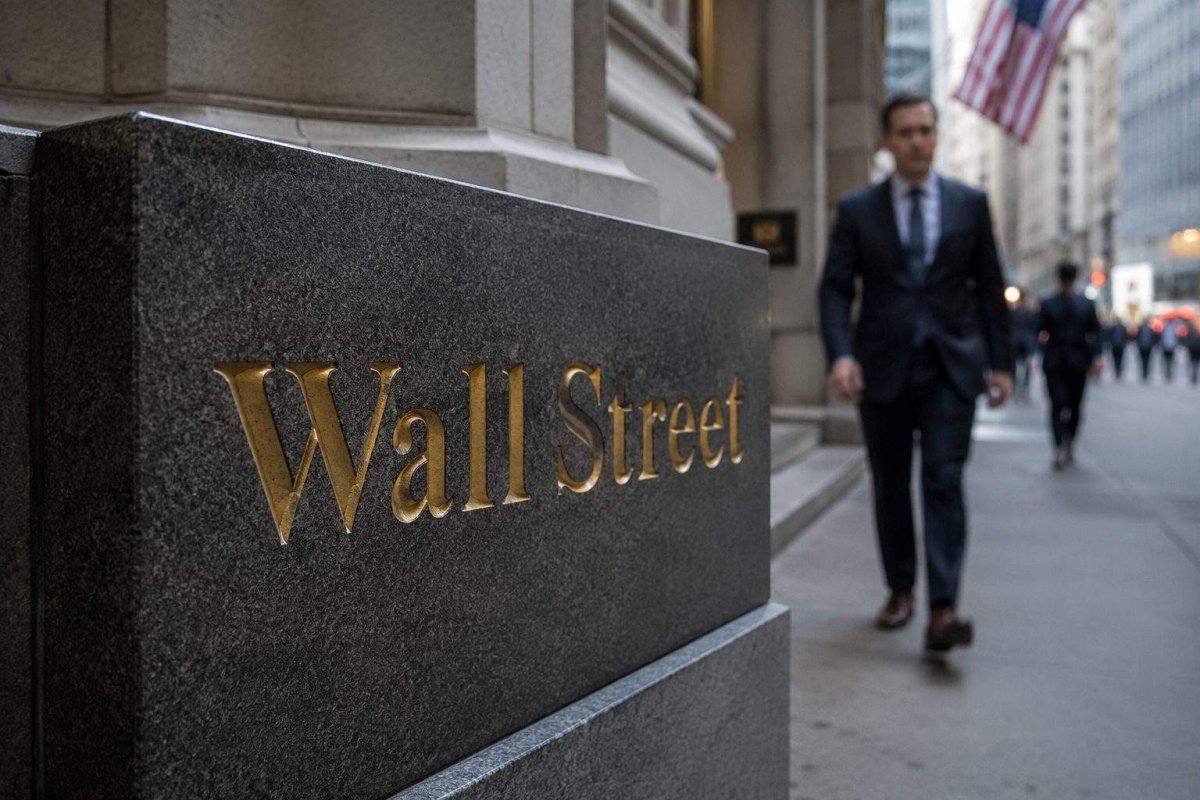
Wall Street staged a partial recovery on Monday, clawing back some ground after a brutal selloff that erased approximately $2 trillion in market value on Friday. The rebound was led by a recovery in chip stocks and easing geopolitical tensions in the Middle East, but the mood remained cautious as doubts about the artificial intelligence trade intensify.
The Dow Jones Industrial Average opened 0.26% higher, the S&P 500 gained 0.77%, and the Nasdaq Composite climbed 1.38%. The bounce came after the Philadelphia Semiconductor Index (SOX) slumped 10% on Friday, with chip names accounting for more than half of the total losses. Broadcom shares fell over 14% last week after its earnings failed to meet lofty market expectations for custom AI chip demand, with analysts noting that the company's unchanged $100 billion fiscal 2027 AI revenue target disappointed investors hoping for an upward revision. Broadcom competes with Nvidia and other chipmakers for AI infrastructure spending from major cloud providers.
Jobs Data Dents Rate Cut Hopes
The selloff was triggered in part by stronger-than-expected U.S. jobs data on Friday. The Labor Department reported that payrolls grew by 172,000 in May, while the unemployment rate held steady at 4.3%. The robust labor market has dimmed hopes for near-term Federal Reserve rate cuts, putting additional pressure on expensive growth stocks whose valuations are heavily dependent on future earnings.
Goldman Sachs now expects the Fed to hold rates steady through 2026, with the first rate cut pushed to 2027. According to CME FedWatch data cited by Reuters, traders are pricing in a 75.5% probability of rate hikes by the end of this year. Higher borrowing costs weigh on growth stocks because they reduce the present value of distant profits.
AI Spending Under the Microscope
Questions about the return on massive AI investments are growing louder in corporate boardrooms. Axios reported over the weekend that the so-called AI bubble has reached a "reckoning" point, as early adopters begin to question whether the technology is delivering sufficient cost savings or new revenue. A survey by Bain & Company of 951 companies found that nearly 40% of those tracking AI savings saw gains of less than 10%, even though their targets were typically between 11% and 20%. Only 7% of companies have fully autonomous AI agents operating in production today, according to Bain.
Bridgewater Associates founder Ray Dalio warned investors about the pace of the AI rally in a Bloomberg interview. "All great technology changes produce bubbles," Dalio said, adding that he expects the strong AI market to end in a bust once paper gains are converted into cash.
Bullish Calls Persist Amid Uncertainty
Despite the recent turmoil, some analysts remain optimistic. Citigroup raised its 2026 year-end S&P 500 target to 8,100 from 7,700, citing strong earnings and AI-driven gains. The bank's new 2026 EPS target for the index is $350. However, Citi acknowledged uncertainty, noting that continued AI-driven growth beyond 2027 is unclear.
Some market participants view the selloff as a long-overdue correction rather than the beginning of a prolonged downturn. "The big surprise is not that we had a selloff, but that we didn't have it before," Lars Skovgaard, senior investment strategist at Danske Bank, told Reuters. He characterized the move as a healthy pullback after an extended period without one.
Monday's bounce may mask deeper concerns. Persistent high borrowing costs and sluggish near-term gains from AI tools could eventually force companies to scale back spending. Investors are increasingly demanding tangible results rather than promises of future potential. The central question has shifted from whether the technology works to who will profit, how quickly, and at what price.