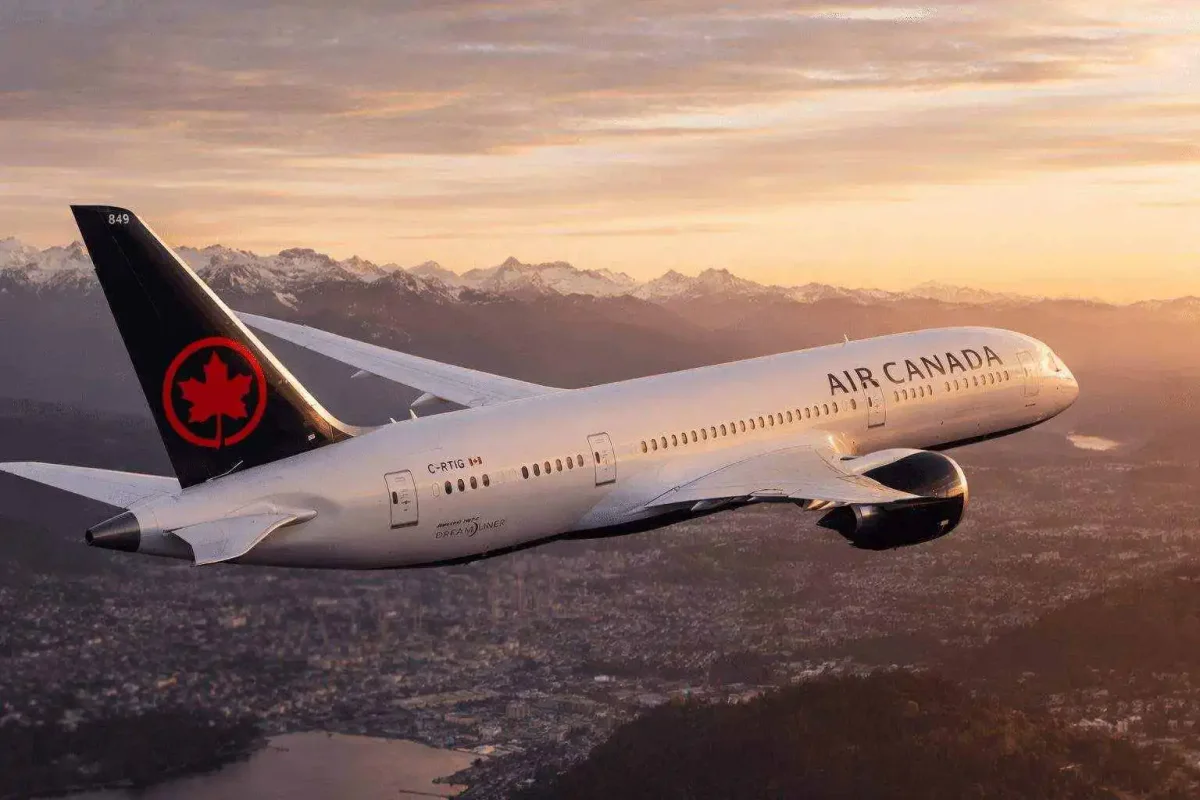
Air Canada has taken the wraps off its new premium cabin designs for the soon-to-enter-service Airbus A321XLR and Boeing 787-10 aircraft. The unveiling occurred at the Aircraft Interiors Expo in Hamburg on Tuesday, April 14, 2026, highlighting the carrier's strategic focus on enhancing its offerings for lucrative international and long-haul routes.
New Cabin Configurations and Premium Focus
The single-aisle Airbus A321XLR will be configured with 14 lie-flat business class suites and 168 economy seats. This marks the first time Air Canada will equip a narrow-body aircraft in its fleet with fully flat beds, a feature typically reserved for wide-body jets. The airline positions this as bringing a "wide-body business class experience" to a more efficient single-aisle platform.
For the larger Boeing 787-10 Dreamliner, the seating plan includes 42 business class seats, 28 premium economy seats, and 262 standard economy seats. The business cabin will feature a new top-tier section called Signature Plus, which will consist of just four suites. These suites will offer two-metre-long beds, guest seating, quartzite tables, and expansive 27-inch entertainment screens. Two center suites can be combined to create a shared space for up to four travelers.
Enhanced In-Flight Technology and Design
Both aircraft types will receive a significant technological upgrade. Every seat will be equipped with a sharp 4K OLED seatback display, Bluetooth audio connectivity, and both USB-C and AC power outlets. Premium economy passengers on the 787-10 will benefit from larger privacy wings on their seats.
The interior design incorporates distinctly Canadian motifs. Elements include wood-grain finishes, bronze accents, and red stitching. The A321XLR will feature a glowing maple-leaf canopy, while the 787-10 will have an entry monument with a water-themed design.
Strategic Rationale and Route Deployment
Air Canada's Chief Operations Officer, Mark Nasr, emphasized that details matter in the premium travel experience. The airline plans a separate revamp of onboard service, including food, beverages, and amenities, later this year. The cabin redesign is part of the airline's "Glowing Hearted" brand shift, aimed at creating a more inviting and personal space for passengers.
The A321XLR, with its extra-long range, is central to Air Canada's strategy of opening new long-haul routes that may not support the larger capacity of a wide-body aircraft. The carrier expects its first A321XLR to arrive imminently, with entry into service targeted for late May, beginning on domestic transcontinental routes. Subsequently, the jet will be deployed on transatlantic services from Montreal and Toronto, as well as on longer North American flights. Notably, the A321XLR will not have a premium economy cabin, as the airline determined the economics did not justify it for the intended route network.
Competitive Landscape and Design Choices
Air Canada's move aligns with a broader industry trend where North American carriers are heavily investing in premium cabins. Competitors like American Airlines, United Airlines, and Delta Air Lines are all rolling out new suites with enhanced privacy features, including doors.
In a distinct design choice, Air Canada opted not to include doors on its A321XLR business suites. Nasr explained this decision was driven by the need to maximize bed length and aisle width within the narrower fuselage of a single-aisle aircraft. He also noted that certification for the suite doors on the 787-10 is still pending and it is "too soon to say" if it will be completed before the aircraft enters service.
Fleet Modernization and Execution Risks
Beyond these two new aircraft types, Air Canada is overhauling cabins on its existing Airbus A320 and A321 fleets as they are integrated into mainline service. Boeing 737 MAX jets are being transferred to its leisure-focused Rouge subsidiary, and regional aircraft operated by Jazz are also receiving cabin upgrades.
The airline acknowledged potential execution risks, citing possible disruptions from supplier bottlenecks, tariffs, geopolitical events, labor costs, and fluctuating travel demand, all of which could impact its plans and financial outlook.