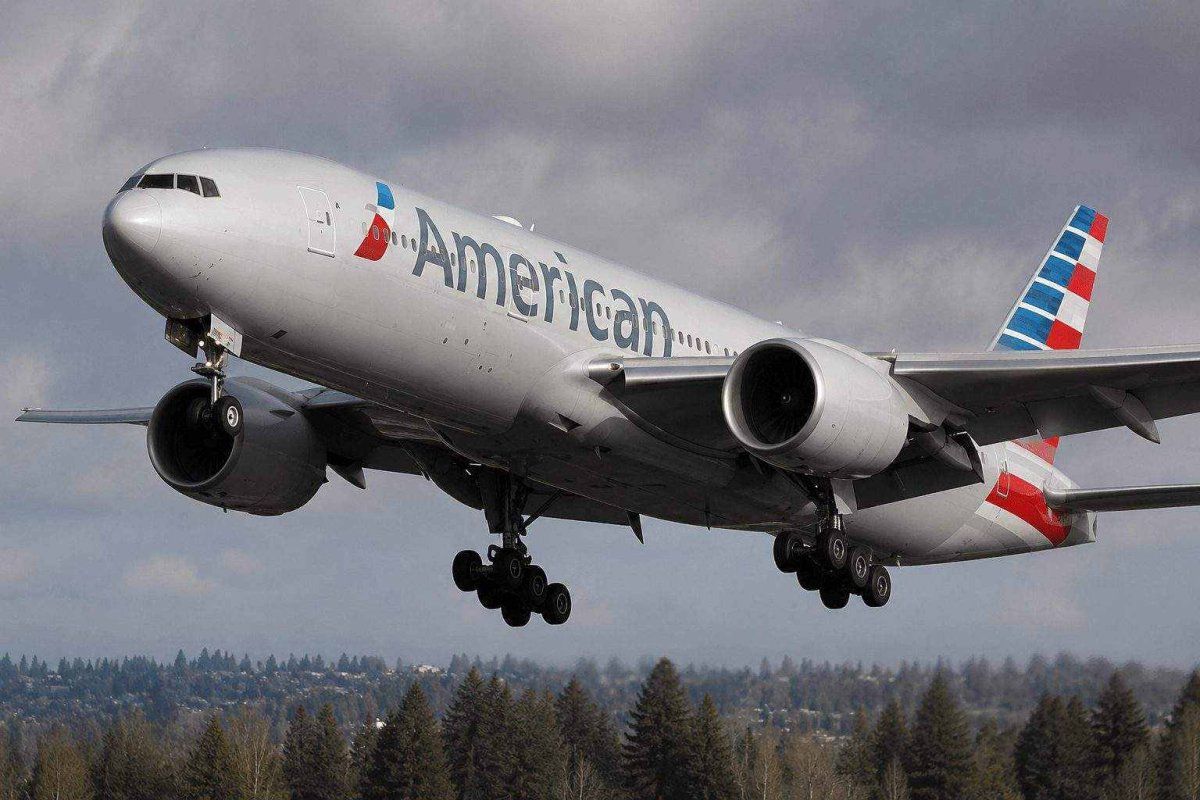
American Airlines Group Inc. (AAL) shares ticked higher in premarket trading Friday, recovering modestly after a decline in the previous session, as investors weighed strong travel demand against rising fuel costs that threaten margins.
The stock was trading at $14.74 as of 9:07 a.m. Eastern, up 0.6% from Thursday's close of $14.65, which represented a 1.8% drop. Regular Nasdaq trading is scheduled to begin at 9:30 a.m. Eastern.
CEO Robert Isom reaffirmed the company's 2026 financial guidance during a Bernstein investor conference on Wednesday, even as he warned that fuel expenses could increase by $4 billion to $5 billion this year. Isom characterized current demand as "K-shaped," with higher-income travelers spending more than their less affluent counterparts, but noted that travel continues to expand across income levels. Second-quarter bookings are approximately 80% completed, according to the company.
American Airlines expects second-quarter revenue to rise 15% year-over-year, with capacity increasing by roughly 5%. Corporate travel is up 13% compared to last year, while leisure demand remains "incredibly" strong, Isom said. The airline is focusing on expanding its premium seating offerings to narrow the profit gap with Delta Air Lines (DAL) and United Airlines (UAL). Premium seat growth is expected to double that of main cabin seats, with lie-flat seats projected to increase nearly 50% over three years.
Broader airline stocks showed mixed premarket movement. Delta gained 0.9%, United advanced 2.2%, while Southwest Airlines (LUV) declined 0.9%. The U.S. Global Jets ETF (JETS) edged up 0.2%.
Wall Street futures pointed to a higher open Friday, buoyed by falling oil prices and optimism surrounding U.S.-Iran talks, according to Reuters. Lower oil prices benefit airlines by reducing jet fuel costs, a significant expense. Bob Savage, head of markets macro strategy at BNY, described the mood as having a "risk-on bias."
Despite record first-quarter revenue of $13.9 billion, American Airlines reported a GAAP net loss of $382 million, or 58 cents per share. Total debt stands at $34.7 billion, the lowest level since mid-2015, but remains substantial for a cyclical airline. The company has limited financial cushion to absorb further fuel price increases.
Consolidation speculation in the airline industry cooled this week after United CEO Scott Kirby stated that United has no near-term plans to pursue mergers, according to Reuters. American had previously rejected an approach from United, and Kirby dismissed smaller deal rumors as "idiotic." Isom also pushed back against the idea, arguing it would harm customers and competition.
On the customer experience front, American Airlines announced plans to equip over 500 narrowbody aircraft with Starlink Wi-Fi starting in the first quarter of 2027, aiming to enhance connectivity on domestic and short-haul international routes. Heather Garboden, chief customer officer, said Starlink would keep travelers "connected in flight."
The key risk remains a potential spike in oil prices, weaker demand from middle-income travelers, or an inability to raise fares, which could erode the revenue gains American needs to offset higher fuel costs. The stock's modest premarket rise reflects cautious optimism, but the central question for investors is whether demand can sustain margins before fuel costs take a bigger bite.