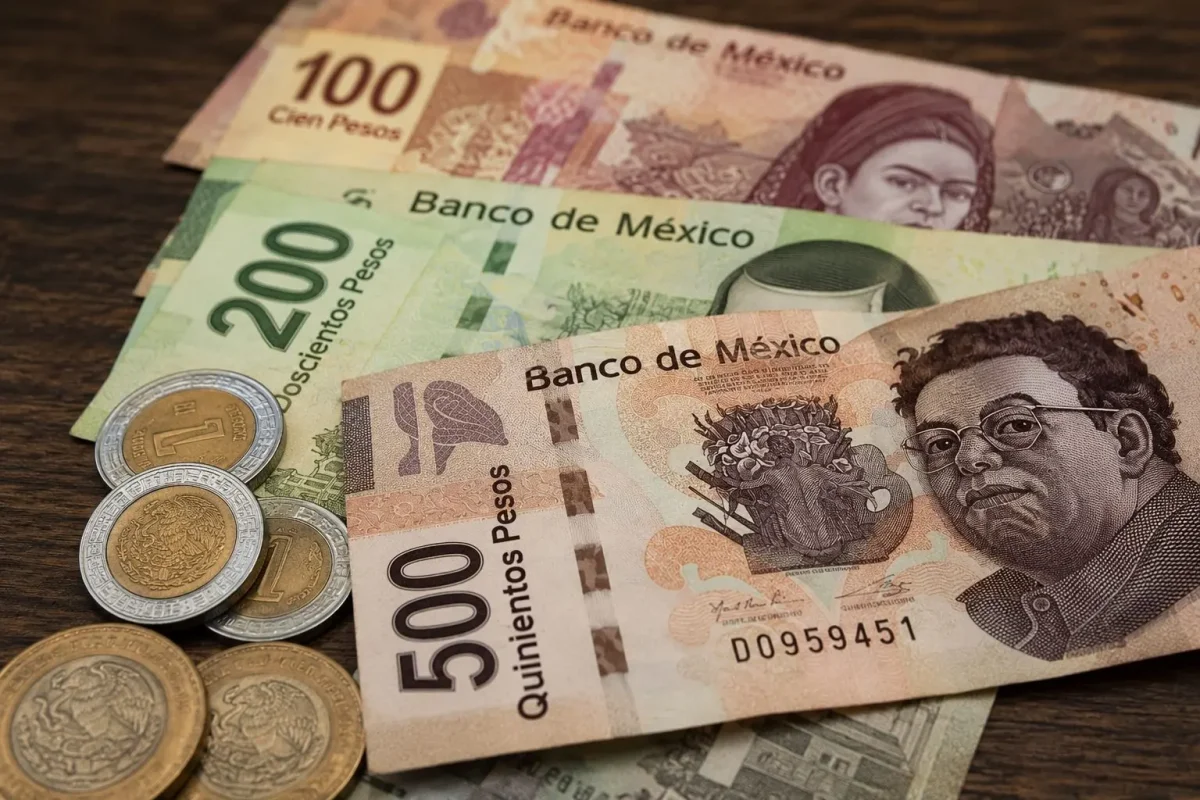
The Mexican peso weakened on Monday, giving up roughly a month's worth of its policy-rate advantage over the U.S. dollar as a sharp jump in oil prices rattled currency markets. The peso slipped about 0.35% to near 17.52 per dollar late in the session, while Brent crude futures surged 9.6% following reports of new military clashes between the United States and Iran near the strategic Strait of Hormuz.
Oil Shock and Geopolitical Tensions
The move in oil came as a geopolitical shock to a market already on edge. The Strait of Hormuz, a critical chokepoint for global oil shipments, has been a flashpoint in U.S.-Iran tensions. The sudden spike in crude prices sent ripples through emerging-market currencies, with the peso losing ground in a controlled but persistent decline. The dollar started the session near 17.47 pesos and gradually ticked higher, trading in a band between 17.46 and 17.53 before settling at 17.52 according to Banxico data. The official FIX rate, used for settlement, was set at 17.5023.
Impact on Carry Trade
The peso is a popular vehicle for carry trades, where investors borrow in low-yielding currencies like the dollar to buy higher-yielding peso-denominated assets. The latest selloff wiped out the gross interest rate advantage Mexico holds over the U.S. for roughly a month. Banxico's overnight target rate stands at 6.50%, while the Federal Reserve's target range of 3.50%–3.75% implies a midpoint of 3.625%. That leaves a headline gap of 2.875 percentage points, or about 1.14 basis points per trading day. The peso's 0.26%–0.35% loss corresponds to approximately 23–31 days of that spread, effectively erasing a month of carry income for unhedged positions.
Market Reaction and Context
Janneth Quiroz Zamora at Monex noted that the peso opened under pressure as investors pulled back from emerging-market currencies amid heightened geopolitical anxiety. Felipe Mendoza of EBC Financial Group described the market as highly sensitive to global risk. The local S&P/BMV IPC equity index fell 0.79%, a steeper decline than the currency's move. Among Latin American peers, the peso outperformed Chile's peso, which dropped 0.89%, but lagged Brazil's real and Peru's sol, which fell 0.20% and 0.31% respectively.
Key Data and Policy Outlook
The oil shock comes at a critical juncture for U.S. monetary policy. June inflation data is scheduled for release Tuesday morning, followed by Federal Reserve Chair Kevin Warsh's first major policy testimony at 10 a.m. ET. Mexico's June annual inflation came in at 3.37%, with core inflation at 4.03%. Capital Economics analyst Kimberley Sperrfechter said the headline decline will be welcomed by Banxico and suggests rates will remain on hold in the near term. However, Fed Governor Christopher Waller recently signaled that the Federal Open Market Committee may need to consider tightening if core inflation reaccelerates.
Risks and Outlook
Market participants are watching for two key U.S. data releases this week: consumer prices on Tuesday and producer prices on Wednesday. A hot inflation reading could prompt the Fed to hike rates, narrowing Mexico's yield advantage. Meanwhile, ongoing tensions in the Strait of Hormuz could further boost the dollar and push Treasury yields higher. A 1% drop in the peso would erase nearly four months of gross rate advantage before costs. Analysts polled by FX strategists in early July forecast the peso at 17.78 per dollar in 12 months, implying about 1.5% depreciation from current levels—still within the 2.875-point policy-rate buffer, but only if rates hold steady and the forecast proves accurate.
The peso continues to offer a yield premium for taking on global risk, but the latest oil-driven volatility serves as a reminder that even modest currency moves can quickly erode the benefits of carry trades. Traders will be closely watching U.S. inflation data and Fed testimony to gauge how much more turbulence the peso can withstand.