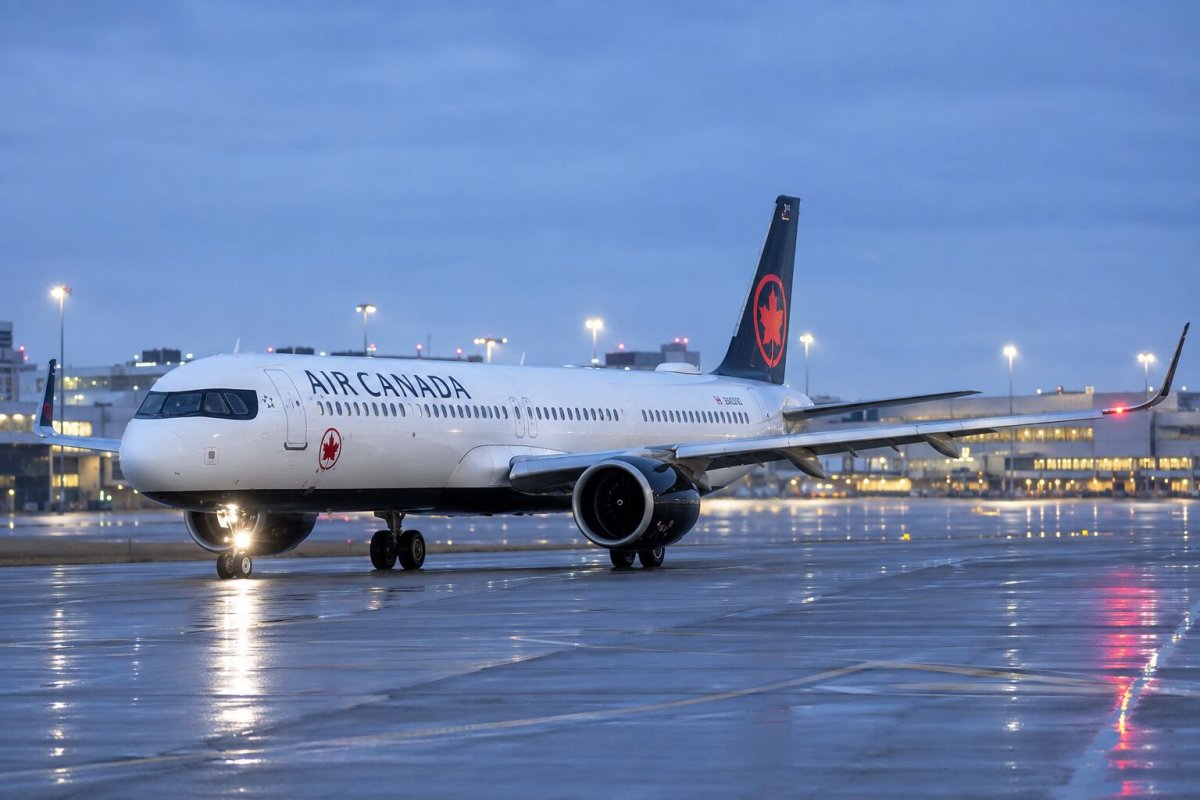
Air Canada (TSE:AC) shares climbed 2.4% on Thursday following the announcement of its most extensive international expansion to date, but the stock's flat performance on Friday signals investor caution. The carrier's ambitious route plan, centered on the fuel-efficient Airbus A321XLR, is designed to open new long-haul markets, yet recent financial results show that revenue growth has not translated into improved margins.
The airline plans to increase international available seat miles (ASMs) by more than 8% next summer, adding five destinations and seven routes across Asia, Europe, and Latin America. The centerpiece is the deployment of 18 weekly A321XLR departures, including new services from Toronto to Oslo and Shannon, Montréal to Basel, and a fifth daily Toronto-Heathrow flight. Each aircraft seats 182 passengers, providing 3,276 outbound seats per week—a modest addition compared to Air Canada's overall 169,000 weekly international seats.
The A321XLR Advantage
The A321XLR offers a 30% fuel burn reduction per seat compared to previous-generation aircraft, according to Airbus. This efficiency allows Air Canada to serve thinner routes that would not justify a wide-body jet. Mark Galardo, the airline's chief commercial officer, called the summer 2027 schedule "the most extensive intercontinental expansion in Air Canada's history," underscoring the company's ambition to become a "true global airline."
However, the aircraft's efficiency alone does not guarantee profitability. New routes require time to mature, and initial costs for marketing, crew, and station operations can erode the advantages. The airline's second-quarter results illustrate the challenge: revenue rose 11% to C$6.27 billion, but the company posted a C$215 million operating loss. Adjusted EBITDA margin fell to 11.5% from 16.1% a year earlier, while adjusted cost per available seat mile (CASM) climbed 7.4% despite capacity remaining nearly flat.
Cost Pressures Mount
Fuel costs added further strain, with expenses jumping 49% as the average price per litre surged 51% to C$1.33. Management has trimmed its full-year adjusted EBITDA guidance to C$2.9 billion–C$3.2 billion and now expects adjusted CASM to rise 5%–6%. Free cash flow is projected at C$200 million–C$500 million, a wide range that reflects uncertainty.
The balance sheet provides some cushion: Air Canada ended June with C$8.91 billion in liquidity, though long-term debt and lease liabilities stood at C$12.79 billion. This leverage heightens the impact of any operational hiccup, from fuel price volatility to currency fluctuations or soft demand in its home market.
What to Watch
Investors will look for signs that premium fares and connecting traffic can outpace incremental operating costs. Full planes alone will not settle that test; unit revenue must grow faster than the cost of putting each seat in the air. The stock closed Friday at C$28.72, just one cent below Thursday's level, and gained 5.2% over the week. After the Labour Day holiday, traders will watch whether C$28.73 becomes a support level or merely a one-day reaction.
The expansion's success hinges on execution. Air Canada must demonstrate that its international passenger revenue per seat grows faster than the associated costs. If the airline can achieve that, the A321XLR could transform its network economics. If not, the margin pressure seen in recent quarters may persist, leaving investors to question the payoff of this bold bet.
