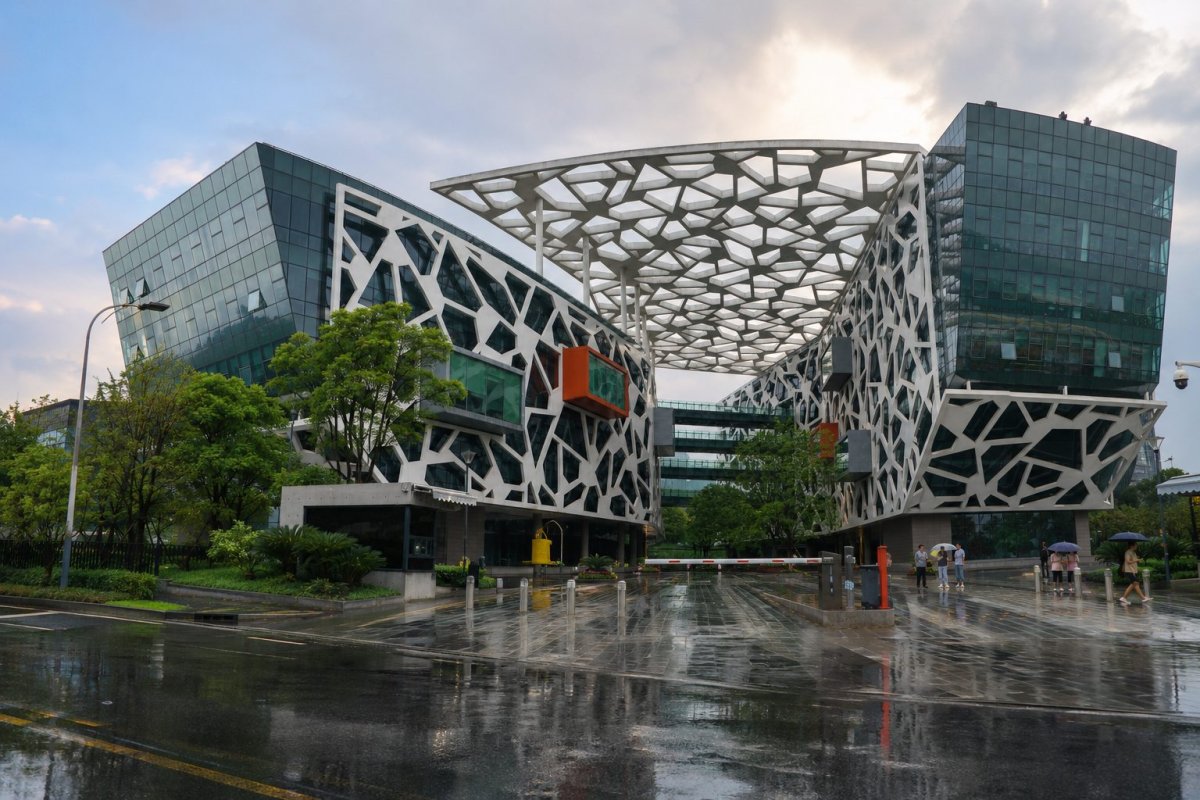
Asian equity markets ended Monday's session in the red, with technology shares bearing the brunt of a selloff triggered by two major capital-allocation decisions. Alibaba's hefty share placement and Samsung's shareholder return program fell short of investor expectations, reigniting concerns about dilution and the effectiveness of capital deployment in the region's tech giants.
Alibaba's AI Ambition Meets Market Skepticism
Alibaba (BABA) announced a HK$80 billion placement of 710 million new shares at HK$112.70 each. The company plans to allocate 100% of the net proceeds to its full-stack artificial intelligence initiatives. The placement is expected to close on 26 August. However, investors balked at the dilution, sending the company's depositary receipts down sharply. On KASE Global, Alibaba's ADR (BABAd) fell 8.21% to $115.29, making it the steepest decliner on the exchange page.
The market's reaction underscores a growing tension: while AI investments are seen as essential for long-term competitiveness, the immediate cost in shareholder value is increasingly hard to swallow. The placement, valued at approximately $10.2 billion, matches Alibaba's quarterly capital expenditure, highlighting the scale of its AI spending spree.
Samsung's Buyback Plan Fails to Impress
In Seoul, Samsung Electronics unveiled an estimated KRW90–110 trillion shareholder return program for 2026, which includes about KRW30 trillion in third-quarter cash dividends. Despite the generous headline numbers, investors marked the shares down 8.7%, dragging the KOSPI index 3.12% lower. The market's disappointment suggests that the buyback mechanics were insufficiently specified, leaving questions about execution and timing.
The KOSPI's decline was broad but uneven: 576 stocks advanced while 286 declined, illustrating that the damage was concentrated in Samsung's massive index weight. The Hang Seng Tech index fell 2.13%, while the Shenzhen component managed a 1.42% gain, and the KOSDAQ slipped 3.61%.
Regional Closing Board
- KOSPI: −3.12% at 6,696.96
- Hang Seng: −1.89% at 25,517.33
- Nikkei 225: −0.74% at 65,528.09
- Shanghai: −0.59% at 3,882.01
- Nifty 50: −0.14% at 24,219.05
- TOPIX: +0.15% at 4,073.29
Late Global Handoff and Cross-Asset Signals
KASE Global remained the executable Asian venue into the late session, with its continuous counter-auction scheduled to end at 22:00 AST (01:00 SGT). The exchange page snapshot showed Alibaba leading declines, with Amazon, Intel, and Micron also among the largest fallers. The displayed quote is treated as an exchange-page snapshot, not tick data, given the exchange's schedule.
In cross-asset moves, U.S. Treasury yields eased, with the 10-year note near 4.698%, about four basis points lower, according to Reuters' 15:14 UTC update. Brent crude fell 1.83% to $92.65, while spot gold rose 1.53% to $4,673.16, suggesting continued demand for safe-haven assets amid unresolved Iran sanctions and trade tensions. However, lower yields and oil prices did little to arrest the technology selloff.
What to Watch Next
Investors will closely monitor the KASE Global close at 01:00 SGT to see if Alibaba remains the leading faller. The closing of Alibaba's placement on 26 August will be a key test of market absorption and stability. Additionally, Nvidia's earnings report, due after the U.S. close on 26 August, will provide crucial read-through for AI-related valuations across Korea, Hong Kong, and Taiwan.
On 28 August, Federal Reserve Chair Kevin Warsh speaks at Jackson Hole. His comments on interest rates will be pivotal; a higher-for-longer stance remains the principal bear case for long-duration Asian growth shares. The bull case hinges on falling yields, cheaper oil, and a clean Alibaba placement close, which could narrow the selloff to company-specific issues. Conversely, disappointing Nvidia guidance or a rebound in bond yields could extend pressure on AI-linked valuations.
Key levels to watch include KOSPI breadth versus Samsung's weight, Hang Seng Tech at 4,594, and whether Shenzhen continues to lag Shanghai.