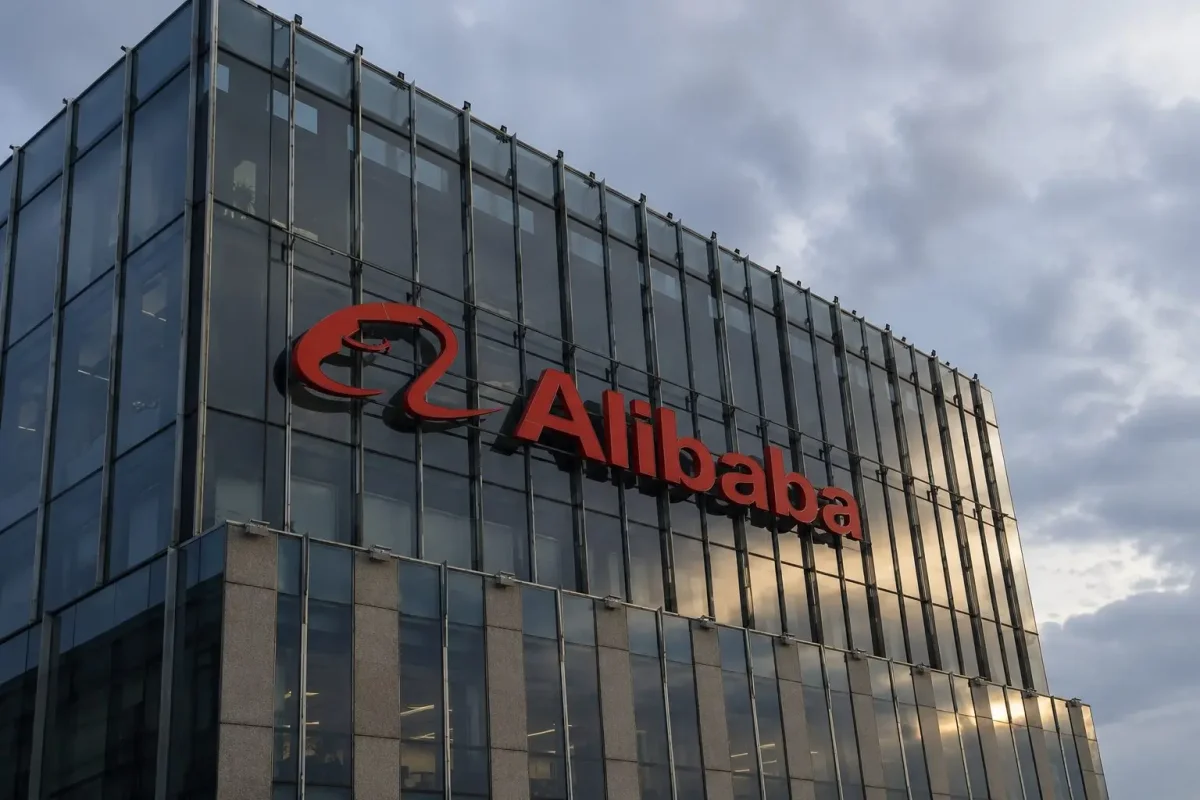
Alibaba Group Holding Limited (NYSE: BABA; HKG: 9988) closed Friday's trading session at $122.28, up 5.1%, extending its five-day gain to 9.0%. The surge came after a report connected the company's cloud infrastructure to Moonshot AI's acquisition of approximately 20,000 Nvidia chips, underscoring the growing synergy between Alibaba's cloud business and its AI investments.
The report, which cited Bloomberg, indicated that Moonshot's agreement with Alibaba involved a significant cluster of Nvidia Corp (NASDAQ: NVDA) processors, reportedly from the Hopper generation. This computing power is said to support Moonshot's Kimi AI models. However, Alibaba denied providing H200 chips, calling the allegation "completely groundless," and Reuters was unable to independently verify the deal.
This development is significant as Alibaba has committed to spending more than 380 billion yuan ($53 billion) on AI over the next three years. Investors responded positively to evidence that the company's deployed capacity is attracting users, with Alibaba outperforming the China-internet benchmark by roughly 3.7 percentage points. The stock also surpassed e-commerce rivals JD.com Inc (NASDAQ: JD) and PDD Holdings Inc (NASDAQ: PDD), suggesting a stock-specific AI premium.
Market Performance and Context
On Friday, Alibaba's ADR rose $5.96, adding approximately $13.6 billion to its market capitalization based on 2.28 billion shares outstanding. Trading volume was about 16% higher than its 65-day average. The weekly performance was also robust: Alibaba's ADR climbed 9.0%, its Hong Kong-listed shares gained 6.4%, and the KraneShares CSI China Internet ETF (NYSEARCA: KWEB) rose 8.3%.
Despite the recent rally, the ADR remains 36.5% below its 52-week peak of $192.67, indicating that the stock has not fully recovered from earlier losses. However, the positive momentum has boosted investor sentiment, particularly as Alibaba's cloud growth aligns with leading U.S. firms.
Cloud Growth and Margins
Alibaba Cloud Intelligence revenue climbed 38% in the March quarter, with AI offerings contributing to 30% of external cloud sales. This growth is comparable to Amazon Web Services (NASDAQ: AMZN), which posted 37% growth, and Microsoft Azure (NASDAQ: MSFT), which saw a 43% increase. While the reporting periods and methodologies vary, Alibaba remains in a similar growth range.
However, the more pressing concern is whether this growth will translate into higher margins. Bill Birmingham, managing director of REX Financial, noted that investors are seeking "visible, near-term revenue and margin expansion." While the Moonshot report provides revenue clarity, it offers limited data on margins. In May, CEO Eddie Wu stated that Alibaba's investments were "beginning to pay off commercially," but adjusted EBITA dropped 84% in the latest quarter, and revenue came in below consensus, largely due to heavy spending on AI infrastructure and quick-commerce.
Economic Indicators and Risks
China's official manufacturing Purchasing Managers' Index (PMI) fell to 49.2 in July, the lowest in five months, while the non-manufacturing index slipped to 49.0. These figures reflect sluggish domestic demand, which continues to weigh on Alibaba's broader commerce segment. Monday's private Caixin manufacturing PMI is expected to print at 51.5, slightly below June's 51.7, according to a Reuters poll.
Risks remain significant. The Moonshot deal has not been independently confirmed, U.S. regulations restrict access to advanced chips, and ongoing investments in AI and quick-commerce could continue to pressure margins. Additionally, weak consumer demand in China may counterbalance gains in cloud services. Despite these challenges, Alibaba's strategic focus on AI and cloud infrastructure positions it for potential long-term growth, provided it can navigate the evolving regulatory and competitive landscape.