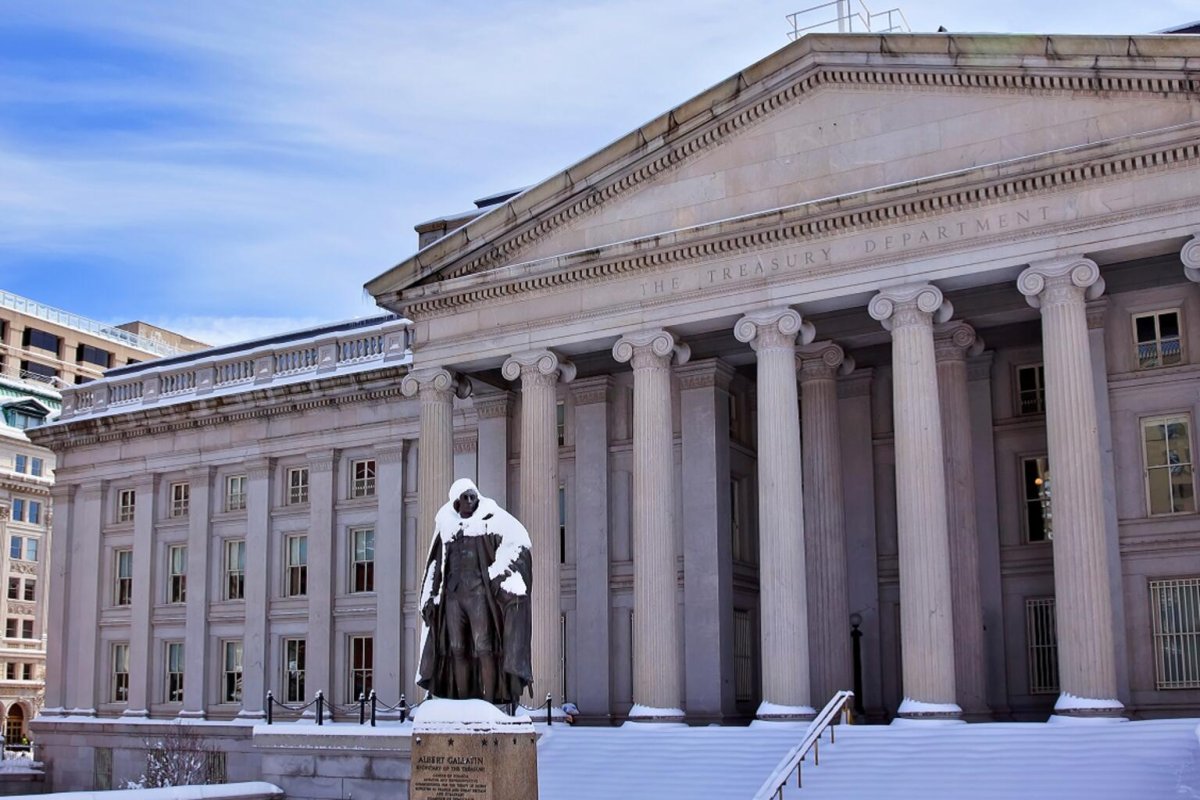
Treasury Secretary Scott Bessent has declared the government's latest $6 billion long-bond repurchase a triumph, but market data tells a more nuanced story. While the operation may have enhanced liquidity in older securities, it failed to prevent the benchmark 10-year Treasury yield from climbing above the 5% threshold—a level not seen in nearly two decades.
During a September 15 appearance before the House Financial Services Committee, Bessent pointed to robust auctions that followed the buyback as evidence of its success, according to a Reuters report published by CNN Brasil. However, on the very same day, the 10-year yield touched 5.041%, its highest point in 19 years, as reported by The Guardian. By September 16, the yield settled at 5.006%, up from a previous close of 4.996%, according to delayed data from the Cboe 10-year Treasury yield index.
What the Buyback Actually Accomplishes
The Treasury's buyback program is designed to improve market functioning, not to control yields. It targets older, or "off-the-run," securities that often trade less efficiently than newly issued benchmarks. By repurchasing these bonds, the Treasury injects cash into the market, which dealers can then use to facilitate trading. The operation is financed through fresh debt issuance, making it a liquidity tool rather than a debt-reduction mechanism.
In August, the Treasury expanded the program's scope. On August 19, it announced an increase in the maximum size of buybacks in the 10-to-20-year and 20-to-30-year sectors from $2 billion to at least $4 billion, effective September 9. The updated quarterly refunding schedule then authorized larger operations, including the $6 billion transaction in question. The program is set to continue through the current refunding quarter, with the next policy update scheduled for November 4.
Not Debt Cancellation
It's crucial to understand that these buybacks do not reduce the national debt. The Treasury's own estimates indicate that new securities will replace the repurchased bonds, leaving privately held net marketable borrowing largely unchanged. The department projects borrowing of $739 billion in the July-to-September quarter and $628 billion in the following quarter, assuming its stated cash-balance targets are met.
Measuring Success Beyond the Yield
Bessent's assessment rests on execution metrics: the ability to absorb older bonds and sell new debt without disrupting auctions. Investors should monitor auction tails, bid-to-cover ratios, and dealer awards, as well as the price spread between liquid benchmark bonds and older issues. These indicators align more closely with the program's objectives than the outright level of the 10-year yield.
Yet critics argue that liquidity support has its limits when supply and inflation expectations are pushing yields higher. A 5% 10-year yield raises borrowing costs for mortgages, corporate financing, and equity valuations, regardless of how smoothly individual auctions clear. Moreover, the Treasury's substantial borrowing needs mean the market must continuously absorb large volumes of new paper, while buybacks recycle only a fraction of that supply.
Looking Ahead to November 4
The next key date is November 4, when the Treasury will announce future buyback sizes as part of its quarterly refunding. A larger or more frequent program would signal that officials see ongoing value in liquidity support, while a reduction might suggest the September expansion was sufficient. However, neither outcome will definitively determine the direction of yields, which will continue to be driven by inflation, Federal Reserve policy, fiscal borrowing, and investor demand.
For bond and equity investors, the practical takeaway is measured: the $6 billion buyback may have fulfilled its market-plumbing role, but it has not altered the fundamental reality of a 5% rate environment. Portfolio strategies must now account for this new normal, where long-term rates remain elevated and the cost of capital is higher across the board.