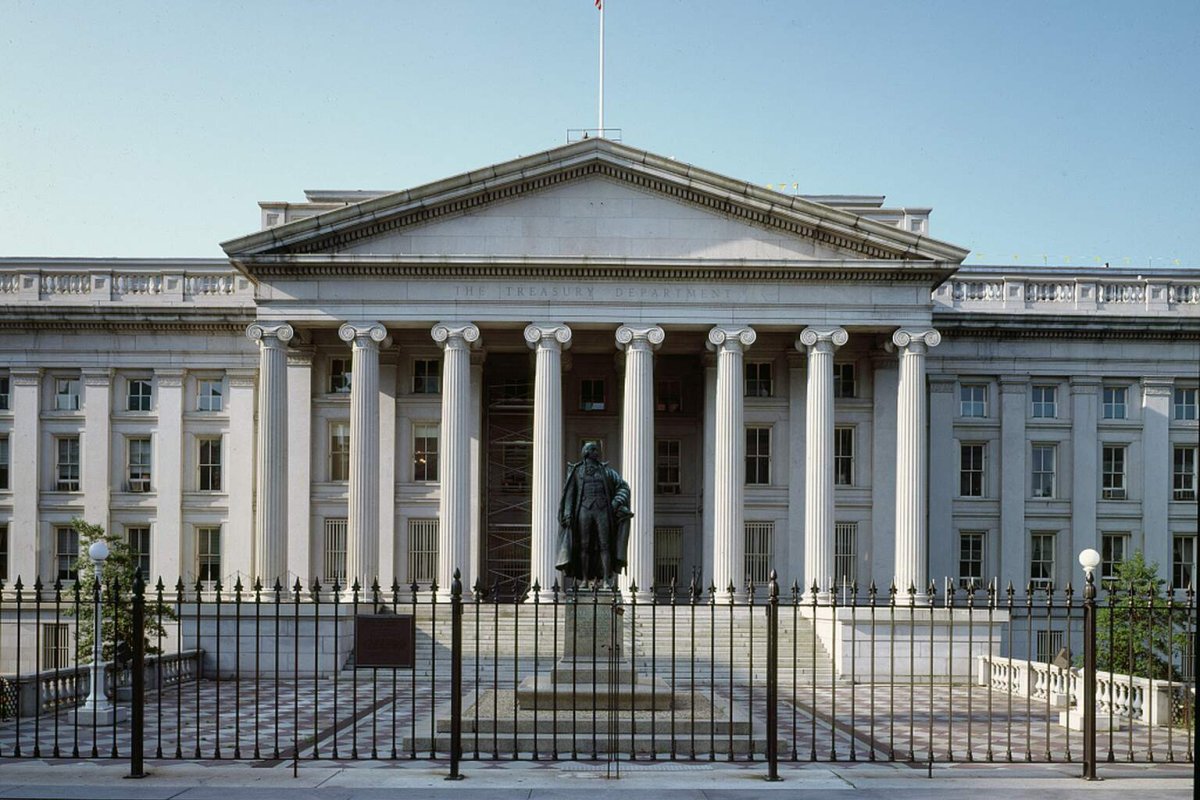
The U.S. Treasury's recent move to expand its bond buyback program was met with a stark reality: long-term yields continued their upward march. On September 10, the department, led by Secretary Scott Bessent, offered to repurchase up to $6 billion in older long-dated government bonds. Instead of easing market conditions, the benchmark 10-year Treasury yield surged to 4.95% that afternoon, and further to 4.96% by September 11, up from 4.83% prior to the announcement.
This tension is not confined to the bond desk. Long-term Treasury yields serve as a reference for mortgage rates and corporate borrowing costs, and they compete with equities for investor capital. While the buyback aims to improve liquidity in specific securities, it does not address the fundamental supply of government debt that investors must finance.
Expanded Buyback Program: Scope and Limitations
On August 19, the Treasury announced it would at least double the maximum size of its liquidity-support buybacks in the 10-to-20-year and 20-to-30-year maturity sectors. The previous cap was $2 billion per operation; the new minimum ceiling is $4 billion through the November 4 quarterly refunding. The September 10 operation, covering the 10-to-20-year sector, was set at up to $6 billion.
It is crucial to distinguish between liquidity support and monetary stimulus. The Treasury is exchanging newly issued debt for less liquid outstanding securities, not conducting a Federal Reserve asset-purchase program. The goal is to improve trading in older issues and reduce pockets of poor liquidity across a very large market.
The Treasury has been explicit on this point. In its August borrowing estimate, the department stated that buybacks are not expected to significantly change privately held net marketable borrowing, as new issuance replaces the securities it purchases. It projects $739 billion of such borrowing in the July-through-September quarter, followed by $628 billion in October through December.
Market Reaction: A Yield Curve Reading
The $6 billion cap represents only about 0.8% of the current quarter's projected $739 billion net borrowing. While these figures are not directly comparable—one is a maximum for a single secondary-market operation, the other a quarterly financing estimate—the comparison underscores the scale. Even a tripled buyback cannot be assumed to overpower issuance, inflation expectations, or the term premium.
The official Treasury par-yield curve shows the move clearly. From September 9 to September 11, the 10-year yield rose 13 basis points to 4.96%, the 20-year yield rose 10 basis points to 5.38%, and the 30-year yield rose 7 basis points to 5.35%. These are indicative secondary-market yields based on bid-side prices around 3:30 p.m. Eastern.
Attributing the entire move to one debt-management announcement would be too neat. Yields also respond to inflation data, energy prices, expectations for the Federal Reserve, and demand at new auctions. The narrower conclusion is that the larger buyback did not prevent long rates from rising. Investors still demanded more compensation to hold duration.
Fiscal Backdrop and Forward Outlook
The fiscal environment keeps that compensation in focus. The Congressional Budget Office projected in February that the federal deficit would total $1.9 trillion in fiscal 2026, with net interest outlays reaching $1.0 trillion, or 3.3% of gross domestic product. Under its current-law baseline, debt held by the public rises from 101% of GDP in 2026 to 120% in 2036, when net interest reaches $2.1 trillion.
The strongest counterargument is that the policy should not be judged by the headline yield. If larger operations narrow price gaps between old and newly issued bonds, deepen dealer capacity, and attract more competitive offers, they can improve market function even while the whole curve moves higher. Better liquidity could lower financing friction at the margin without lowering the total amount of debt outstanding.
Bond and equity investors therefore have three separate signals to watch. First is execution: the amount accepted and the breadth of offers in subsequent long-end buybacks. Second is financing: any change to auction sizes or the maturity mix at the November 4 refunding. Third is price: whether 10- and 30-year yields retreat when the program operates, or continue climbing as supply and inflation risk dominate.
A sustained move above the latest 4.96% 10-year reading would tighten the discount rate applied to future corporate profits and raise refinancing costs for leveraged borrowers. A decline accompanied by healthy auction demand would be a more persuasive sign that the market can absorb Treasury's financing plan. The buyback is a useful plumbing tool, but the next test for Secretary Bessent is still the price buyers demand for the government's new debt.