Australia's 2026-27 defence budget has earmarked A$26.570 billion for the Hunter Class frigate program, a headline number that might appear to be a windfall for BAE Systems. However, investors should be cautious: this figure represents the entire program's approved acquisition spending, not a single contract awarded to the shipbuilder. BAE's actual contract for the first three ships, disclosed in 2024, is worth £4.6 billion, a fraction of the Australian appropriation.
The A$26.6 billion budget covers a much wider scope, including training, spares, tools, and test equipment, as well as contributions from multiple suppliers. The Australian Defence portfolio budget shows A$6.923 billion of the acquisition amount has been spent through June 2026, with another A$2.465 billion allocated for 2026-27. That means roughly 26% of the approved envelope has been consumed, but not all of it flows to BAE.
BAE Systems Maritime Australia is the prime contractor, but the project also involves Saab Australia, Lockheed Martin Australia, CEA Australia, and Thales Australia, among others. Some combat-system purchases are outside the shipbuilder's economics, further diluting the direct benefit to BAE from the headline budget.
For BAE shareholders, the cleaner number comes from the company's 2024 annual report: the Batch 1 contract for the first three Hunters is worth £4.6 billion. At its original value, that represents about 5.5% of BAE's £84.0 billion group backlog as of June 2026. This is already embedded in the order book, not a fresh award from this year's budget.
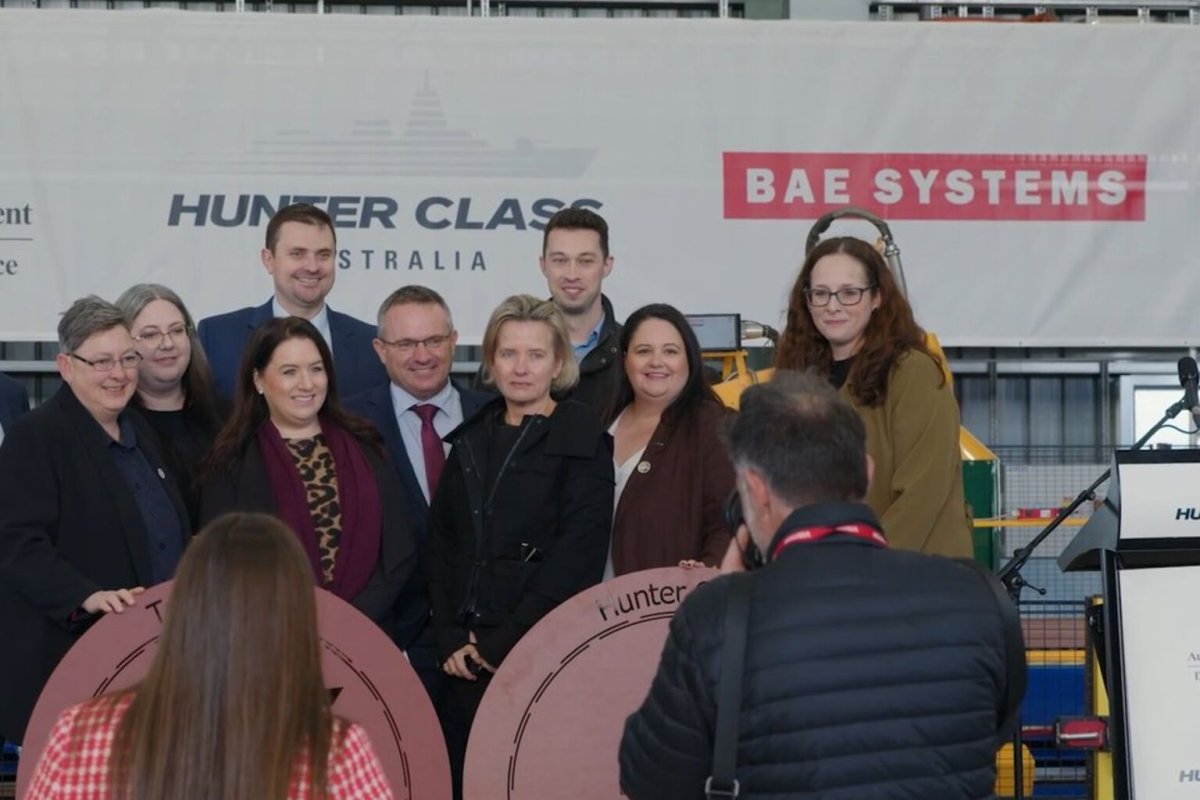
The build is progressing from planning into expensive physical work. BAE Systems Australia laid the keel of the first ship, NUSHIP Hunter, on August 24, and 20 of its 22 blocks are already under construction. The second ship is scheduled to enter construction during the current fiscal year, with the first delivery not due until 2032.
This first-of-class ship can add sales before it adds margin. BAE's half-year report shows maritime sales rose 4% at constant currency to £3.407 billion, helped by Australia and submarine work, but underlying EBIT fell 7% to £208 million. The division's return on sales slipped 70 basis points to 6.1%, reflecting the low margins associated with early-stage, first-in-class programs.
Management attributed the weaker profitability to several first-in-class programs trading at relatively low margins, with Hunter being one of the large, early-stage Australian builds. While the company does not disclose the frigate program's margin separately, the disclosure identifies the key test: whether rising Australian activity can mature without absorbing the benefit in engineering, labour, or supply-chain costs.
BAE has ample room to carry this investment. First-half sales rose 9% at constant currency, order intake reached £16.4 billion, and free cash flow was £1.791 billion, helped by customer advances. The company upgraded its full-year targets to 8%-10% sales growth and 10%-12% underlying EBIT growth, indicating Hunter is a long-duration contributor within a much larger portfolio, not a near-term binary bet.
Three dated tests will replace the headline number: 2026-27, when construction of the second ship begins; 2031, when the first Hunter starts sea trials; and 2032, when the Royal Australian Navy accepts the first ship. The upside case is a decades-long production line, a possible second batch of three ships, and follow-on support work. The counterargument is that a large government envelope can coexist with thin contractor returns when a bespoke warship runs late or costs more to build.
For BAE investors, the keel proves that steel is moving. The Maritime margin will show whether value is moving with it.