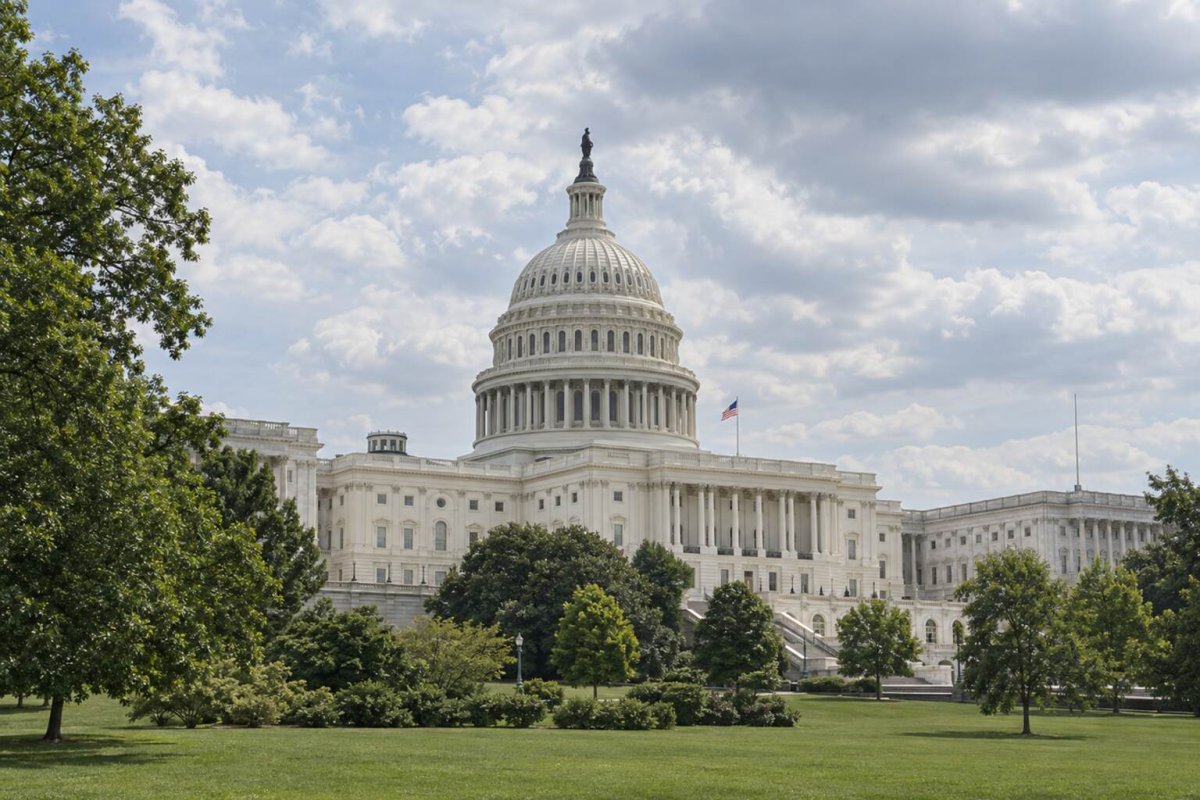
The U.S. Senate is poised to hold a critical procedural vote on the Digital Asset Market Clarity Act (H.R. 3633) at approximately 2:15 p.m. ET on Tuesday. The cloture vote, which requires 60 votes to proceed, will determine whether the chamber can begin debate on the legislation. This is not a final passage vote, but a key hurdle that will shape the legislative path for the bill.
As the vote approaches, crypto-linked stocks have been under pressure. At 12:05 p.m. ET, Circle Internet Group (CRCL) traded at $89.49, down 8.1% from Monday's close, while Coinbase Global (COIN) fell 5.4% to $181.08. Bitcoin was near $76,410, down 2.3%, and ether slipped 3.8% to about $2,420. These are intraday snapshots, not closing prices.
The decline in crypto assets cannot be solely attributed to the bill. Broader markets were also weaker, with the S&P 500 down about 0.5% and the Nasdaq Composite losing 0.8%. The 10-year Treasury yield hovered near 4.99% as investors awaited the Federal Reserve's next move. However, Circle and Coinbase underperformed the major indexes, making the Senate vote a key company-specific catalyst.
Political Hurdles and the Path to 60 Votes
The near-term complication is a late Democratic counteroffer on government ethics. Senator Ruben Gallego stated Monday evening that the latest Republican language was not a final deal and that he would respond. According to the Associated Press, Republicans hold 53 seats and need Democratic support to reach the 60-vote threshold. President Donald Trump had accepted additional restrictions, including a larger enforcement role for state attorneys general, but many Democrats still consider the protections insufficient.
What a Successful Cloture Vote Would Accomplish
A successful cloture vote would clear a procedural hurdle, allowing the Senate to take up the bill. It would not enact a regulatory regime. Senators could still amend the text, the chamber would need to pass it, and any Senate changes would have to be reconciled with the House before the bill could reach the president's desk.
The core market question is whether Congress can replace enforcement-driven uncertainty with a statutory division of responsibilities. The Senate Banking Committee framework, released in May, addressed digital-commodity oversight, registration, disclosures, illicit-finance controls, and coordination between the SEC and CFTC. It also stated that tokenized securities remain securities. The floor text has since been revised, especially around ethics, so the May document serves as a guide to the architecture rather than a substitute for the version senators will vote to consider.
Implications for Trading Platforms
For trading platforms, a clearer asset-classification and registration path could lower the cost of deciding which tokens may be listed and which regulator sets the rules. Failure today would preserve the current patchwork and make another vote before the November midterms harder, as Congress is expected to be out during October, according to the AP. This calendar risk is more immediate than any modeled revenue benefit.
Circle and Coinbase: Different Exposures
Circle is the more concentrated regulatory and interest-rate bet. Its second-quarter report showed $668 million of reserve income and $701 million of total revenue and reserve income, meaning reserve income supplied about 95% of the total. USDC circulation averaged $76.5 billion, while the reserve return rate was 3.5%, down 66 basis points from a year earlier. Revenue less distribution costs was $289 million after $412 million of distribution, transaction and other costs.
A market-structure law could support wider institutional use of USDC, but it would not remove Circle's sensitivity to short-term rates or partner economics. A lower policy rate can reduce the yield earned on reserves even if circulation grows. The stronger bull case requires both legal certainty that expands demand and enough net reserve income per dollar of USDC to convert that demand into profit.
Coinbase has a broader revenue mix, though regulation still affects listings, products and institutional adoption. The company said in its second-quarter release that subscription and services generated $555 million, or 48% of net revenue. Average USDC held in Coinbase products reached $20 billion, and the exchange reported a 10.3% crypto trading-volume share. These figures make Coinbase both a transaction-volume play and a beneficiary of stablecoin adoption, but they do not make a procedural vote equivalent to booked revenue.
What to Watch After the Vote
The cleanest confirmation signal arrives after 2:15 p.m. ET: whether the Senate reaches 60, followed by the text of any agreement that secured the votes. A defeat would keep regulatory risk high, but the pre-vote selloff may already reflect some skepticism. A win would improve the legislative path, yet amendments, final passage and House reconciliation would remain. Investors should separate that multi-step timetable from the first price reaction.