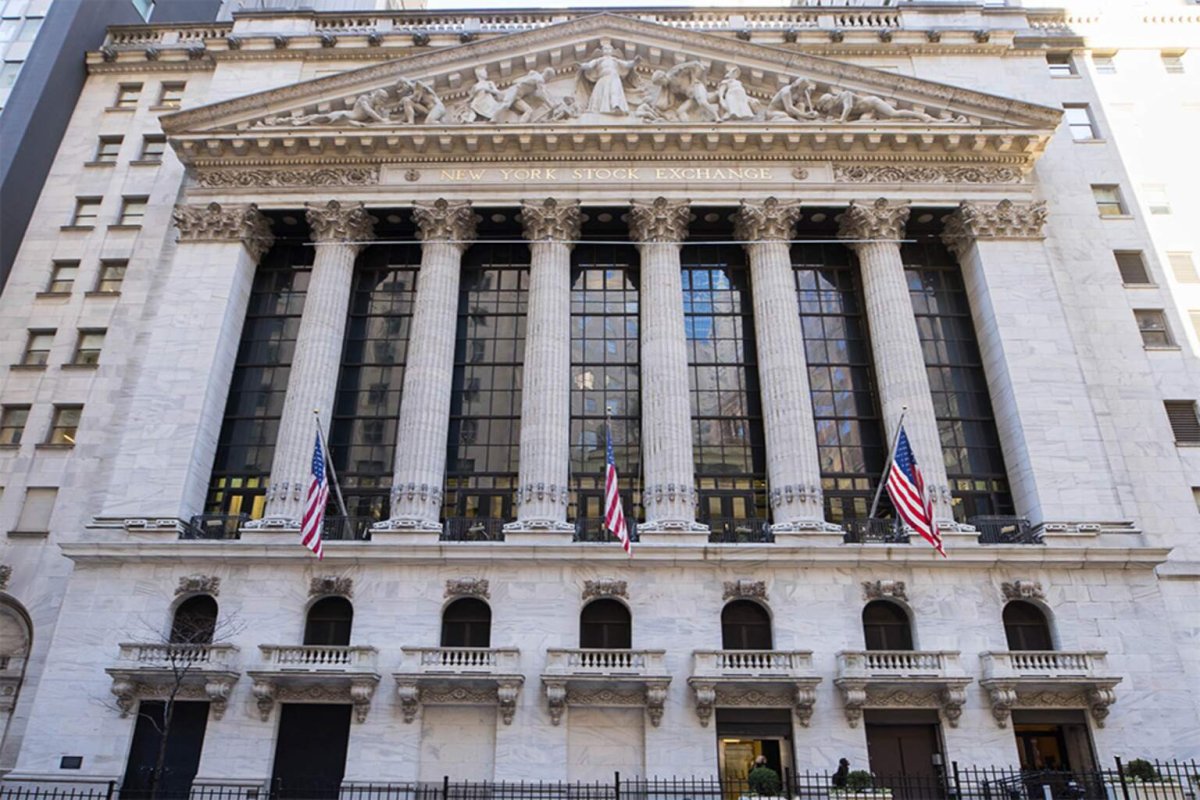
U.S. stocks opened lower on Tuesday, with the Dow Jones Industrial Average shedding 393 points in early trading as a key bond yield crossed a psychological threshold and oil prices climbed. The blue-chip index was down 0.75% at 52,028.11 by 10:06 a.m. Eastern time, after opening at 52,303.24. The decline was broad but uneven, with the S&P 500 falling 0.25% to 7,600.86 and the Nasdaq Composite losing 0.35% to 26,095.27.
The market's focus quickly shifted to the bond market, where the 10-year Treasury yield rose 4.3 basis points from Monday's close to 5.004%. That level, last seen in 2007, signals higher borrowing costs for corporations and consumers, and it raises the discount rate applied to future earnings. At the same time, West Texas Intermediate crude jumped 1.68% to $103.09 a barrel, adding to inflationary pressures and squeezing margins across industries.
The selling accelerated during the first half-hour of trading. The Associated Press reported the Dow down 289 points at 9:35 a.m., and by 10:06 a.m. the loss had widened by roughly 104 points. This was a cash-session move, not a reflection of pre-market futures, which had been modestly positive. The divergence between the Dow and the Nasdaq underscores that the pressure is coming from macro factors rather than a broad technology selloff.
Notably, artificial intelligence stocks showed resilience. Nvidia was up 1.1% and Advanced Micro Devices gained 2.4% in the early snapshot, recovering from Monday's tech-led decline. This suggests the current weakness is not a repeat of the AI-driven correction but rather a response to the twin headwinds of rising yields and higher energy costs.
The 5% yield on the 10-year Treasury is a critical level for investors. It offers a competitive return relative to equities, potentially drawing funds out of stocks, and it raises the cost of capital for companies, particularly those with high debt loads. Meanwhile, oil above $103 adds to input costs for transportation, manufacturing, and consumers, potentially keeping inflation elevated.
The combination of high yields and high oil prices narrows the Federal Reserve's policy options. With the Fed's two-day meeting scheduled for September 15-16, and a widely expected rate announcement on Wednesday at 2 p.m. ET, investors must price in both the decision and the updated economic projections while the oil shock is still unfolding. The central bank faces a delicate balancing act between curbing inflation and supporting growth.
Despite the sharp move in stocks, fear gauges remained subdued. The Cboe Volatility Index (VIX) stood at 17.09, essentially unchanged from Monday's close of 17.10, after touching 18.03 earlier in the session. This suggests an orderly repricing of risk rather than panic selling, with investors adjusting to the new rate and energy environment.
The key test for the rest of Tuesday will be whether the 10-year yield holds above 5% and oil stays above $100. If either retreats, the Dow could pare its losses quickly. However, if both remain elevated into Wednesday's Fed decision, the pressure on equities could extend beyond today's 393-point drop, with broader implications for market valuations and economic growth.