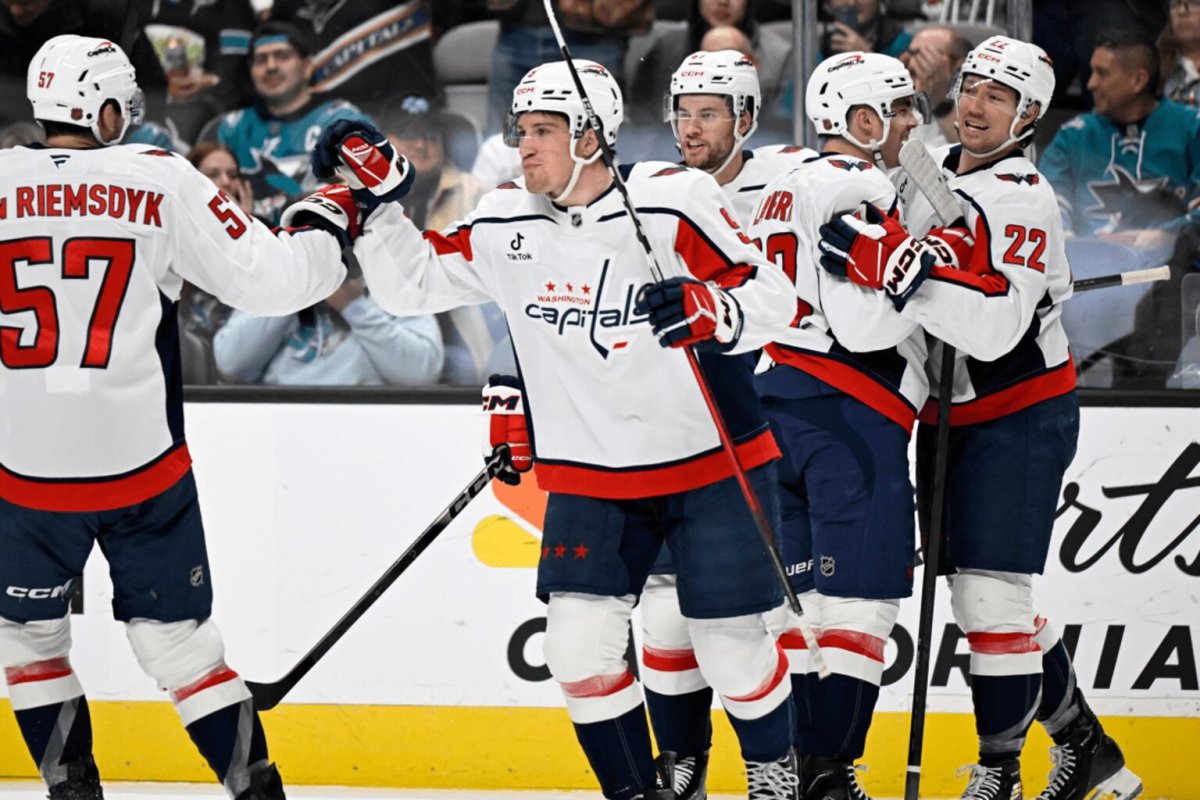
The Washington Capitals have made a significant long-term commitment to forward Ryan Leonard, signing him to an eight-year, $84 million contract extension. The deal, announced on Tuesday, carries an average annual value of $10.5 million and will keep the 21-year-old in the nation's capital through the 2034-35 season. The timing of the announcement, just one day before a new collective bargaining agreement (CBA) takes effect, was no coincidence.
Under the current CBA, which expires on September 15, teams could sign their own players to contracts as long as eight years. However, the new labor agreement, effective September 16, reduces the maximum contract term for re-signing players to seven years. By finalizing the deal on September 15, the Capitals secured an additional year of Leonard's services that will not be available to other teams in future negotiations.
The extension begins in the 2027-28 season, following the final year of Leonard's entry-level contract. His $10.5 million cap hit will represent roughly 9.25% of the NHL's projected $113.5 million salary cap for that season. In comparison, his current $950,000 average annual value accounts for less than 1% of the $104 million cap in 2026-27.
The significant jump in salary reflects the Capitals' belief in Leonard's potential rather than his established production. In his rookie season, Leonard scored 20 goals and tallied 45 points in 75 games. He ranked third among first-year players with at least 50 games played in five-on-five points per 60 minutes (2.13), and 16 of his goals came at even strength.
If Leonard develops into a first-line scorer, the contract could prove to be a bargain, especially as the salary cap continues to rise. A fixed $10.5 million charge will represent a smaller percentage of the team's payroll in future years, and the eighth year provides Washington with an additional season before Leonard can test free agency. General Manager Chris Patrick began negotiations in August to avoid a potential offer sheet after the upcoming season.
However, the deal carries inherent risks. Washington is betting on a player with only one full NHL season under his belt, and the eight-year commitment shifts injury and performance risk from the player to the club. If Leonard's scoring or five-on-five play declines, the team will have limited flexibility to move on from the contract. Additionally, the NHL has not published salary cap projections beyond 2027-28, so long-term savings remain speculative.
For investors, the Capitals' contract has no direct public-market impact, as the team is part of privately held Monumental Sports & Entertainment. The closest publicly traded comparison is Madison Square Garden Sports Corp. (NYSE: MSGS), which owns the New York Rangers and Knicks. MSGS shares traded at $394.00 on Tuesday, down about 0.6% from the previous close.
MSG Sports' financial reports illustrate the importance of player contracts to team owners. In its fiscal year ending June 30, player and team personnel compensation, included in direct operating expenses, rose 10.4% to $833.7 million, while revenue increased 11% to $1.154 billion. However, the filing combines basketball and hockey financials, making it difficult to isolate Rangers-specific payroll data.
As MSG Sports works toward separating its Rangers business from the Knicks, a standalone Rangers company would provide investors with clearer insight into NHL media, sponsorship, and roster costs. Leonard's extension serves as a league-wide price signal for young scoring talent, but it is not a direct indicator of MSGS earnings.
The contract's true test will come before the new money kicks in. Leonard has one more season at his entry-level price to demonstrate that his 20-goal rookie campaign was a foundation, not a peak. If his production climbs, Washington will have a core forward locked in at a reasonable cap percentage. If not, the extra eighth year will become the longest part of the risk.