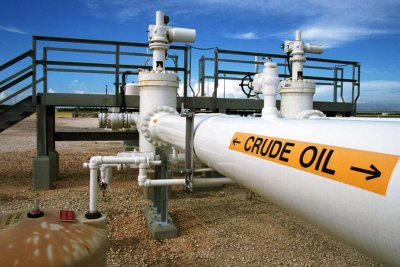
American Airlines Group Inc. (NASDAQ: AAL) has quantified the impact of rising fuel costs on its future financial performance. The carrier disclosed that for every one-cent increase in its average fuel price, its annual expenses for 2026 would rise by approximately $50 million. This sensitivity metric has become particularly relevant as West Texas Intermediate (WTI) crude surged 4.0% to $105.47 per barrel on Tuesday, marking a significant intraday move.
The market reaction was immediate and sector-wide. American Airlines shares dropped 2.7% to $12.75 within minutes of the oil price spike, while United Airlines Holdings Inc. (NASDAQ: UAL) fell 2.9% and Delta Air Lines Inc. (NYSE: DAL) declined 1.8%. The synchronized decline across major carriers suggests investors are pricing in a broader fuel cost problem rather than a company-specific issue, as jet fuel prices are closely tied to crude oil benchmarks.
Critically, American Airlines enters this period of volatility without any financial hedging protection. The company's 2025 annual report stated that no fuel hedging contracts were outstanding at year-end, and its policy is to refrain from entering such transactions, although management periodically reviews this stance. The same position was reiterated in the second-quarter filing as of June 30, leaving shareholders fully exposed to spot price fluctuations.
The $50 million-per-penny rule provides a clear framework for understanding the earnings impact. Based on this linear sensitivity, a sustained 10-cent increase in fuel prices would add approximately $500 million to annual expenses, while a 25-cent rise would translate to roughly $1.25 billion. These figures are derived from American's stated sensitivity and are not company guidance, but they illustrate the scale of potential cost pressure.
However, the actual expense impact will depend on several variables. These include flight volume, refinery margins, taxes, geographic fuel procurement differences, and the timing lag between crude oil prices and delivered jet fuel costs. The second-quarter results demonstrate why these caveats matter. American paid an average of $4.05 per gallon including taxes, up sharply from $2.29 a year earlier. While gallons consumed rose 3.5%, the price surge drove aircraft fuel and related taxes up by $2.2 billion, or 83.3%, to $4.88 billion.
Investors should not directly translate Tuesday's crude oil gain into the penny formula. A barrel contains 42 gallons, refiners produce multiple products from it, and airline fuel invoices include additional costs such as transportation and taxes. The directional signal is useful, but a single-day conversion oversimplifies the complex relationship.
Timing also plays a crucial role. American's sensitivity metric describes a full-year average. If oil prices retreat quickly, the expense impact would be far smaller than a simple annualized scenario suggests. Conversely, if crude remains above $100 per barrel and refined product spreads stay wide, the higher costs will accumulate into the quarterly average, compounding the financial strain.
The airline has non-derivative tools to mitigate the impact. It can trim marginal capacity, reassign aircraft to more efficient routes, push fare increases, or rely on stronger loyalty program revenue. Yet none of these measures provides a perfect offset. Reducing capacity can sacrifice revenue, while fare hikes depend on competitor behavior and consumer acceptance. The fact that Delta and United also fell alongside American suggests traders do not expect an easy industrywide recovery of every fuel dollar through pricing.
American's unhedged policy has a defensible rationale. Hedging costs money and can backfire when oil prices decline. Airlines that lock in fuel at the wrong price may underperform competitors that remain unhedged. American preserves the potential benefit of a price reversal and avoids the collateral posting and accounting complexity associated with derivatives programs. However, this approach leaves shareholders bearing the full spot-price risk in the current environment.
The most important checkpoints for investors will be the company's next quarterly filing, which will reveal the average fuel price, gallons consumed, and passenger revenue per available seat mile (PRASM). Together, these metrics will show whether Tuesday's crude move has faded, reached American's fuel bill, or been successfully recovered through pricing actions.