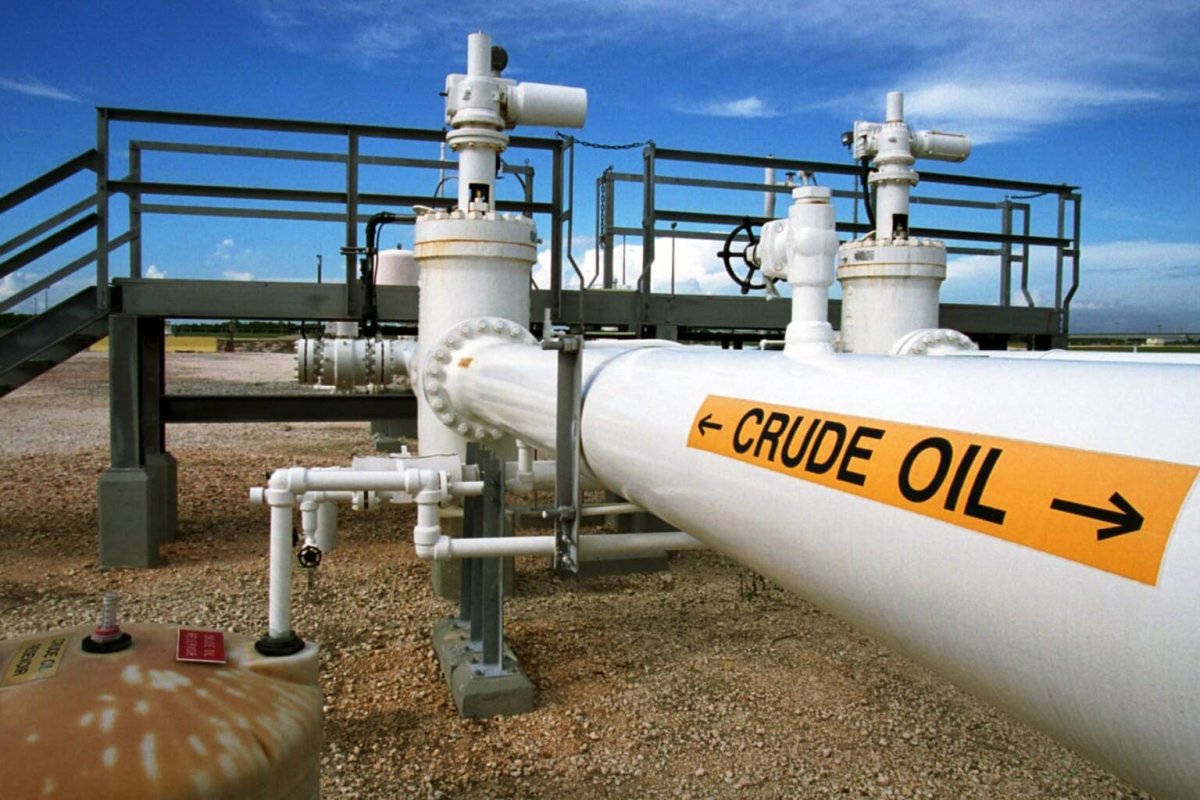
The United States' emergency crude stockpile has dropped to its lowest level in over four decades, according to the latest data from the Energy Information Administration (EIA). As of the week ending September 4, the Strategic Petroleum Reserve (SPR) held 285.36 million barrels of crude oil, marking the smallest inventory since November 5, 1982.
This decline comes at a time when oil prices are hovering above the $100 mark. West Texas Intermediate (WTI) crude was trading at $103.37 per barrel at 6:35 a.m. ET on September 15, up 2.0% from the previous settlement, based on delayed NYMEX data. The contract had earlier reached an intraday high of $104.21 overnight.
Why the Reserve Is Falling
The reduction in the SPR is not the result of a failed refill effort. Instead, it is part of an emergency exchange program authorized in response to the 2026 oil supply shock. In March, the Department of Energy (DOE) announced a coordinated release of 172 million barrels as part of a larger International Energy Agency (IEA) action, with deliveries scheduled over approximately 120 days.
This operation is structured as an exchange rather than a conventional sale. Companies receive crude oil now, but they are obligated to return a greater volume at a later date. The DOE stated in March that it had arranged for roughly 200 million barrels to be returned within the following year, representing about a 20% premium over the planned draw, at no net cost to taxpayers.
Repayment Schedule and Market Impact
A subsequent request for proposals in June covered an additional 40 million barrels, and the department noted that four earlier solicitations had already awarded more than 133 million barrels. The DOE reported a 26% premium on barrels due back under those earlier exchanges. The refill therefore depends on scheduled physical returns, not on the government purchasing crude at today's elevated prices.
The stockpile decreased by 1.24 million barrels in the latest week, and by 13.33 million barrels over the past four weeks. That four-week draw represents 4.5% of the August 7 inventory level. At its current size, the reserve is approximately 40% full relative to the DOE's stated design capacity of 714 million barrels.
Approaching the Congressional Minimum
A September 10 analysis from RSM places the congressionally mandated minimum at 252.4 million barrels, leaving just 32.96 million barrels between the latest EIA figure and that threshold. RSM estimates that completing the full authorized release without any intervening returns would push the reserve about 9 million barrels below the legal minimum.
For oil traders, the timing of these flows cuts both ways. Remaining deliveries add supply to the market in the near term, which tends to put downward pressure on prices. However, the future repayment obligations require companies to source barrels and deliver them at a premium, creating additional demand later. The size and schedule of these exchanges are more significant than the headline promise to refill the reserve.
Broader Context
A 44-year low in the SPR is not evidence that the United States is running out of oil. Commercial inventories, domestic production, and imports are separate from the emergency stockpile. The risk is more specific: with less crude already stored, policymakers have a smaller immediately available buffer if another disruption occurs before exchange barrels are returned.
As the energy market continues to digest these developments, the focus remains on the balance between near-term supply and future repayment obligations. The SPR's trajectory will be closely watched by analysts and traders alike, given its implications for both market stability and strategic reserves.