Australia's benchmark S&P/ASX 200 closed at 8,672.5 on Tuesday, shedding 77.4 points, or approximately 0.9%, as declines across mining, banking, and energy sectors dragged the index to its weakest finish since June 11. During the session, the benchmark touched an intraday low of 8,657.1, coming within a point of its July 2 trough before staging a slight recovery into the close.
The latest slide extends a broader pullback that has seen the ASX 200 lose 3.9% since reaching 9,020.1 on September 3, according to delayed ASX data. While the decline has reset the near-term trend, it has not yet breached the July intraday floor, leaving the market in a technical gray zone.
Longer-term perspective shows the index remains 6.7% below its six-month intraday high of 9,296.7 set on August 6, but still 5.0% above the March 23 low of 8,262.4. These figures, derived from the same daily price series, indicate the market has given back a significant portion of its winter rally without crossing the conventional 10% correction threshold.
Heavyweights Lead the Decline
BHP closed approximately 2.2% lower at A$59.25, while Rio Tinto fell 2.2% to A$164.50. Commonwealth Bank dropped 1.6% to A$152.50, and Woodside Energy lost 2.2% to A$32.35. These four stocks, representing key sectors of commodity cycle, domestic rates, and oil and gas, collectively pulled the index lower, overshadowing gains in technology and healthcare.
The breadth of the selloff underscores that Tuesday's decline was not confined to a single industry. BHP and Rio Tinto carry the commodity cycle, Commonwealth Bank reflects domestic rates and credit conditions, and Woodside is the largest listed oil-and-gas producer. Weakness across all three fronts left few large-cap stocks able to support the benchmark.
Commodities and Rates in Focus
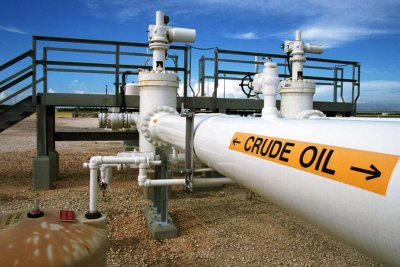
Iron ore was down approximately 0.8% near US$95.75 a tonne around midday, while Brent crude traded above US$107, according to ABC's market coverage. At 12:10 p.m. Sydney time, basic materials had lost 2.1% and financials 1.2%, while technology and healthcare were positive, limiting the index's decline.
Australia's 10-year government-bond yield hovered near 5.41% in the same midday snapshot, raising the return hurdle for equities even as company earnings forecasts remain unchanged. Higher oil prices are not automatically bullish for every energy share; while they can lift realized prices, a rapid move also raises recession risk, operating costs, and the discount rate applied to future cash flows. The fact that Woodside fell alongside banks and miners suggests investors were reducing broad Australian risk rather than buying every producer linked to crude.
Inflation and RBA Decision Loom
Australia's July consumer-price index rose 3.5% year-over-year, with the trimmed-mean measure up 3.6%, according to the Australian Bureau of Statistics. With oil above US$100, there is a threat of further pass-through into fuel, freight, and household inflation ahead of the Reserve Bank of Australia's September 29 policy decision.
The RBA's cash rate currently stands at 4.35%. For bank shareholders, a higher rate can initially support lending margins, but it also increases deposit competition and credit stress. For miners, the key question is whether weaker iron ore and copper prices reflect temporary risk aversion or a durable slowdown in demand. The ASX 200 cannot sustain a convincing recovery if both groups remain under pressure.
Market Outlook
There is a credible counterargument to the bearish reading. The benchmark halted just above its July 2 intraday low, and midday gains in technology and healthcare indicate buyers have not abandoned the entire market. A retreat in oil or stabilization in iron ore could quickly alleviate the inflation-and-growth squeeze.
The next confirmation will come from price action rather than broad narratives. A close below the July low would turn Tuesday's three-month closing low into a clearer technical breakdown. Conversely, holding that level while BHP, Rio Tinto, and Commonwealth Bank stabilize would suggest the decline is becoming selective rather than accelerating across the index.