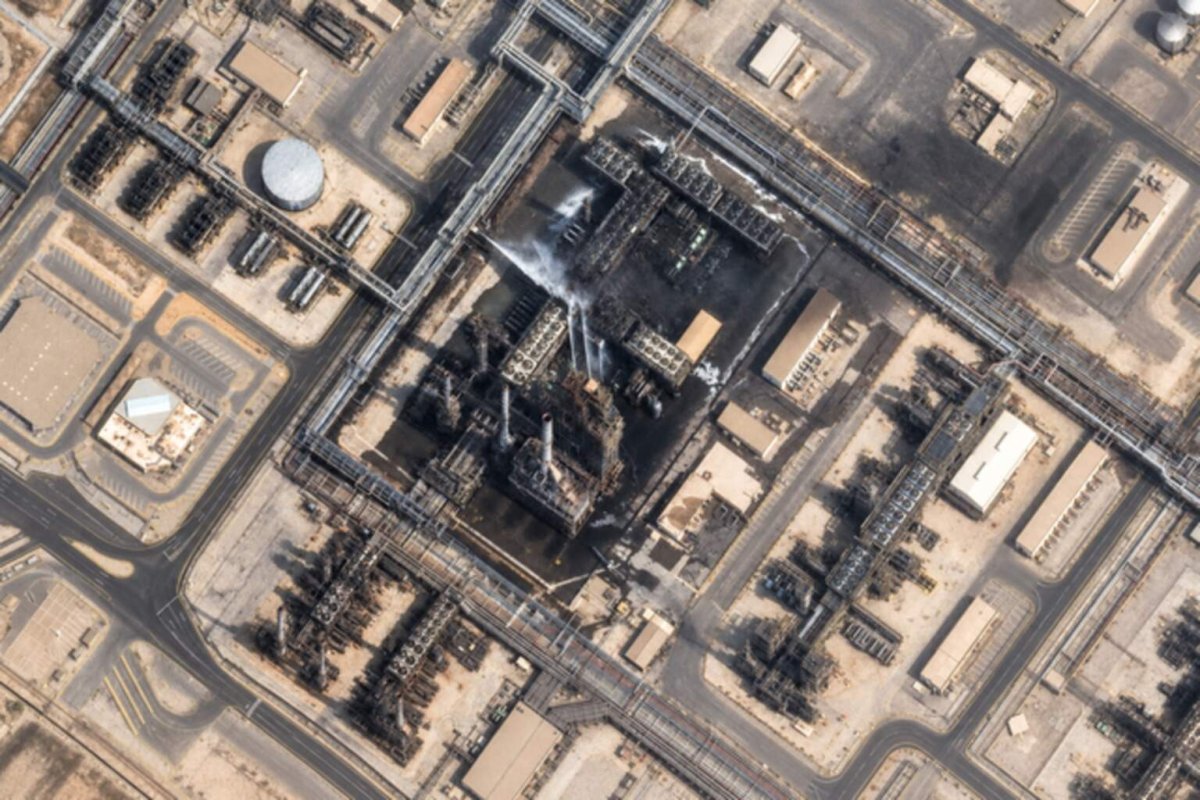
Saudi Arabia's East-West crude pipeline may remain mostly offline for three to five weeks, transforming what started as a precautionary measure into a significant global supply concern. The estimate, provided by two regional officials to the Associated Press on Monday, suggests that while partial flows might resume, the full capacity will take weeks to restore.
Brent crude was trading at $106.15 per barrel at 4:59 p.m. EDT on September 14, a 1.5% increase from Friday's settlement of $104.61, after touching an intraday high of $109.78. The retreat from the peak indicates that traders are pricing in a serious constraint, but not yet a definitive loss in barrels.
The Repair Timeline
Saudi Arabia confirmed on September 11 that the 1,200-kilometer pipeline had been attacked in the Riyadh and Madinah regions and was shut down as a precaution. The Energy Ministry's statement, carried by the Saudi Press Agency, said emergency teams were securing the line and assessing its safety, but did not detail the damage or provide a restart date.
Monday's three-to-five-week estimate from AP changes the investor calculus because the pipeline has become Saudi Arabia's primary alternative to the Strait of Hormuz. It transports crude from the kingdom's eastern production fields to Yanbu on the Red Sea, where tankers can head north toward the Suez Canal or south toward Asian markets.
Capacity and Actual Flows
The pipeline's nameplate capacity is seven million barrels per day, and Saudi authorities had previously restored full pumping capacity after earlier attacks in April. However, the actual usage is more critical: Rystad Energy estimated that the line moved a weekly average of 2.6 to 4 million barrels per day from late August, according to AP. A complete stoppage would remove a flow equivalent to roughly 2.6% to 4% of the approximately 100 million-barrel-a-day global oil market, as tracked by the U.S. Energy Information Administration.
But a pipeline outage does not automatically equate to lost production. Saudi Aramco can draw on storage, adjust refinery runs, or reroute some cargo. Partial service would also reduce the shortfall. These buffers mean the repair window should not be mechanically multiplied by four million barrels a day to estimate losses.
Market Constraints
However, the constraints are unusually tight. Hormuz traffic has already been disrupted by the Iran war, while Houthi advances and attacks around the Red Sea complicate the western route. Sending Yanbu cargoes north and then back toward Asian buyers adds distance and cost. Rystad told AP that the market could initially manage a monthlong closure, but a longer interruption would require a substantial reshuffling of global crude flows.
There is also an evidence gap: Aramco had not publicly provided a repair estimate when AP published its report, and the officials spoke anonymously because they were not authorized to brief the media. The Saudi government's formal position remains that technical teams are assessing the line. A faster restart would weaken the current price premium; confirmed zero flow or a longer timetable would strengthen it.
What the 6 Brent Price Is Testing
Monday's price action contains both sides of the argument. Brent traded nearly 5% above Friday's settlement at its high, then gave back most of that advance. The market is pricing a greater chance of disrupted Saudi exports while withholding a worst-case verdict until physical flows are clearer.
For oil producers, a sustained triple-digit benchmark can lift cash flow if their own barrels keep moving. Refiners, airlines, and other fuel-intensive companies face the opposite pressure. Bond and equity investors also have to account for the inflation channel: Reuters reported through Euronext that Brent had already risen 2% to $106.72 early Monday as the pipeline closure compounded shipping attacks.
The next useful evidence is physical rather than rhetorical: a Saudi or Aramco restart notice, a measured flow rate, Yanbu loading data, and a confirmed repair schedule. Until one arrives, three to five weeks is the market's best available clock, but not an official guarantee.