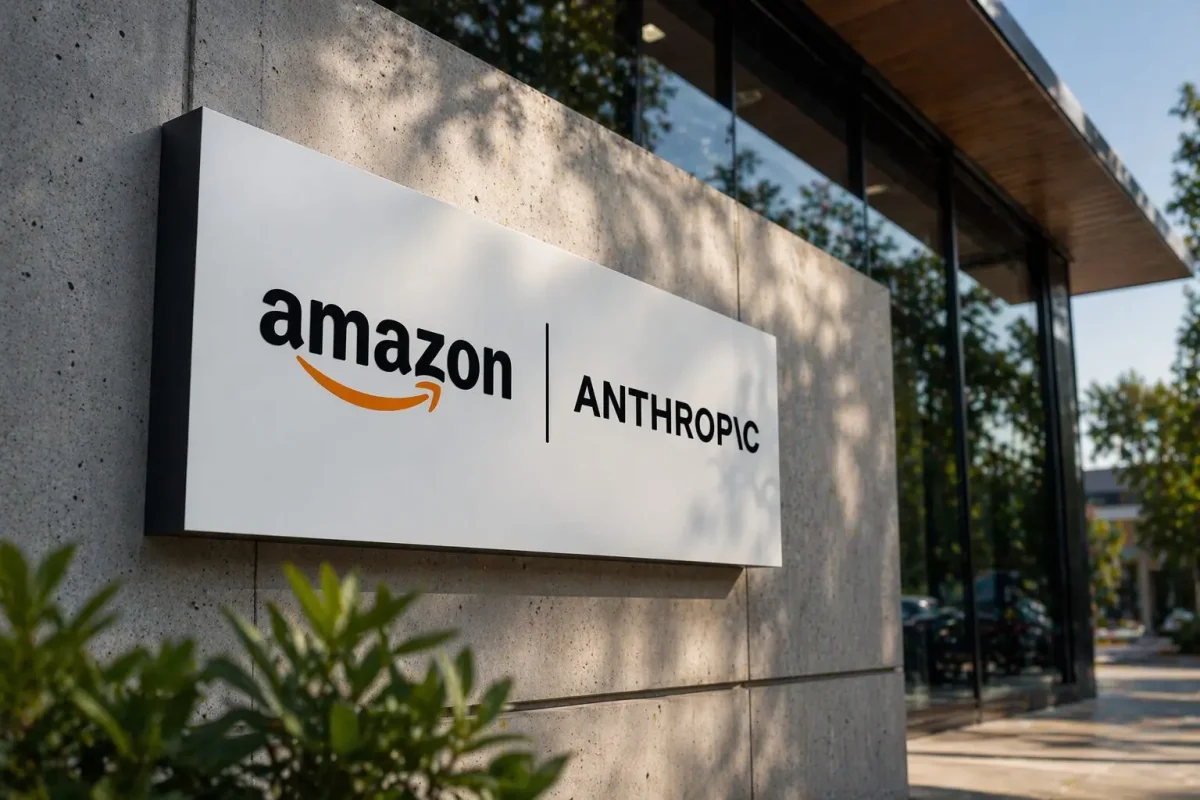
In a massive strategic move to solidify its position in the artificial intelligence arena, Amazon has announced a plan to invest up to an additional $25 billion in Anthropic, the creator of the Claude AI models. The initial tranche of this commitment is $5 billion, with the remaining $20 billion contingent on the achievement of specific commercial milestones. This fresh capital builds upon the $8 billion Amazon had already invested in the AI startup, marking one of the most significant corporate partnerships in the rapidly evolving AI sector.
The investment is part of a reciprocal agreement where Anthropic has committed to spending more than $100 billion on Amazon Web Services (AWS) cloud infrastructure over the coming ten years. This colossal spending pledge is a major win for AWS as it seeks to convert its substantial investments in AI hardware into sustained cloud demand and usage. The deal arrives as Anthropic scrambles to add computing capacity to support its surging user base, with the company acknowledging that high traffic for Claude has previously led to reliability concerns for some customers.
Securing AI Chip Capacity
A cornerstone of the arrangement is Anthropic's commitment to secure up to 5 gigawatts of capacity on Amazon's custom Trainium AI chips. This capacity will span the current Trainium2 and Trainium3 chips, as well as the future Trainium4. The company stated that nearly 1 gigawatt of capacity from Trainium2 and Trainium3 should be operational by the conclusion of 2026. Furthermore, Anthropic plans to deploy additional inference capabilities—which handle user queries after models are trained—in data centers across Asia and Europe.
Amazon CEO Andy Jassy highlighted the strategic importance of the company's custom silicon, emphasizing its "high performance at significantly lower cost for customers." He framed Anthropic's decade-long Trainium commitment as validation of their joint achievements in developing specialized AI hardware. Anthropic CEO Dario Amodei noted that Claude has become "increasingly essential" for its users, necessitating a major infrastructure expansion to support that growth.
Product Integration and Market Context
On the product front, Amazon confirmed that users can now access the full Claude Platform directly through their existing AWS accounts. Anthropic reaffirmed that AWS remains its primary cloud and training partner for critical workloads, with both companies reporting that over 100,000 customers are already operating Claude models on AWS.
This agreement is a key maneuver in the intensifying global race for AI infrastructure. Earlier in April 2026, Anthropic disclosed a separate pact with Google and Broadcom to secure several gigawatts of Google's TPU chip capacity starting in 2027. Notably, Claude remains accessible across multiple major clouds, including AWS, Google Cloud, and Microsoft Azure. This multi-cloud strategy, while giving AWS a dominant role, ensures Anthropic is not reliant on a single provider.
Wall Street has quickly identified Anthropic as a tangible catalyst for AWS demand growth. Analyst Justin Patterson of KeyBanc pointed to "capacity gains, AI diffusion, and client expansion" at AWS, subsequently raising his price target for Amazon. He cited Anthropic's projected cloud spending as a direct fuel for future revenue.
Explosive Growth and Execution Risks
The driving force behind this massive infrastructure push is clear. Anthropic revealed its annualized revenue run rate has skyrocketed past $30 billion, a dramatic increase from approximately $9 billion at the end of 2025. This explosive growth underscores the immense scale of investment required to keep pace with demand.
However, the deal is not without significant execution risk. Amazon's conditional $20 billion is tied to Anthropic hitting undisclosed commercial targets. The company has also cautioned that its rapid scaling has previously caused performance issues during peak usage times for both free and paid users. The success of the partnership hinges on Anthropic's ability to scale its operations and technology seamlessly.
Following the announcement, Amazon's stock saw a late-trading gain of roughly 2.7%. However, by 13:22 UTC on the following Tuesday, shares had retreated, trading about 0.9% below the prior day's closing price, reflecting a measured market response to the long-term, high-stakes partnership.