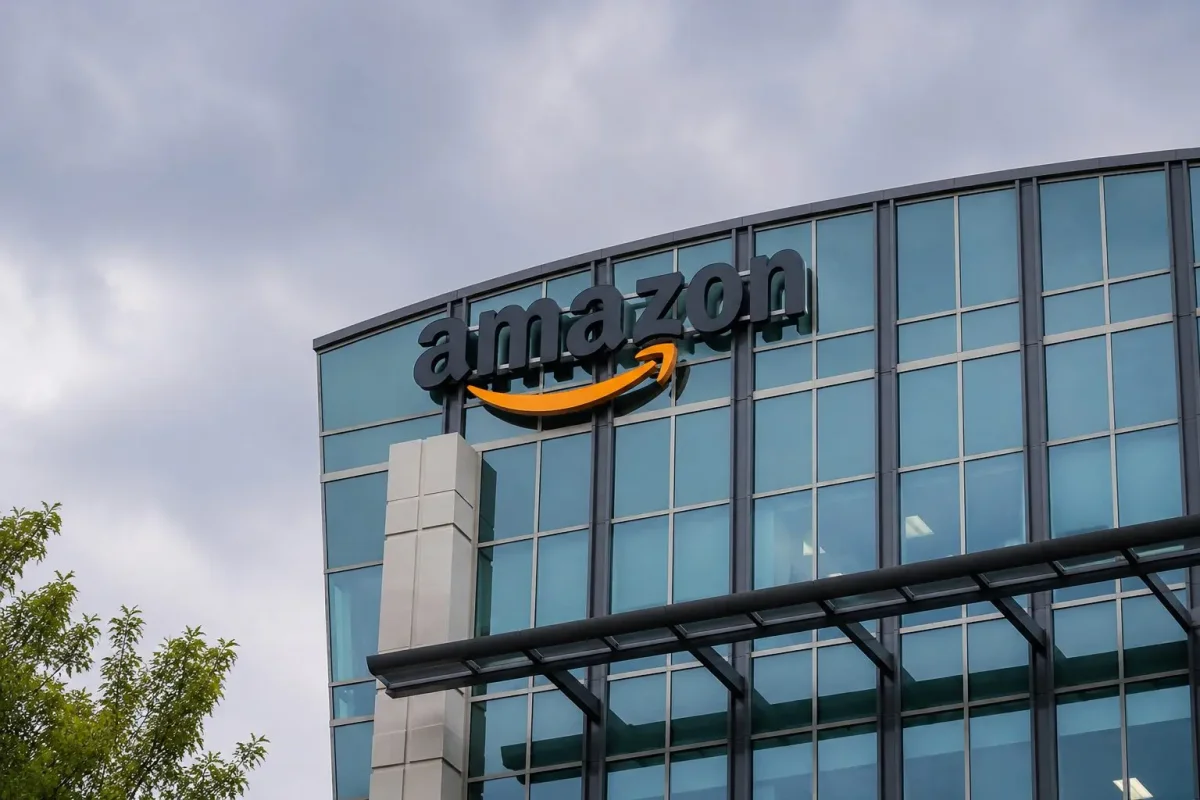
Amazon.com (AMZN) shares fell sharply on Friday, declining 3.1% to $246.03, as a robust U.S. jobs report rekindled concerns that interest rates would remain elevated for longer. The sell-off was part of a broader retreat in big-cap technology stocks, with the Nasdaq Composite sliding 4.18% and the S&P 500 losing 2.64%. Trading volume in Amazon topped 55 million shares, and the company's market capitalization settled near $2.68 trillion.
The catalyst for the downturn was the May payrolls report, which showed 172,000 jobs added—more than double the consensus forecast from a Reuters poll. The data prompted investors to reassess the timeline for potential Federal Reserve rate cuts, putting pressure on growth-oriented names that rely on distant future earnings. Higher discount rates reduce the present value of those profits, making fast-growing tech stocks particularly vulnerable.
Amazon's AI and Cloud Investments in Focus
Despite the negative market reaction, Amazon continues to make significant strides in artificial intelligence and cloud computing. On Thursday, the company unveiled Proteus, a new AI-powered warehouse robot, in Britain as part of a 10 billion euro ($11.6 billion) investment in European fulfillment. Scott Dresser, vice president of Amazon Robotics, noted that workers can instruct Proteus on tasks and "it figures out the priority, the route, the timing."
In a major endorsement of Amazon Web Services (AWS), Pinterest announced a $4 billion commitment to cloud services through 2031, with plans to use Amazon's custom chips for AI workloads instead of standard hardware. Pinterest Chief Technology Officer Matt Madrigal cited "compute flexibility, hardware optionality, and infrastructure efficiency" as key reasons for the deal.
Financial Performance and Capital Spending
Amazon's first-quarter results, reported in April, showed revenue rising 17% year-over-year to $181.5 billion. AWS sales surged 28% to $37.6 billion, and net income reached $30.3 billion, boosted by $16.8 billion in pre-tax gains related to its investment in Anthropic. However, free cash flow over the trailing twelve months plummeted to $1.2 billion from $25.9 billion a year earlier, primarily due to heavy spending on property, equipment, and AI infrastructure. CEO Andy Jassy stated that Amazon was "well positioned to lead" in the AI era.
The central debate among investors now revolves around whether AWS growth and AI-related deals can justify the escalating capital expenditures. Amazon is pouring billions into data centers, chips, warehouses, and robotics, which could drive future profits but also raises the bar for near-term returns.
Market Context and Analyst Views
Strategists characterized Friday's sell-off as a market-wide reset rather than a company-specific event. Ryan Detrick at Carson Group remarked, "the dam just broke today." Ohsung Kwon at Wells Fargo attributed the drop to "positioning rather than fundamentals," while Carol Schleif at BMO Private Wealth suggested that "a bit of pause is warranted."
The divergence among peers underscored the selective nature of the sell-off. Microsoft (MSFT) fell 2.7%, and Alphabet (GOOGL) dropped 0.9%, but Walmart (WMT), a major retail competitor, gained 1.0%, indicating that investors were not indiscriminately selling all consumer stocks.
Outlook and Risks
Looking ahead, any surprise in inflation data or hawkish signals from the Federal Reserve could further pressure Amazon's valuation. If AWS growth decelerates or AI spending fails to translate into margin expansion, investor focus may shift from the scale of the AI opportunity to the cash required to sustain it. For now, Amazon's strong demand signals—including the Pinterest deal, new robotics deployments, and robust cloud growth—were overshadowed by macro concerns, leaving the stock moving in lockstep with the broader tech sector.